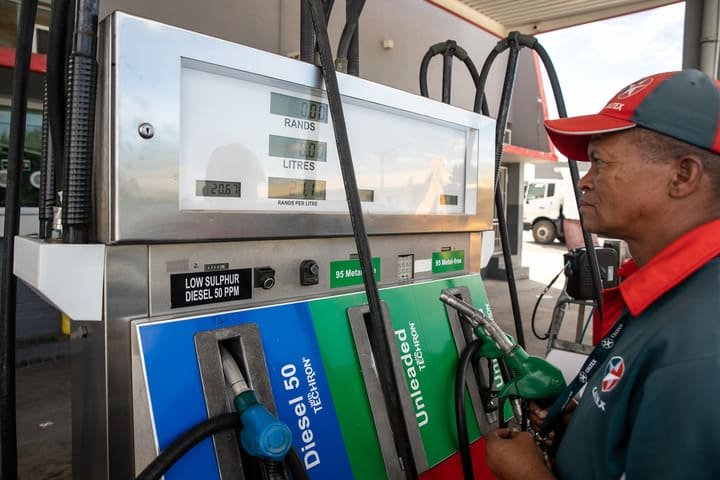
South Africans will start the new year with some relief at the fuel pumps after the Minister of Mineral and Petroleum Resources, Gwede Mantashe, announced a significant reduction in most fuel prices, effective from Wednesday, 7 January 2026. The changes are part of the country’s regular monthly fuel price adjustment, which is influenced by what is happening both locally and internationally.
In simple terms, fuel prices in South Africa go up or down depending on how much oil costs on the global market, how strong the rand is against the US dollar, and other costs such as shipping, storage and refining. Because South Africa imports most of its crude oil and some finished fuel products, global trends play a major role in what motorists end up paying.
According to Mantashe, the main reason for the January decrease is the drop in international oil prices. The average price of Brent crude oil, which is the global benchmark used by South Africa, fell from about 63.55 US dollars per barrel to 61.47 dollars during the period under review. This decline was largely caused by an oversupply of oil on the world market, as major producers, including members of the OPEC+ group and other non-OPEC countries, increased production.
When crude oil prices go down, the cost of producing petrol, diesel and other fuels also tends to fall. This trend was clearly seen in international petroleum product prices. Petrol prices followed the downward movement of crude oil, while diesel and illuminating paraffin dropped even more sharply. One reason for this is that countries in the Northern Hemisphere had built up large fuel reserves in preparation for winter, leading to higher stock levels and lower prices.
As a result, the basic fuel price – which is the main building block of what consumers pay at the pump – was reduced significantly. Petrol prices benefited from a reduction of more than 45 cents per litre, while diesel and illuminating paraffin saw even bigger decreases.
Another factor that helped bring prices down was the stronger rand. Over the review period, the rand improved against the US dollar, moving from an average of R17.22 to R16.85. Because oil is traded in dollars, a stronger rand means South Africa pays less for the same amount of fuel. This currency movement contributed to further reductions of around 20 to 22 cents per litre across petrol, diesel and illuminating paraffin.
Mantashe also confirmed that the slate levy, which is used to recover losses or gains from fuel price smoothing, will remain unchanged at zero cents per litre.