The inquiry into the fitness of South Gauteng Director of Public Prosecutions Advocate Andrew Chauke has delivered a stinging rebuke of former National Director of Public Prosecutions Advocate Shamila Batohi, accusing her of disregarding due process and displaying what the panel described as a potentially “disdainful attitude” towards the proceedings.
In a strongly worded ruling released on Friday, the Nkabinde Inquiry dismissed Batohi’s application to submit written representations explaining why she abandoned her testimony while under cross-examination and later refused to return to complete her evidence.
The ruling, authored by retired Constitutional Court Justice Sisi Nkabinde, rejected Batohi’s attempt to have written submissions admitted into the official record, finding that she was merely a witness and not a party to the proceedings.
The decision marks the latest chapter in an increasingly bitter standoff between Batohi and the inquiry established by President Cyril Ramaphosa to determine whether Chauke remains fit to hold office.
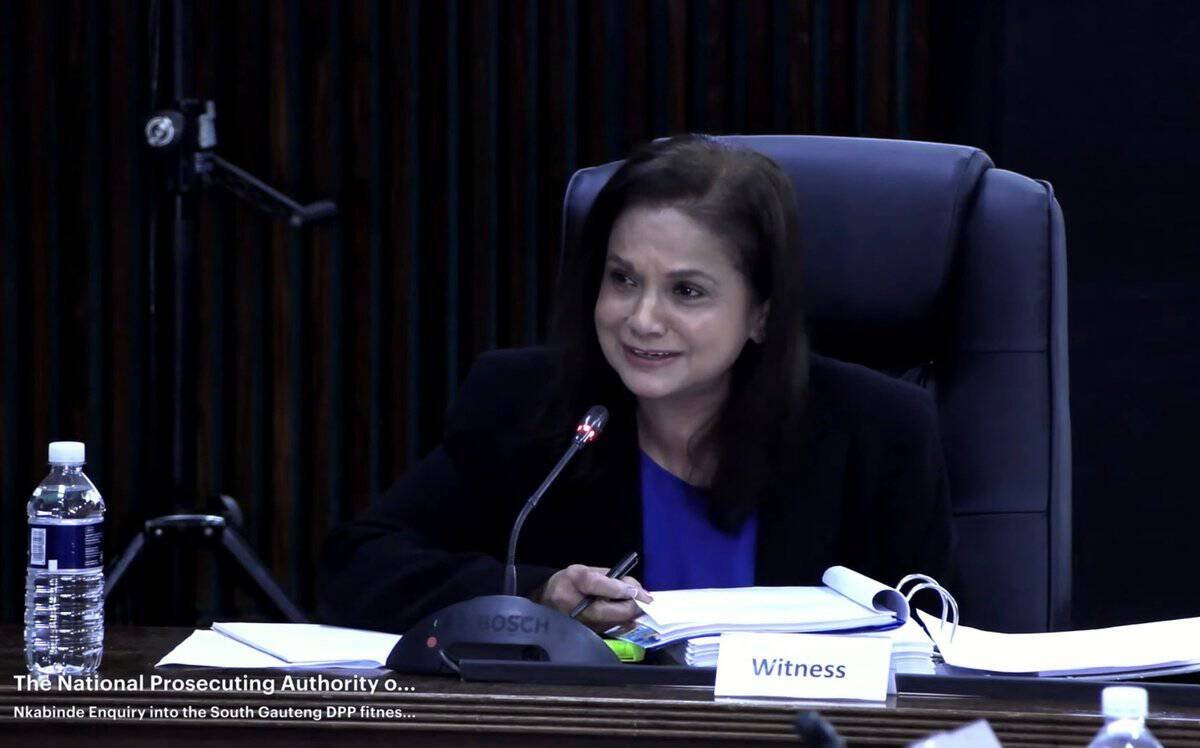
At the centre of the dispute is Batohi’s dramatic departure from the witness stand in December last year while she was being cross-examined by Chauke’s legal team.
According to the ruling, Batohi left during a lunch adjournment without seeking permission from the panel and later informed the inquiry that she would not continue testifying until she had obtained what she described as “proper legal counsel”.
When questioned by the panel about her actions, Batohi reportedly told the inquiry: “I was not seeking your permission, it is something that I decided I needed to do because it is about me and my integrity.”
The panel viewed that conduct dimly.
“Adv Batohi walked out of the Enquiry without the permission of the Panel,” Nkabinde wrote.
The ruling reveals that the panel kept the door open for more than four months, from December 2025 until April 2026, in the hope that Batohi would return to complete her evidence. However, after several exchanges through attorneys and the State Attorney, she eventually informed the inquiry that she would not be coming back.
Batohi subsequently sought permission to file written submissions explaining her decision and providing what she described as important context for her incomplete testimony.
She argued that fairness required the panel to understand why she had not completed her evidence before assessing its value or commenting on her conduct.
The panel was unmoved.
In one of the ruling’s most striking passages, Nkabinde criticised Batohi for attaching the very written submissions she was seeking permission to file.
“Curiously, Adv Batohi has taken it upon herself to annex and file of record” the submissions without first obtaining leave, the ruling states.
“This inexplicable tactic is extraordinary. It offends the principles of procedural law. If this is not a display of a disdainful attitude toward the Panel, it is not clear what it is.”
The inquiry found that Batohi was effectively attempting to place evidence before the panel through what it described as a “back door” after electing not to complete her testimony under oath and subject to cross-examination.
The ruling repeatedly emphasises that Batohi is not a party to the proceedings but merely a witness whose role was limited to providing evidence.
Because she chose not to complete her testimony, the panel said she must accept the consequences of that decision.
“Adv Batohi must make peace with her election not to return and complete her evidence and must stand by her election,” the ruling states.
“She cannot have her cake and eat it too.”
The panel also rejected Batohi’s argument that her submissions were necessary in the interests of fairness.
Instead, it concluded that any difficulties she now faced were entirely self-created.
“Adv Batohi has created a storm of her own making,” the ruling says.
“Adv Batohi cannot and will not be allowed to meddle with the Enquiry procedures to do as she pleases.”
Chauke opposed the application, arguing that admitting Batohi’s written account would prejudice him because the claims contained in it would not be subjected to cross-examination.
The evidence leaders also opposed the application, arguing that Batohi’s submissions would add nothing relevant to the inquiry’s central task of determining Chauke’s fitness for office.
The panel agreed, noting that Batohi herself had conceded that her proposed submissions did not address the key question before the inquiry.
Instead, the ruling characterised the application as largely focused on explaining her own conduct and defending her credibility.
The inquiry further criticised an earlier attempt by Batohi’s legal representatives to place an eight-page letter before the panel on the final day of hearings in April.
That letter, which reportedly contained allegations concerning the inquiry and reasons for her refusal to continue testifying, was rejected after objections from Chauke’s legal team.
According to the ruling, the latest application represented a second attempt to place substantially the same material before the panel.
“The approach is not only disingenuous but also disregards due process and the principle of finality and legality,” Nkabinde wrote.
With the application dismissed, the panel says it will proceed with compiling its final report for submission to President Ramaphosa.
The report is expected to determine whether Chauke remains fit to serve as Director of Public Prosecutions in South Gauteng, bringing an end to one of the most contentious inquiries involving senior figures in the National Prosecuting Authority in recent years.