South Africa has one police officer for every 427 residents, a policing ratio that has come under renewed scrutiny as Parliament demands answers over the country’s response to gender-based violence (GBV).
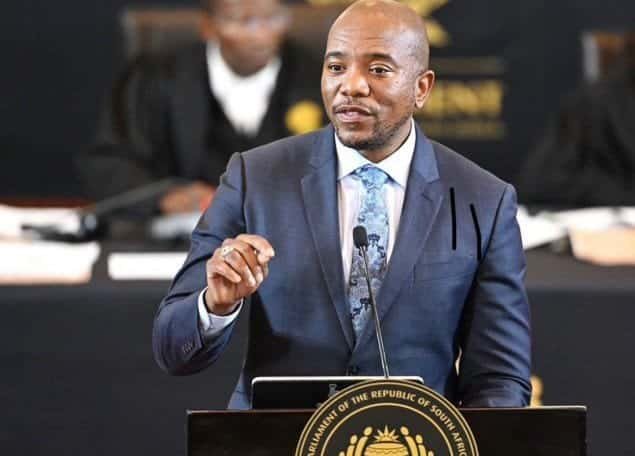
The alarming ratio has been highlighted by Standing Committee on Appropriations chairperson Dr Mmusi Maimane on Tuesday, following the discovery of the bodies of nine women in Kempton Park and other parts of Ekurhuleni.
Maimane said the figures raise questions about whether the South African Police Service (SAPS) has sufficient resources and personnel to prevent violent crime and provide effective protection to vulnerable communities.
This is despite SAPS receiving about R127 billion for the 2026/27 financial year.
“We will examine whether sufficient funding has been allocated to respond effectively to gender-based violence,” Maimane said.
South Africa’s policing capacity has been a longstanding concern. Government data previously showed the ratio deteriorating from about 1:353 in 2014 to 1:427 in 2023.
The Presidency has also referenced a United Nations-suggested ratio of one police officer for every 220 people.
SAPS’s latest annual report, however, recorded a different ratio of 1:406 as at 31 March 2025, based on its establishment and the 2024 mid-year population estimate.
The discrepancy in reported ratios underscores the importance of Parliament examining not only the size of the police budget, but also how many officers are actually available for frontline policing.
Maimane said the committee would invite the Minister of Social Development, Dina Pule, to appear before it and engage the acting Minister of Police Firoz Cachalia on the planning and funding required to tackle GBV.
He said government must demonstrate that resources are being translated into effective prevention, visible policing, victim support and prosecutions.
“We need to bring the relevant departments before the committee to determine whether adequate resources have been made available and whether those resources are being used effectively,” he said.
The scrutiny comes after President Cyril Ramaphosa declared GBV and femicide a national disaster in November 2025, placing further pressure on government to demonstrate measurable progress.
Maimane said tackling GBV could not be reduced to public statements, insisting that government must fund prevention, policing, victim support, prosecution and community-based programmes.
The committee said it will also write to relevant National Assembly committees to ensure that GBV and its funding requirements remain on Parliament’s agenda.
“Ultimately, the committee seeks to establish a clear way forward that ensures funding follows function and strengthens accountability,” Maimane said.