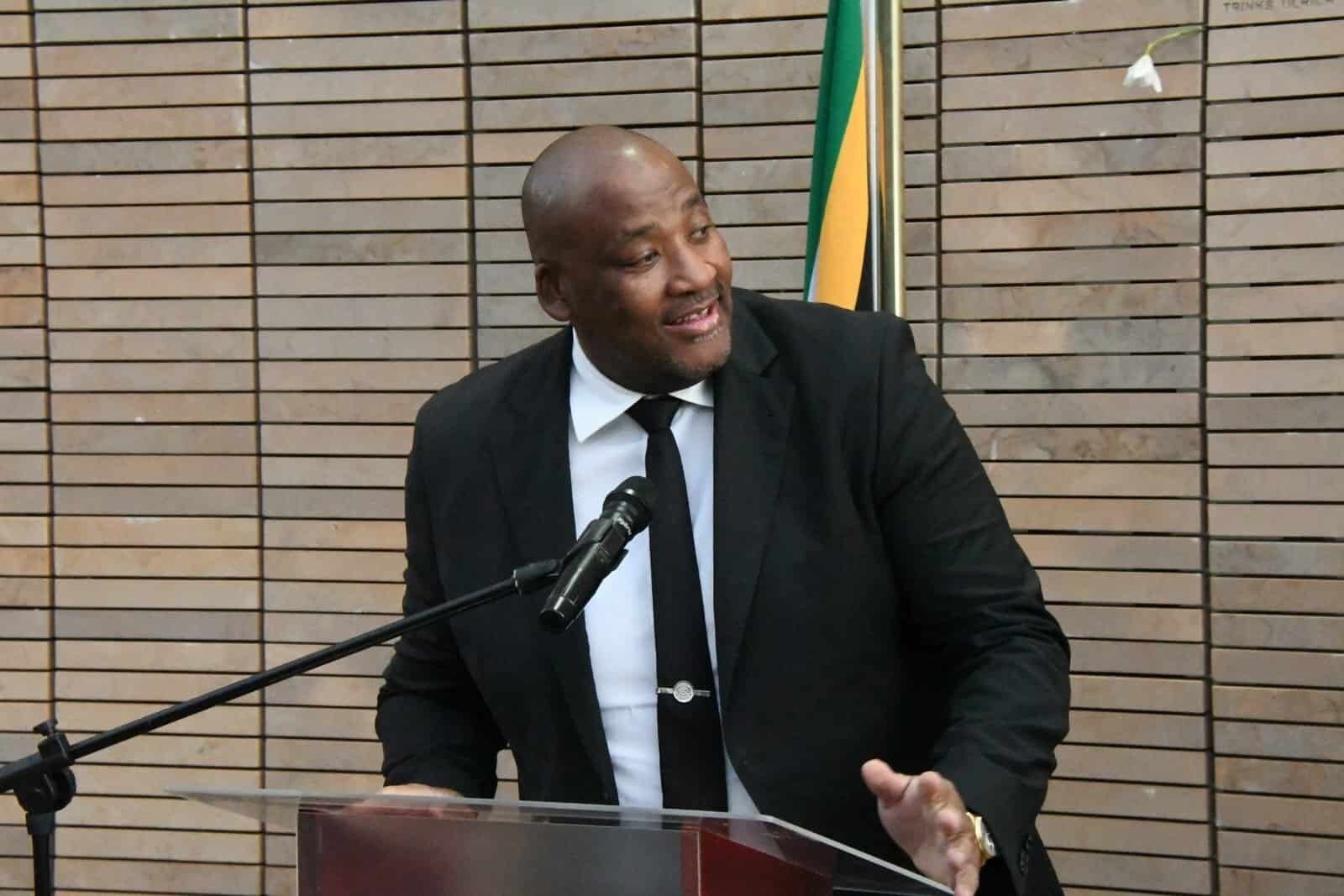
Parliament’s Joint Committee on Ethics and Members’ Interests has ruled that it will not investigate Sport, Arts and Culture Minister Gayton McKenzie over decade-old tweets containing the K-word – but political and public pressure for his removal continues to mount.
In a decision announced on Tuesday, the committee concluded that the remarks, which resurfaced earlier this month, predated McKenzie’s swearing-in as a Member of Parliament on 14 June 2024 and therefore fell outside its jurisdiction.
“The Code of Ethical Conduct does not allow us to act retrospectively on matters that occurred before a member was sworn in,” said committee co-chairperson Bheki Nkosi. “This does not prevent other institutions from investigating, nor does it shield a member from political consequences.”
The ruling follows a formal complaint lodged on Sunday, 10 August 2025, by the African Transformation Movement (ATM), which accused McKenzie of bringing Parliament into disrepute and called for “appropriate consequences” over what it described as “unacceptable racial slurs.”
ActionSA has lodged a similar complaint with the South African Human Rights Commission (SAHRC), which met on Monday to consider its next steps. SAHRC spokesperson Wisani Baloyi told African Times on Tuesday: “We are finalising the statement. It should be out very soon.”
On Tuesday, 12 August, African Times reported under the headline “Gayton McKenzie Digs In on Twitter Defence as Pressure Mounts over Racism Allegations” and that political parties, civil society organisations and ordinary South Africans were intensifying calls for the Minister’s dismissal.
That report detailed how McKenzie had reposted the controversial tweets on X (formerly Twitter) in an attempt to defend himself – insisting they had been taken out of context – but critics argued the move only worsened the backlash.
African Times also noted that the Democratic Alliance’s Renaldo Gouws had been swiftly removed from his position following a racism scandal, raising questions over why McKenzie’s case was being treated differently.
At the time, opposition parties including the ATM, the Economic Freedom Fighters (EFF) and ActionSA demanded that President Cyril Ramaphosa fire McKenzie, arguing that keeping him in Cabinet undermined government’s stated commitment to combat racism.
Reacting to the Ethics Committee’s latest ruling, ATM leader Vuyo Zungula accused Parliament of “hiding behind technicalities.”
“The principle is simple – whether you said it yesterday or ten years ago, racism has no place in leadership. Parliament’s failure to act sends the wrong message,” he told African Times.
EFF spokesperson Leigh-Ann Mathys repeated the party’s call for McKenzie’s immediate dismissal, saying Ramaphosa could not claim moral authority while keeping him in office.
ActionSA leader Herman Mashaba said the SAHRC complaint was now “more important than ever.”
“If Parliament will not act, then the human rights framework must,” he said.
The uMkhonto weSizwe (MK) Party accused Parliament of protecting political elites. “Ordinary South Africans have been fired and even prosecuted for less,” said MK spokesperson Nhlamulo Ndhlela.
Despite the uproar, McKenzie has refused to back down. This mirrors the defiance he displayed in African Times’ 12 August report, where he dismissed calls for his resignation and insisted his record of service proved he was not a racist.
Social media reaction to the Ethics Committee’s decision was sharply divided. Supporters of McKenzie claimed the matter was a politically motivated attempt to weaken him and his party, the Patriotic Alliance, while critics said the decision showed how easily leaders could escape accountability for past actions.
The SAHRC’s forthcoming decision will now be the key test in the case. The commission has previously taken strong action against public figures accused of racial slurs. In the Gouws case, it issued a condemnation within days and opened an investigation that contributed to his removal from office.
Sources close to the SAHRC told African Times the commissioners on Monday discussed the age of McKenzie’s tweets, the public interest in the case, and whether they amounted to hate speech under the Equality Act.
If the SAHRC finds the comments to be hate speech or unfair discrimination, it could lead to a legal process and significantly increase pressure on Ramaphosa to act.
One Political analyst said Ramaphosa’s decision on McKenzie would be shaped by political realities.
“The Patriotic Alliance is a crucial coalition partner in municipalities, especially in Gauteng. Removing McKenzie could destabilise these coalitions. The President has to weigh that against the public outcry,” said the analyst.
However, he warned that keeping McKenzie risked damaging government credibility. “If there’s one standard for councillors and another for ministers, it erodes trust,” he added.
With Parliament out of the picture, the SAHRC’s decision will be pivotal. Baloyi confirmed the commission’s statement would be released “very soon,” possibly within the next 48 hours.
Until then, McKenzie remains in his ministerial seat, shielded by Parliament’s ruling but under intense public scrutiny.