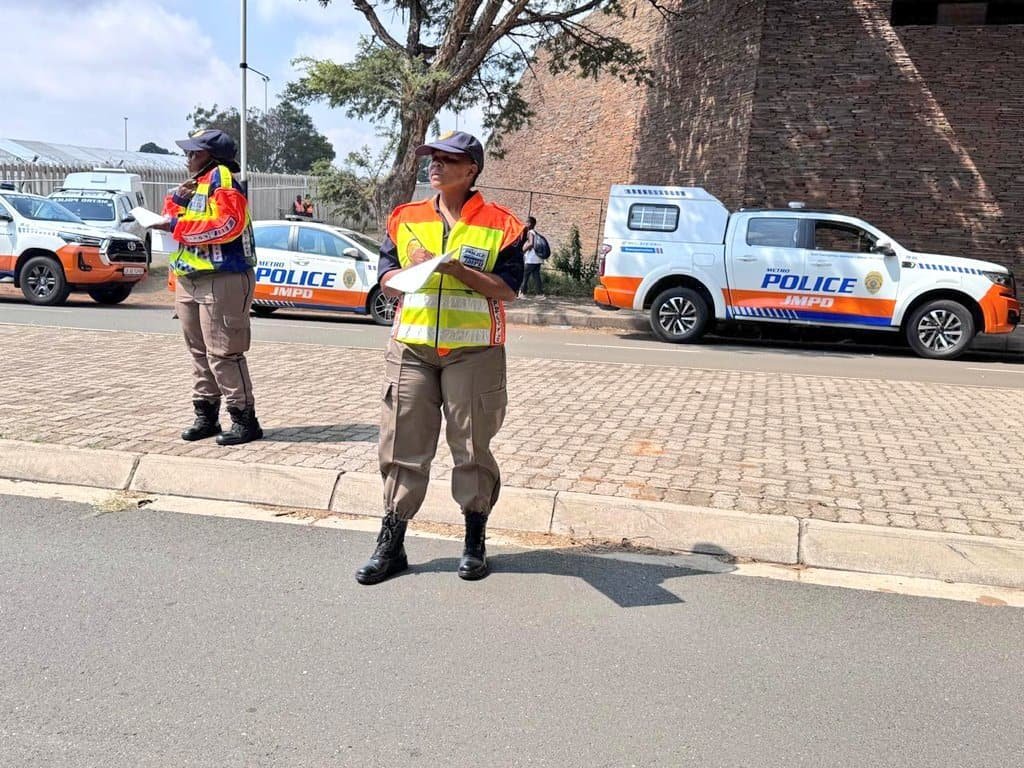
Law enforcement authorities across South Africa are intensifying road safety operations ahead of the Freedom Day and Workers’ Day long weekends, warning that increased traffic volumes and risky behaviour could reverse recent gains in reducing road fatalities.
The Johannesburg Metropolitan Police Department (JMPD) says it will deploy additional officers across Johannesburg, with a particular focus on pedestrian safety as fatalities involving people on foot continue to account for a significant share of deaths on the city’s roads.
JMPD spokesperson Xolani Fihla said while overall road fatalities have declined in recent years, pedestrian deaths remain a persistent concern.
“As traffic volumes increase over the long weekend, we are urging both motorists and pedestrians to prioritise safety. One life lost is one too many,” Fihla said.
The department has identified sections of the N12 freeway near Eldorado Park and the M1 in the Booysens area as high-risk zones, where pedestrians frequently attempt to cross high-speed roads, often with fatal consequences.
Authorities warned that walking on freeways is illegal and extremely dangerous, urging pedestrians to use designated crossings, remain visible in low-light conditions, and avoid distractions or alcohol when near traffic.
Motorists have also been urged to reduce speed, remain alert, and anticipate unexpected pedestrian movement, particularly in known hotspots.
The JMPD said it would increase enforcement visibility in these areas, including engaging with pedestrians found in restricted zones and removing them from danger.
The heightened enforcement in Gauteng comes as provinces brace for a surge in interprovincial travel linked to holiday events, sporting fixtures and public gatherings.
In Limpopo, the Limpopo Department of Transport and Community Safety has activated its “Operation Arrive Alive” campaign, which will run from 25 April to 5 May.
Limpopo MEC for Transport Violet Mathye said the province is aiming to build on a reported 24.7% decrease in road fatalities recorded during the recent Easter period.
“We turned the corner at Easter. We must not slide back. These holidays must be celebrated, not mourned,” Mathye said.
The province expects heavy traffic on major routes, including the N1, R101, R37, R81, R71, N11, R524, R518 and R33, with increased movement driven by events such as Freedom Day celebrations, Workers’ Day gatherings, and the Soweto Derby, which is expected to draw supporters travelling between provinces.
Authorities also flagged risks associated with peak wedding season travel, particularly late-night driving and alcohol consumption.
According to the department, Limpopo — together with Gauteng, KwaZulu-Natal, Western Cape and Eastern Cape — accounts for the majority of road crashes and fatalities nationally.
Several roads in Limpopo have been identified as pedestrian hotspots, including the R71 in Mankweng, the R37 in Tubatse and Mecklenburg, and the R524 in Thohoyandou, where a high proportion of crashes involve pedestrians.
Law enforcement operations will include 24-hour roadblocks, vehicle checks, fatigue management interventions and targeted enforcement on public transport vehicles, particularly minibuses travelling to major events.
Officials said officers would be deployed on foot and in vehicles, with additional measures such as loudhailers to warn pedestrians in high-risk areas.
“If you speed through a village, you will be arrested. If you walk drunk on these roads, we will remove you for your own safety,” Mathye said.
Authorities have also emphasised the importance of driver responsibility, warning against speeding, drunk driving, overloading and fatigue.
The coordinated national approach reflects ongoing concerns about road safety during peak travel periods, when increased traffic volumes and behavioural risks often lead to spikes in accidents.
Officials say the focus will remain on prevention, visibility and enforcement to ensure that road users reach their destinations safely.
As the long weekend approaches, the message from authorities is consistent: compliance with road rules and responsible behaviour are critical to avoiding preventable deaths.