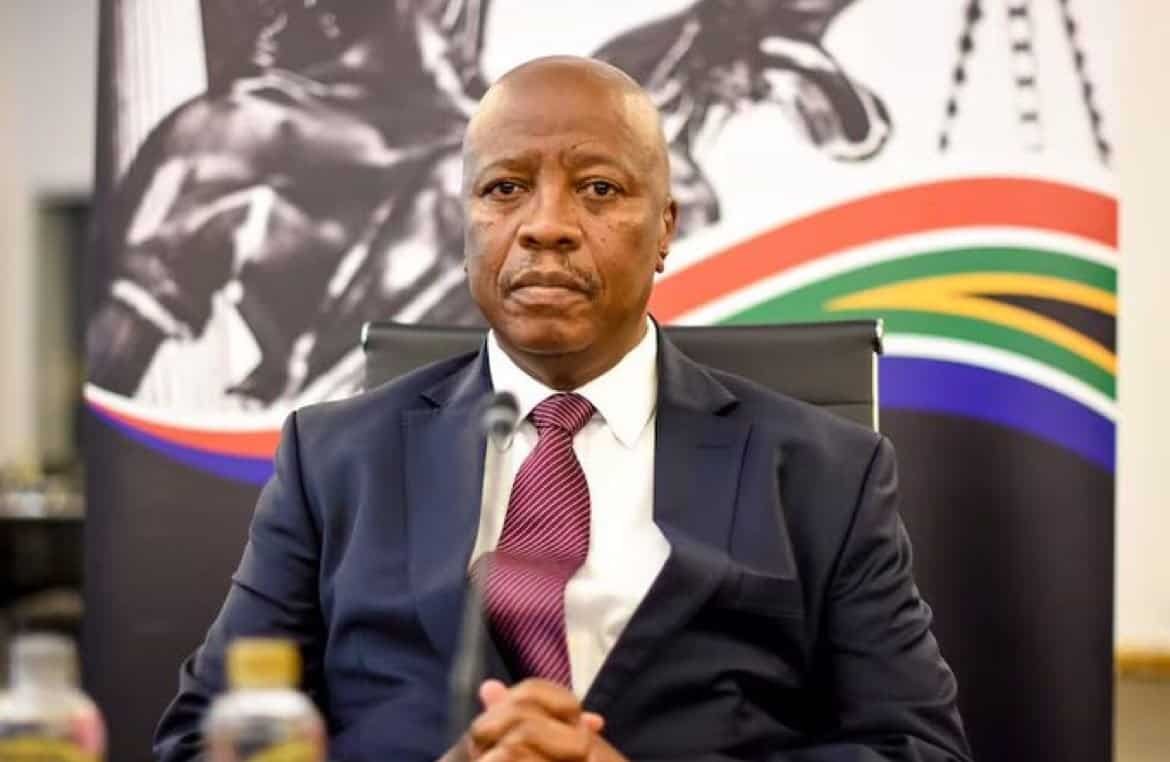
President Cyril Ramaphosa has appointed Aubrey Ledwaba as the new Judge President of the Gauteng Division of the High Court, elevating one of the judiciary’s most experienced figures to lead the country’s busiest court division amid renewed scrutiny over his past rulings and allegations raised against him.
The appointment, announced by presidential spokesperson Vincent Magwenya, takes effect on 15 May 2026 and forms part of a broader set of judicial appointments aimed at strengthening court capacity across South Africa.
Ledwaba’s elevation marks the culmination of a legal career spanning more than four decades. Born in Pretoria in 1962, he matriculated at Mamelodi High School before obtaining a BProc degree from the University of the North in 1983. He began his legal career as a public prosecutor before completing his articles and being admitted as an attorney in 1986.
For nearly two decades, Ledwaba operated a private legal practice in Gauteng, steadily building his profile within the legal fraternity. His rise accelerated in the early 2000s when he was appointed as a commissioner in the Small Claims Court and later served on the Magistrates Commission.
In 2005, former president Thabo Mbeki appointed him as a judge of the then Transvaal High Court. His influence within the judiciary continued to grow, and in 2013, former president Jacob Zuma appointed him Deputy Judge President of the Gauteng Division.
Over the years, Ledwaba became deeply involved in judicial administration, including leadership roles in case-flow management structures within the Office of the Chief Justice. He also served as chairperson of the Magistrates Commission from 2019 and acted in higher courts, including the Constitutional Court and the Supreme Court of Appeal.
During his stint as an acting Constitutional Court judge in 2019, Ledwaba authored a unanimous judgment declaring parts of the apartheid-era Intimidation Act unconstitutional, a ruling praised by legal commentators at the time for advancing constitutional protections.
But despite his extensive judicial résumé, Ledwaba’s appointment as Gauteng Judge President has reignited controversy over both his judicial decisions and allegations that surfaced during the Madlanga Commission of Inquiry.
One of the most contentious episodes in Ledwaba’s career came in 2019 during litigation linked to the CR17 campaign funding saga. At the height of investigations surrounding President Ramaphosa’s ANC presidential campaign finances, Ledwaba controversially ordered the sealing of CR17 bank statements.
Critics argued the decision amounted to an abuse of judicial process that shielded potentially damaging information from public scrutiny. Supporters, however, maintained the order was procedural and legally justified within the context of the case before the court.
The CR17 matter later became one of the most politically explosive legal battles of Ramaphosa’s presidency, feeding allegations from opponents that state institutions were being used to protect politically connected individuals.
More recently, Ledwaba faced tough questioning during interviews before the Judicial Service Commission (JSC) after testimony at the Madlanga Commission implicated him in allegations of receiving a R2.5 million bribe connected to a bail application involving alleged underworld figure Katiso “KT” Molefe.
Ledwaba denied the allegations, dismissing them as hearsay and insisting no evidence had been presented proving wrongdoing on his part.
Chief Justice Mandisa Maya reportedly told Ledwaba during the JSC interview process that his candidacy was “shrouded by a dark cloud”, referencing the seriousness of the allegations hanging over him. Despite this, the commission ultimately recommended him for the influential post.
Judicial monitoring organisation Judges Matter defended the recommendation. Researcher Mbekezeli Benjamin described Ledwaba as a seasoned judicial figure capable of bringing stability and continuity to the Gauteng bench, saying his institutional knowledge made him well positioned to assume the role immediately.
The appointment has nevertheless sparked fierce reaction on social media platform X, where critics accused Ramaphosa of promoting politically connected individuals despite unresolved controversy.
One user wrote that Ramaphosa had appointed Ledwaba “despite serious allegations” raised at the Madlanga Commission, while another claimed the judge was “closer to Ramaphosa’s skeletons” because of his involvement in sealing the CR17 bank statements.
A third social media user compared the appointment to apartheid-era strategies of placing loyalists in key institutions to preserve political protection networks.
Supporters of Ledwaba, however, argue that no formal findings of corruption or misconduct have been made against him and that the Judicial Service Commission thoroughly interrogated the allegations before endorsing his appointment.
The Gauteng Division of the High Court remains South Africa’s busiest and most politically significant court division, handling many of the country’s most sensitive constitutional, commercial and corruption-related cases.
Ledwaba now assumes leadership of a judiciary under increasing public scrutiny, with his appointment likely to remain a focal point in debates over judicial independence, accountability and political influence within South Africa’s legal system.