The Pretoria High Court has ruled that the body of former Zambian President Edgar Lungu, who died earlier this year in South Africa, must be repatriated to Zambia for a state funeral at Embassy Park in Lusaka, putting an end to weeks of legal back-and-forth between the Zambian government and Lungu’s family.
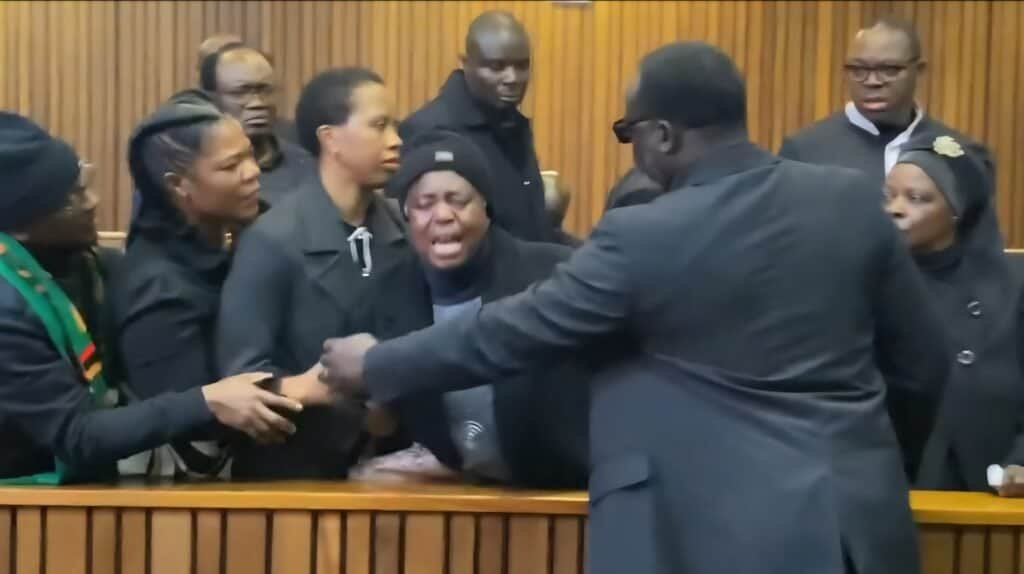
Lungu’s sister, Bertha, cried loudly in the court after the court ruling. She says, “Hichilema’s government wants to take her brother’s body to perform rituals”.
The judgment, delivered by Deputy Judge President Aubrey Ledwaba, orders the handover of Lungu’s remains so that the late head of state can be buried in accordance with Zambia’s official state protocol.
“It is in the interest of justice, public dignity, and national order that the body of a former President be returned to his country for burial,” said Judge Ledwaba. “There is no lawful basis to delay or obstruct the return of Mr Lungu’s remains.”
The court case was triggered by a dispute between Lungu’s family and the Zambian authorities. While the Zambian government pushed for his repatriation and state burial, Lungu’s family had resisted, allegedly fearing political persecution, continued scrutiny, and a lack of trust in the authorities.
In a letter seen by African Times earlier this year, VFV Attorneys, acting for the Zambian state, described the issue as urgent. They sought access to the funeral parlour in South Africa where Lungu’s body was being kept, in order to identify and authenticate the body before transporting it back to Lusaka.
The attorneys stressed that the process would be done respectfully and that the presence of Lungu’s family would be welcomed during identification. However, they also warned that continued resistance from the family would force the Zambian state to seek relief from the court – which they ultimately did.
“We submit that this process will not cause any harm or prejudice to the family. It is a necessary and respectful step to bring certainty to a matter of public and personal importance,” the letter said.
Edgar Lungu served as Zambia’s president from 2015 until 2021, when he lost power to current president Hakainde Hichilema. His presidency, once hailed as a continuation of Zambia’s democratic tradition, became marred by growing allegations of corruption, abuse of state resources, and authoritarian tactics.
Following his fall from power, several close allies, including his wife, Esther Lungu, became the subject of high-profile corruption investigations involving millions of dollars allegedly looted from state coffers. The Zambian Anti-Corruption Commission has issued multiple warrants and asset forfeiture notices connected to the Lungu family.
In this context, some critics say the legal push to control the repatriation of Lungu’s body was not just about honouring a former head of state, but also about reclaiming political ground—and public memory.
The court’s decision has stirred heated reactions across southern Africa. On social media platform X (formerly Twitter), users expressed both outrage and sympathy.
One user, @Yknpt, wrote:
“Let him go & be buried in a country he failed. These cruel African leaders should learn. You can’t cheat your citizens & then go die in luxury abroad!”
Others defended the late president. Political analyst Sishuwa Sishuwa, a vocal critic of Hichilema’s administration, posted:
“They took everything away from Edgar Lungu when he was alive. Now they want to take his body from the family. The frenzy to pursue him into the grave is disturbing.”
Another user, @KeepGoing, struck a conciliatory tone:
“Even without knowing all the details, it just makes sense that a former head of state be laid to rest on home soil, where his story began and ended.”
The ruling brings legal clarity to an emotionally and politically charged issue. Judge Ledwaba’s judgment is being seen by legal observers as a balancing act between state protocol and family wishes, while reinforcing South Africa’s role in facilitating lawful international repatriation.
It is now expected that Zambian officials, in coordination with South African authorities, will finalise logistical arrangements to transport the body back to Lusaka, where preparations are already underway for a state funeral at Embassy Park, the resting place of former Zambian presidents.
In simple terms, this court case was about whether the body of Zambia’s late president, Edgar Lungu, should be buried in South Africa or sent home to Zambia. His family didn’t want to send him back right away—possibly because of political tensions and corruption cases involving them.
But the Pretoria High Court said that as a former president, Lungu deserves to be buried in Zambia and that the South African government must allow the body to be returned. The judge said it’s about respecting the public and national traditions, not just family wishes.
Now, Zambian officials will prepare a state funeral to honour him in Lusaka—even as debates about his legacy continue to divide opinion across the continent