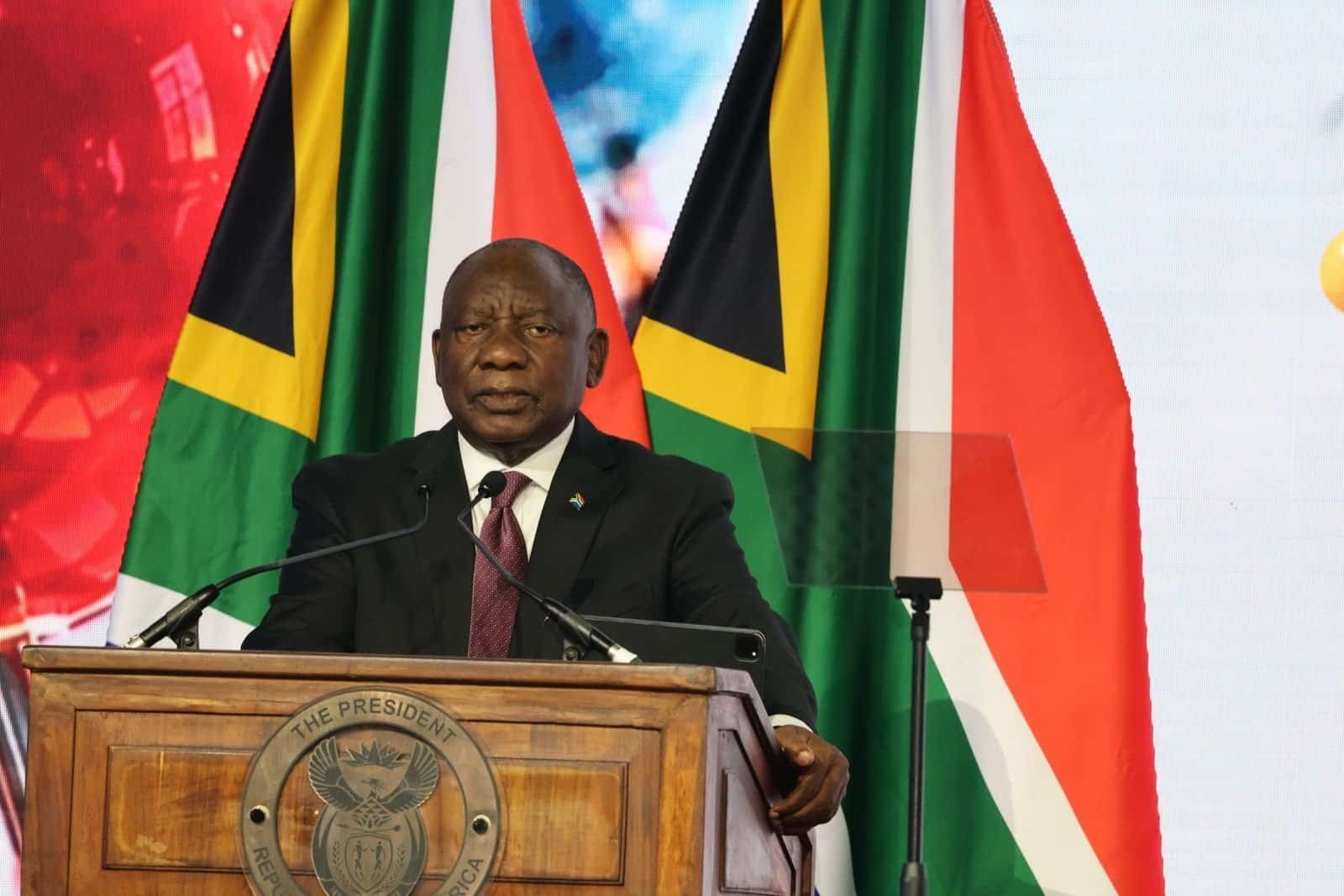
President Cyril Ramaphosa has challenged South African employers to stop shutting young people out of the job market because they lack work experience, warning that the country cannot afford to waste the potential of a generation desperate for opportunities.
Addressing the SA Youth National Leadership Convening at the Galleria Conference Centre in Sandton on Thursday, Ramaphosa acknowledged the frustration of young people who submit countless job applications without receiving responses, as well as graduates whose qualifications have failed to open doors to employment.
Behind every unemployed young person, he said, was a story of hopes and aspirations left unrealised.
It could be a young woman who has completed her studies but cannot find her first job, a young man who has applied for numerous positions without success, or an aspiring entrepreneur whose business idea remains unrealised because of a lack of funding and support.
“These are not simply statistics. These are the lives, hopes and aspirations of our young people,” Ramaphosa said.
His remarks highlighted a familiar predicament facing many young South Africans: employers demand experience, but young people cannot gain that experience without being given an opportunity to work.
“We must stop treating a lack of experience as a lack of ability,” he told business leaders.
“Let us recognise potential, aptitude, determination and the willingness to learn.”
Ramaphosa urged companies to reconsider recruitment practices that place previous employment experience above a young person’s potential, arguing that workplaces must become more willing to train, mentor and develop inexperienced workers.
For young people trying to enter the labour market, the first opportunity can determine whether years of education and training translate into a sustainable livelihood.
The president said employers should create more entry-level positions and workplace learning opportunities, allowing young people to demonstrate their abilities rather than remain trapped outside the economy.
“This is not an appeal for charity. It is an appeal for investment in the future of our economy,” he said.
South Africa’s youth unemployment crisis remains a major challenge, despite government programmes aimed at connecting young people with training, workplace experience and employment opportunities.
Ramaphosa acknowledged that existing interventions had not done enough to ensure that young people could move from education into lasting employment.
He said the country needed to rethink how it prepared young people for the world of work, particularly as technological innovation, artificial intelligence and the transition to cleaner energy reshape the economy.
Young people, he argued, should not be spectators to these changes but active participants in developing new industries and creating jobs.
The president called for stronger links between educational institutions, training providers and employers to ensure that the skills young people acquire correspond with actual opportunities in the economy.
He also highlighted the role of technical and vocational education and training colleges, saying South Africa needed skilled artisans, electricians, mechanics, technicians and agricultural specialists alongside university graduates.
Not every young person needed a university degree to build a successful future, he said, urging greater recognition of vocational and technical careers.
From temporary work to lasting livelihoods
Ramaphosa said public employment programmes had provided young people with income, practical experience and opportunities to contribute to their communities.
Through initiatives supporting education, food security, community safety and environmental protection, participants had gained skills while performing socially valuable work.
However, he cautioned that temporary employment could not be the ultimate destination.
The government needed to ensure that these programmes became stepping stones to permanent jobs, further training or entrepreneurship.
“Our objective cannot simply be to place young people in temporary programmes. It must be to create pathways into sustainable livelihoods,” he said.
The president also called for greater support for young entrepreneurs, particularly those operating in townships and rural communities.
He said promising businesses often struggled to survive because they could not access finance, customers, markets and business development support.
Established companies, he urged, should open their supply chains to youth-owned enterprises, giving emerging businesses opportunities to secure contracts and demonstrate their capabilities.
“A young entrepreneur does not always need a grant. Sometimes what that entrepreneur needs most is a customer. A contract. A market,” Ramaphosa said.
Tourism, agriculture, manufacturing, infrastructure, digital services, the green economy and the creative industries were among the sectors he identified as having potential to create opportunities for young people.
Promises must translate into opportunities
The convening brought together government, business, labour and civil society representatives to discuss ways of tackling youth unemployment through stronger partnerships.
Ramaphosa said the responsibility could not rest with government alone. Businesses needed to invest and recruit, educational institutions needed to provide relevant skills, and other social partners needed to help make opportunities accessible.
He called for clear commitments, defined responsibilities and mechanisms to measure progress, warning that strategies and announcements would mean little without effective implementation.
He said young people were not asking for special treatment but for a fair chance to work, earn a living and contribute to the country’s development.
“They are not merely beneficiaries of our programmes. They are partners in the development of our nation,” he said.
For a generation facing an uncertain economic future, the president’s challenge to employers was clear: opening the door to someone without work experience could be the beginning of a career, a business or a more secure future.
Ramaphosa said South Africa should ultimately be judged not by the promises made at meetings but by the opportunities created for young people.
“Let us not be remembered for the speeches we made or the declarations we adopted. Let us be remembered for the doors we opened,” he said.
“The future of our young people cannot wait. And the future of our country cannot wait.”