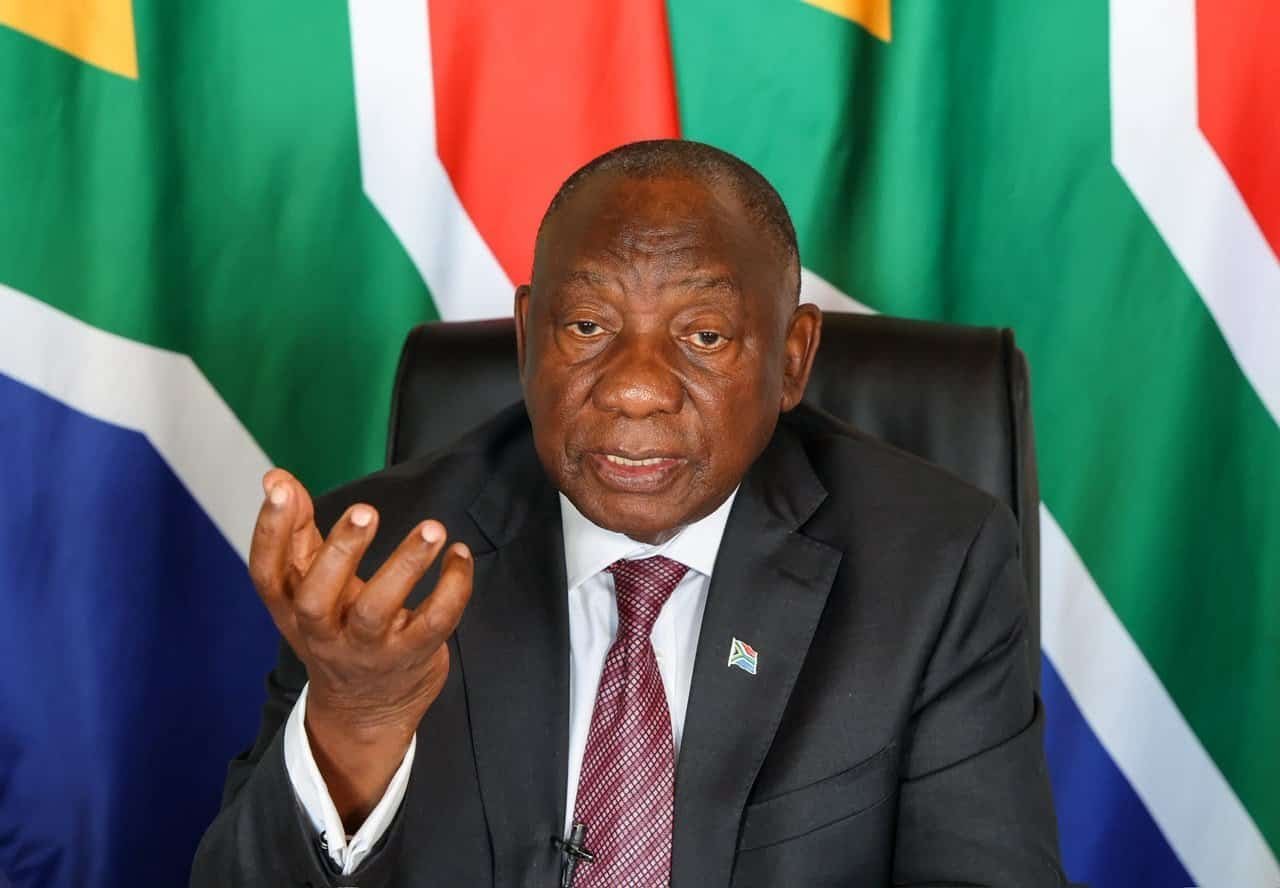
President Cyril Ramaphosa has defended government’s approach to migration, water shortages, municipal failures and illegal mining, telling the National Assembly that South Africa is taking steps to address some of the country’s most pressing challenges.
Responding to questions from MPs on Tuesday, Ramaphosa said government had firmly rejected xenophobia, Afrophobia, vigilantism and discrimination against migrants, while arguing that migration challenges should be addressed through the rule of law and stronger state institutions.
The issue of anti migrant protests was raised by EFF leader Julius Malema, who asked what medium- to long-term interventions had been put in place to restore South Africa’s credibility as a Pan-African voice.
Ramaphosa said South Africa remained a respected member of the African community of nations and a principled Pan African actor.
He said government had reinforced its commitment to Pan Africanism through cooperation with the Southern African Development Community, African Union and partner states on migration governance, regional integration and burden sharing.
He said government had also engaged directly with several Heads of State and Government to explain South Africa’s position.
“Last week, at the 46th Ordinary SADC Summit, hosted in eThekwini, we had the opportunity to brief the leaders of the region on the situation in the country,” Ramaphosa said.
He said the summit had called for coordinated and multidimensional dialogue at the regional level to address the underlying drivers of migration and develop comprehensive and sustainable responses.
Ramaphosa said government’s Comprehensive Approach to Managing Migration emphasised that migration challenges must be dealt with through the rule of law, respect for human dignity and stronger state institutions, rather than unlawful actions targeting foreign nationals.
He said migration governance reforms included strengthening border management, addressing corruption within the immigration system, improving legal migration pathways and implementing the White Paper on Citizenship, Immigration and Refugee Protection.
The President also responded to a question from ANC MP Mdumiseni Ntuli on Madagascar and South Africa’s role as interim chair of SADC.
He said South Africa continued to support Madagascar’s return to constitutional governance through diplomatic engagement, mediation and oversight of its transition process.
This included the deployment of the SADC Panel of Elders, led by former Malawi president Dr Joyce Banda, which had undertaken three missions to Madagascar.
Ramaphosa said SADC had expanded the panel’s mandate to facilitate dialogue, consensus building and reconciliation among key stakeholders.
Approval had also been given for a SADC Liaison Office in Antananarivo to support the implementation of the Programme for the Refoundation of the Republic of Madagascar, electoral reforms and the organisation of a referendum and general elections.
He said the transition needed to remain inclusive, transparent, impartial and time-bound, with the ultimate objective of restoring constitutional governance and establishing a democratically elected government.
The water crisis also came under scrutiny, with DA MP Glynnis Michalakis asking why the National Water Crisis Action Plan would not succeed in restoring reliable water supplies and eradicating sewage pollution.
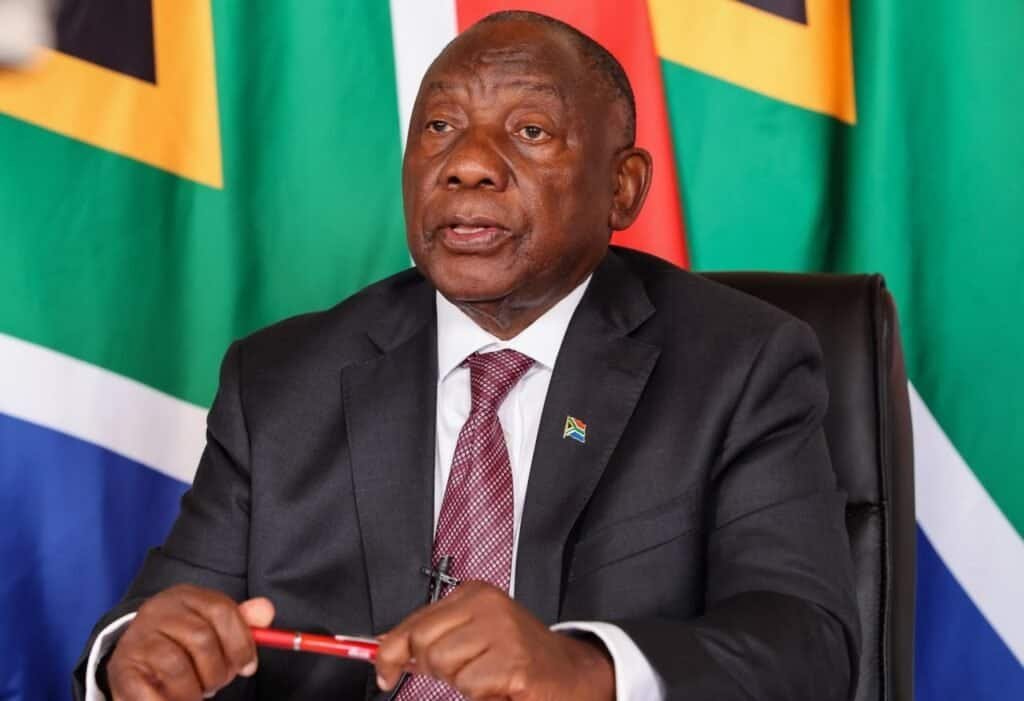
Ramaphosa rejected the suggestion that the plan would fail.
He said government was drawing on its experience in dealing with the electricity crisis, where the Energy Action Plan had brought an end to more than a decade of persistent load shedding.
The same focused and coordinated approach was being applied to the National Water Action Plan, which is overseen by the National Water Crisis Committee.
Ramaphosa said the plan was developed after consultation with municipalities, water boards and relevant departments and was based on an analysis of the root causes of the water crisis at municipal level.
He identified structural problems including the failure in most municipalities to ring-fence revenue from the sale of water and reinvest it into water provision.
He also pointed to the lack of proper separation between water services authorities and water services providers in most municipalities.
Government, he said, was increasing support to struggling municipalities, strengthening interventions in poorly performing municipalities and combating corruption and criminality in the water sector.
This included action against the theft of metal parts for scrap and what he described as the water tanker mafia.
ANC MP Nonceba Gcaleka-Mazibuko asked about reforms aimed at restoring municipal capacity and strengthening accountability.
Ramaphosa said government had focused on building a more capable, professional and developmental local government system through stronger leadership and administration.
He said coordination between the three spheres of government had been improved through measures including the District Development Model, while targeted support had been provided to municipalities facing serious governance and service delivery problems.
Government had also intensified oversight, monitoring and consequence management.
Ramaphosa said a review of the White Paper on Local Government was close to completion and would envisage far-reaching reforms aimed at building stable, capable and accountable municipalities.
On Nelson Mandela Bay, ActionSA MP Athol Trollip asked Ramaphosa about his May 4 comments that Mayor Babalwa Lobishe was doing very well and stabilising the municipality.
Ramaphosa said the comments were made during an ANC National Working Committee oversight visit to the metro, following engagements with regional leadership and site visits to projects.
He said his assessment considered the longstanding challenges in the metro and steps taken by Lobishe and the metro leadership to address them.
However, he acknowledged that government wanted better and faster progress on key issues affecting residents of Gqeberha.
Ramaphosa also provided figures on Operation Prosper, which was announced in his February 12 State of the Nation Address to combat illegal mining.
He said joint operations by the South African Police Service and South African National Defence Force had disrupted illegal mining in the Free State, Gauteng and North West through high visibility policing, vehicle checkpoints and air support.
The operations had resulted in arrests, the dismantling of illegal mining sites and the seizure of firearms, explosives and mining equipment.
According to Ramaphosa, 1,080 people had been arrested, including armed suspects and undocumented miners.
Authorities had seized 19 firearms, more than 2,000 rounds of ammunition and 41 commercial explosives.
They had also confiscated 83 generators, more than 1,000 refining drums, nearly 2,000 kilograms of gold-bearing material and approximately 150 kilograms of gold.
Ramaphosa said the measures had disrupted the operational and financial lifelines of illegal mining networks, while further illegal shaft closures were planned.
He said police and the SANDF would continue securing affected locations through foot patrols, vehicle checkpoints and air-to-ground monitoring.