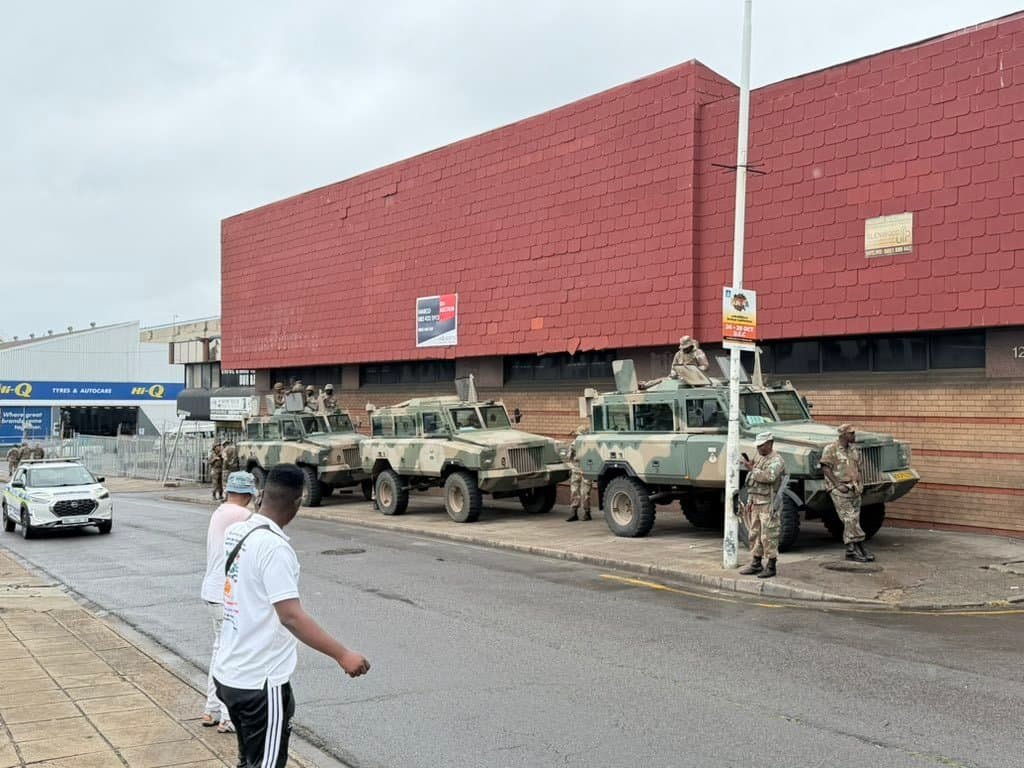
President Cyril Ramaphosa has deployed 510 South African National Defence Force (SANDF) members to KwaZulu-Natal to support police operations amid protests against illegal immigration that have taken place in parts of the province, including Durban.
The deployment, which will cost the government more than R34 million, is intended to assist the South African Police Service (SAPS) in maintaining law and order amid concerns about violent incidents linked to misinformation surrounding a Constitutional Court judgment on the Refugees Act.
According to a statement issued on Tuesday, Ramaphosa informed National Assembly Speaker Thoko Didiza and National Council of Provinces chairperson Refilwe Mtsweni-Tsipane of his decision to deploy the soldiers in support of Operation Prosper.
The deployment, authorised under Section 201(2)(a) of the Constitution, commenced on October 9 and will continue until November 30.
The expected expenditure for the deployment is R34,082,720.
The soldiers will assist police in responding to potential security threats and maintaining public order in the province.
The Presidency said the deployment followed recent violent actions arising from what it described as a campaign of misinformation about the Constitutional Court judgment on the Refugees Act.
The soldiers will remain on standby to support police should further incidents occur.
The deployment comes amid public protests against illegal immigration, with demonstrators raising concerns about the presence of undocumented foreign nationals in South Africa.
The protests have sparked debate about immigration enforcement, public safety and the government’s response to community concerns.
However, the decision to deploy the military has also attracted criticism on social media, with some South Africans questioning the cost of the operation and whether deploying soldiers would address their concerns about illegal immigration.
One X user questioned why the defence force was needed when police were already monitoring the situation.
“I thought the police was already monitoring, now we have the defence force also monitoring. When are they going to start deporting?” the user wrote.
Another user questioned who the soldiers were expected to protect, arguing that the government should engage with protesters rather than resort to what the user viewed as a show of force.
“No citizens and homes have been harmed by protestors. Who is the army protecting with this deployment? The govt must listen instead of threatening us with violence,” the user wrote.
A third user raised concerns about violent crime, referring to the suspected serial killings in Kempton Park and questioning the government’s priorities.
“Meanwhile Kempton park serial killer(s) walks freely amongst us. Isn’t only mere South Africans were killed there. No foreigner,” the user wrote.
The reactions reflect competing public concerns over immigration enforcement, violent crime and the deployment of state security resources.
While the government has linked the deployment to maintaining law and order following violent incidents, the operation has also prompted questions about how authorities intend to address the underlying issues fuelling anti-immigration protests.
The Presidency’s statement did not provide further details about the specific operational arrangements for the soldiers or how the R34-million expenditure would be allocated.
The deployment is scheduled to end on November 30, unless further decisions are taken regarding the military’s continued involvement.