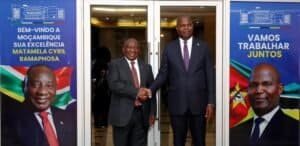
President Cyril Ramaphosa will on Thursday deliver his 10th State of the Nation Address (SONA) to a joint sitting of the National Assembly and the National Council of Provinces at Cape Town City Hall, against a backdrop of deepening socio-economic strain and intensifying political scrutiny.
Presidency said SONA 2026 would outline the government’s programme of action for the coming financial year, reflect on progress made and confront persistent challenges. “The State of the Nation Address is an annual overview delivered by the President to mobilise all sectors of society to secure ongoing development in the country,” said Presidential spokesperson Vincent Magwenya.
Ramaphosa is expected to detail domestic priorities ranging from economic recovery and job creation to infrastructure reform, as well as South Africa’s continental and international relations. The address comes at a pivotal time for the Government of National Unity (GNU), formed after last year’s elections, with opposition parties questioning whether it has delivered tangible change.
Outside Parliament, frustration is mounting. Large parts of Johannesburg and Tshwane have endured prolonged water outages, forcing communities to rely on water tankers. The worsening water crisis — driven by ageing infrastructure, mismanagement and climate pressures — has become a potent symbol of state failure. Analysts say Ramaphosa will face pressure to announce decisive interventions to stabilise water supply systems and prevent a projected national water deficit by 2030.
Economic conditions remain fragile. While the government has pointed to modest growth and improved investor sentiment, unemployment remains stubbornly high, hovering around 32%, with youth unemployment exceeding 60%. Rising living costs and approved electricity tariff hikes of 8.76% for 2026/27 and 8.83% for 2027/28 have further strained households already grappling with stagnant wages.
The African Transformation Movement (ATM) this week accused the GNU of creating “an illusion of progress” and failing to materially improve the lives of the 23.2 million South Africans living below the poverty line. ATM spokesperson Zama Ntshona called for urgent accountability, affordable energy solutions and aggressive job creation measures.
Similarly, the Forum for South Africa (FOSA) said little has changed since the GNU’s formation. “South Africa is collapsing, and leadership has failed,” said national leader Tebogo Mashilompane, citing crime, infrastructure decay and service delivery breakdowns. FOSA also questioned the credibility of SONA, describing it as a costly spectacle disconnected from daily realities.
Crime and the integrity of the criminal justice system are also expected to feature prominently. South Africa’s murder rate remains among the highest globally, while gender-based violence continues to draw widespread condemnation. Civil organisation Action Society warned that the President’s address risks becoming an election-style speech rather than a concrete recovery plan.
“In an election year, we expect a speech aimed at voters,” said Juanita du Preez, the organisation’s national spokesperson. “What South Africa needs, however, is a decisive plan to restore integrity within SAPS, prosecute corrupt officials and eliminate forensic backlogs.”
Energy stability remains another critical issue. Although load shedding has eased compared to previous years, communities continue to experience load reduction and unreliable supply, affecting small businesses and township economies. Opposition groups argue that without consistent electricity and functioning infrastructure, economic reform efforts will falter.
The address also unfolds under the lingering shadow of the Phala Phala controversy, with some critics questioning Ramaphosa’s moral authority. However, the Presidency has maintained that SONA is a constitutional milestone reflecting the resilience of South Africa’s democracy.
Political analysts say Ramaphosa’s challenge will be to strike a balance between acknowledging hardship and projecting stability. The GNU, combining former rivals in a bid to stabilise governance, has been described by supporters as a pragmatic step toward cooperation. Detractors argue it has diluted accountability and slowed reform momentum.
Inside Cape Town City Hall, heightened security and ceremonial pageantry will accompany proceedings. Outside, however, many South Africans will be listening for firm timelines, measurable targets and clear consequences for failure.
With water tankers lining neighbourhood streets, electricity tariffs rising, and unemployment entrenched, SONA 2026 arrives at a moment of acute public anxiety. Whether Ramaphosa’s 10th address can restore confidence in the government’s capacity to deliver remains to be seen.