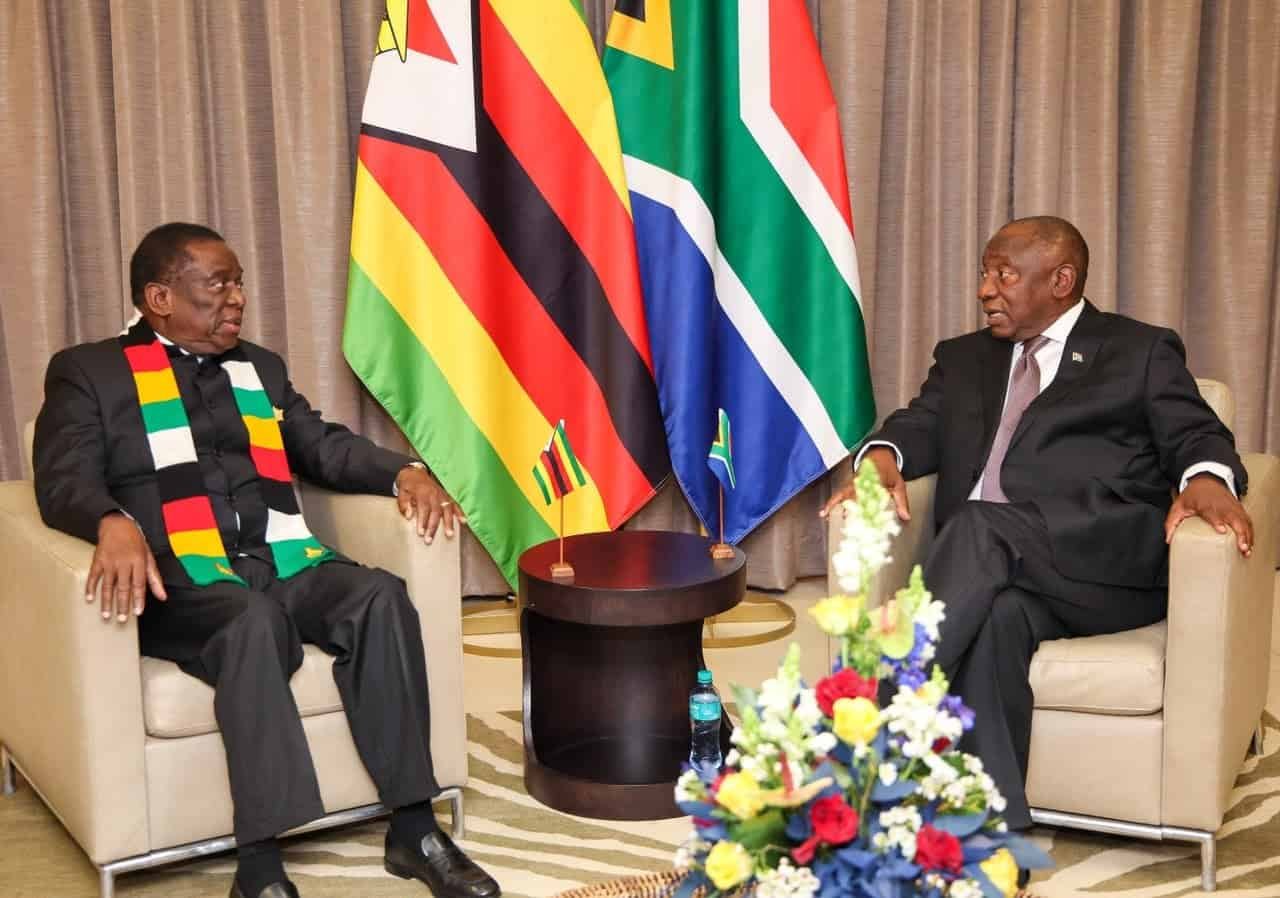
President Cyril Ramaphosa has called for a major expansion and rebalancing of trade with Zimbabwe, saying the two neighbouring countries must turn their historic relationship into jobs, investment and tangible economic opportunities.
Ramaphosa was speaking on Friday at the opening of the fourth session of the South Africa-Zimbabwe Bi-National Commission in Pretoria, where he hosted Zimbabwean President Emmerson Mnangagwa.
The meeting comes as the two countries seek to deepen economic cooperation while addressing long-standing challenges around trade, infrastructure, energy, migration and border management.
Ramaphosa said bilateral trade had almost doubled over the past four years, but warned that the growth had not benefited both countries equally.
“However, there is a significant imbalance in trade between our two countries,” he said, noting that South Africa exports considerably more to Zimbabwe than it imports.
He called for the two countries to use the African Continental Free Trade Area to increase trade while changing its composition so that Zimbabwe and South Africa can both export more manufactured products.
The president said the ministerial report before the BNC would assess progress and identify opportunities in mining, energy, agriculture, transport, logistics and water management.
He also placed infrastructure at the centre of the economic relationship, saying the two countries needed to build the roads, bridges, dams, airports, schools and health facilities required to support economic growth.
South African development finance institutions, including the Development Bank of Southern Africa and the Industrial Development Corporation, could play a role in funding high-impact projects in Zimbabwe, he said.
“These are projects that connect factories and farms to markets. Projects that connect power stations to businesses and homes. That connect dams to taps. That connect countries to their neighbours,” Ramaphosa said.
Mining is another key area.
Ramaphosa pointed to Zimbabwe’s growing production of gold, platinum and critical minerals such as lithium, saying the country was increasingly becoming a global player.
He said South Africa was also expanding exploration and beneficiation and that the two countries should work towards processing minerals locally rather than exporting raw materials.
Energy cooperation is expected to feature prominently, with Ramaphosa highlighting the Southern African Power Pool and its potential to support the generation of clean, affordable and reliable electricity across the region.
Water is also on the bilateral agenda.
Ramaphosa cited the agreement to supply water from Zimbabwe’s Beitbridge Water Works to Musina as an example of practical cooperation that could help address basic needs while strengthening resilience to climate change.
Agriculture and food security were also highlighted, with Ramaphosa calling for greater use of the two countries’ arable land and increased support for communal and commercial farmers.
He referred to Zimbabwe’s agricultural capacity and the need to make farming more productive and resilient as the region confronts climate change and recurring El Niño-related droughts.
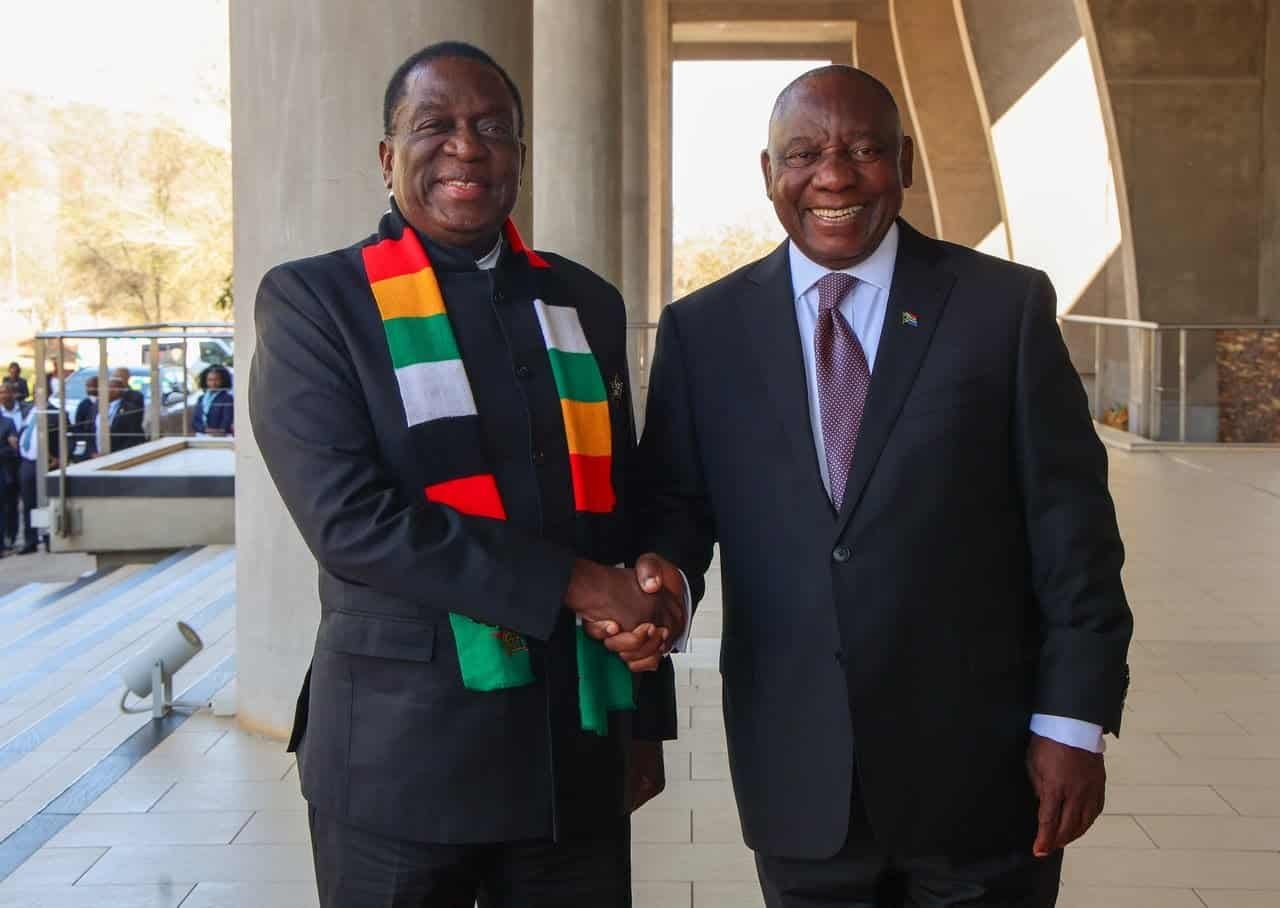
Migration and border management will also require closer cooperation.
Ramaphosa said the movement of people and goods between the two countries needed to be made easier through modernised border facilities and systems, while law enforcement agencies should strengthen their efforts against cross-border crime.
The ministerial segment of the BNC has already identified several projects, including a proposed third Limpopo bridge, the operationalisation of the Beitbridge One Stop Border Post, fertiliser manufacturing, automotive component production and platinum group metals beneficiation.
The broader BNC process has produced more than 33 agreements and memoranda of understanding between the two countries since the mechanism was established in 2015.
The focus on implementation comes as the two governments attempt to move beyond signing agreements and towards projects that can produce measurable economic benefits.
A South Africa-Zimbabwe Business Forum is also being held in Midrand on Friday, bringing together government and business representatives from both countries to identify opportunities to expand trade and investment.
The political relationship also comes amid broader regional concerns.
Ramaphosa expressed concern about instability in eastern Democratic Republic of the Congo, Mozambique’s Cabo Delgado province and Madagascar, as well as conflicts in Sudan, South Sudan and the Sahel.
He said the deteriorating global security environment made dialogue, mediation and peaceful conflict resolution increasingly important.
The president also congratulated Zimbabwe on its election to a non-permanent seat on the United Nations Security Council for the 2027 to 2028 term.
The meeting followed the recent Lake Kariba ferry tragedy, in which dozens of people died. Ramaphosa had previously expressed condolences to Zimbabwe after the disaster.
Beyond the formal agenda, Zimbabwe’s domestic political trajectory remains an important backdrop to Mnangagwa’s engagement with South Africa. Reuters reported in June that Zimbabwe’s Senate had approved constitutional changes that would extend presidential and parliamentary terms from five to seven years, potentially allowing Mnangagwa to remain in office until 2030.
For Ramaphosa, however, the immediate priority is economic.
He said South Africa and Zimbabwe shared a common history and destiny, but stressed that their people expected the BNC to deliver practical results.
“Our people expect that this Bi-National Commission will deliver concrete results,” he said.
The challenge now is whether the agreements and commitments emerging from Pretoria can translate into increased investment, more balanced trade, industrial development and jobs on both sides of the Limpopo.
The BNC is expected to conclude with the signing of agreements and memoranda aimed at expanding cooperation in strategic areas.