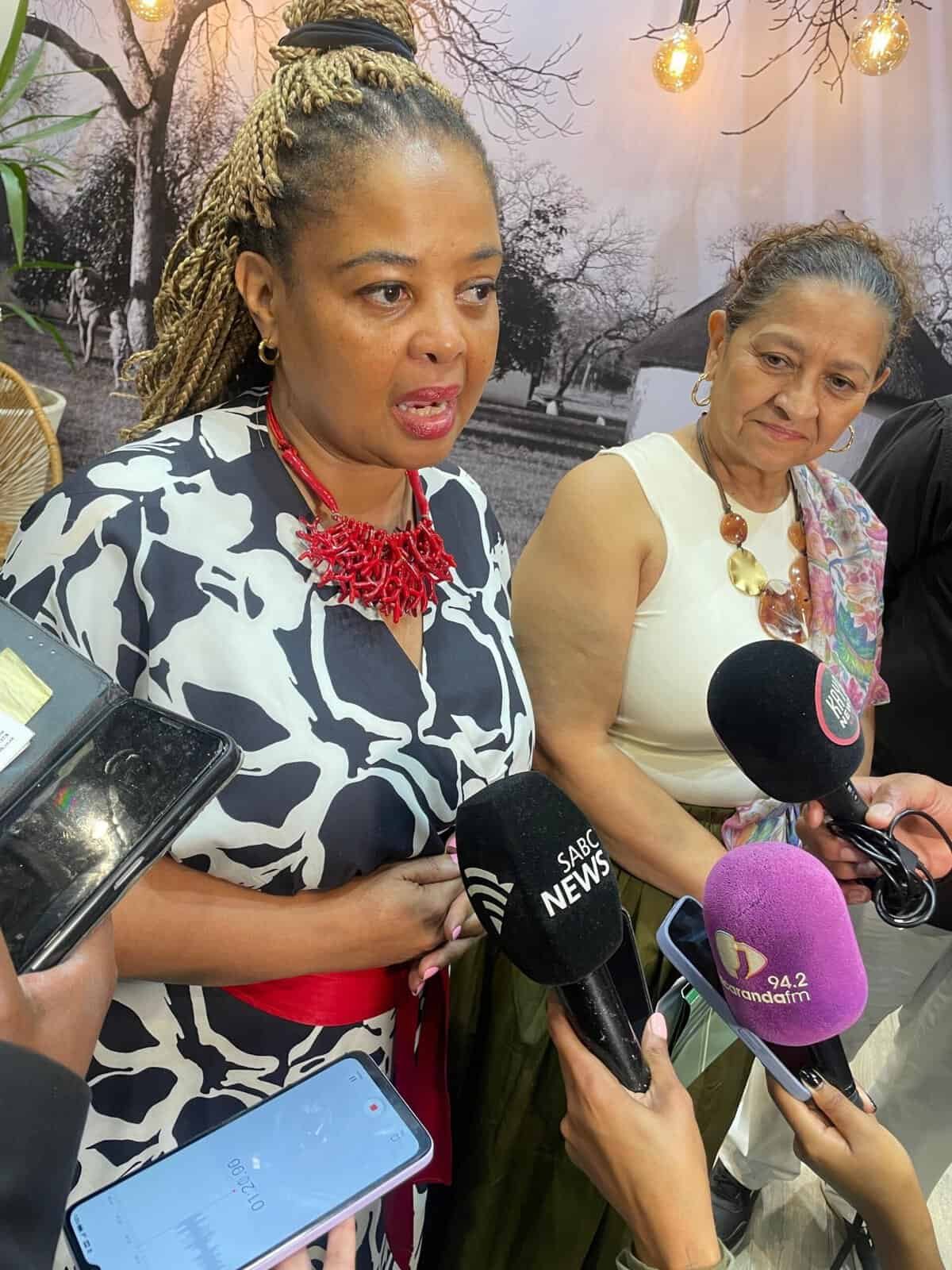
South African National Parks (SANParks) has used Africa’s Travel Indaba 2026 in Durban to celebrate 100 years of the Kruger National Park while positioning conservation and tourism as key drivers of economic growth, community development and climate resilience.
Held at the Inkosi Albert Luthuli International Convention Centre in Durban from 11 to 15 May, the tourism showcase has seen SANParks anchor its participation around the theme “Our Heritage, Our Future”, linking the centenary of the Kruger National Park with the future of sustainable and inclusive conservation.
SANParks said the centenary marks a historic milestone in South Africa’s conservation journey, commemorating 100 years since Kruger was formally proclaimed a national park, while also recognising the establishment of the Sabi Game Reserve in 1898.
Speaking during the event, SANParks chief executive Hapiloe Sello said the centenary was both a celebration and a moment of reflection.
“Kruger National Park’s centenary is both a moment of commemoration and reflection,” said Sello.
“It honours extraordinary conservation achievements, while also acknowledging lessons learned from the painful past of land dispossession and displacements. And now as we look ahead, our focus is firmly on inclusive conservation models that ensure national parks deliver lasting value for both nature and people.”
Sello said Africa’s Travel Indaba remained an important platform to showcase how conservation could contribute to tourism, job creation and economic inclusion across the continent.
As part of its programme, SANParks is hosting its flagship “Conversations About Conservation” dialogue, bringing together tourism leaders, conservation experts, media and business stakeholders to discuss the future of conservation funding, tourism growth and community partnerships.
The organisation has also dedicated half of its exhibition stand to Kruger’s centenary celebrations while showcasing tourism offerings across its network of 21 national parks.
A dedicated Small, Medium and Micro Enterprise support stand is also exhibiting 16 SANParks-supported businesses from communities bordering national parks. The enterprises operate across accommodation, tour guiding, crafts, adventure tourism, hospitality and cultural heritage sectors.
SANParks said the initiative forms part of its Vision 2040 strategy aimed at building a more inclusive conservation economy with strong participation from women-owned, youth-owned and community-owned businesses.
Sello also revealed that SANParks had recorded strong tourism growth in the past financial year, saying visitor numbers had now surpassed pre-pandemic levels.
She said 6.8 million tourists visited SANParks facilities during the financial year ending 31 March 2026.
“It was a very heartening number because it was the first time we had surpassed the 2019 volume as that year was pre-Covid-19, our last normal year in our industry. We believe that we have fully recovered now from the pandemic,” she said.
Sello added that several parks were contributing significantly to SANParks’ revenue generation.
“We run SANParks as a business,” she said.
On climate change and infrastructure damage, Sello said some parks along the Garden Route remained closed following severe flooding earlier this year.
She said SANParks was still recovering from the January floods and was also repairing infrastructure damage in the Kruger National Park as quickly as possible to restore full operations.
Sello further addressed the ongoing challenge of rhino poaching, describing it as a highly organised international criminal activity driven by global demand for rhino horn.
She said SANParks had rhino populations across six national parks, but poaching incidents were largely concentrated in the Kruger National Park because of its size and geographical location along South Africa’s borders with Mozambique and Zimbabwe.
“Kruger National Park has some uniqueness, number one its sheer size of two million hectares. It lies at the border of South Africa and two other countries, so those are some of the inherent characteristics of the park that put it at serious risk,” she said.
Sello said SANParks had significantly increased its investment in technology, including drones and surveillance systems, to combat poaching.
“Technology is very critical. We are beginning to see the results,” she said, adding that arrests of illegal entrants into the park had increased because of enhanced technological monitoring.
SANParks interim board chairperson Beryl Ferguson described Africa’s Travel Indaba as one of the organisation’s most important annual events.
She said SANParks viewed the platform as an opportunity to integrate tourism with conservation efforts.
“Our mandate is conservation and tourism,” Ferguson said.
“If our landscape is going to survive it should be about conservation.”