In the vast plains of Mozambique, where fertile land stretches beyond the horizon and farming remains the heartbeat of millions of households, a quiet revolution is beginning to take shape. Beneath the statistics unveiled this week in Maputo lies a powerful national story — one of immense agricultural potential, persistent rural struggle, and a growing ambition to transform subsistence farming into the engine of economic prosperity.
At the opening of the National Seminar on the Dissemination of Results of the Third Agricultural and Livestock Census (CAP 2023/2024), Mozambique’s Minister of Planning and Development, Salim Valá, delivered a message that may well define the country’s economic direction for decades to come: Mozambique’s future depends on how successfully it modernises its agriculture sector.
The figures presented during the seminar reveal both promise and paradox.
Mozambique currently cultivates more than 6.5 million hectares of land — a significant figure, yet still only 17.8% of the country’s estimated 36 million hectares of arable land. In practical terms, this means that over 80% of Mozambique’s fertile land remains unused.
For a country where agriculture employs the majority of the population and food insecurity continues to affect vulnerable communities, the numbers are striking. They also position Mozambique as one of Africa’s largest untapped agricultural frontiers.
“This means that the future of national economic transformation will continue to be deeply linked to our ability to transform subsistence agriculture into commercial, integrated, resilient agriculture oriented toward agro-industrialisation,” said Salim Valá.
His remarks come at a time when global economic instability, rising fuel prices and climate-related shocks are forcing African governments to rethink food systems and economic resilience.
A Nation of Small Farmers
The census paints a vivid portrait of Mozambique’s rural economy: nearly 5.2 million agricultural holdings spread across the country, with 99.9% classified as small and medium-sized farms.
More revealing still is the scale of fragmentation. Over 84% of farms are smaller than two hectares — tiny plots that often rely on rain-fed production, rudimentary tools and family labour. While these farms sustain millions of households, they also expose structural weaknesses that continue to limit productivity.
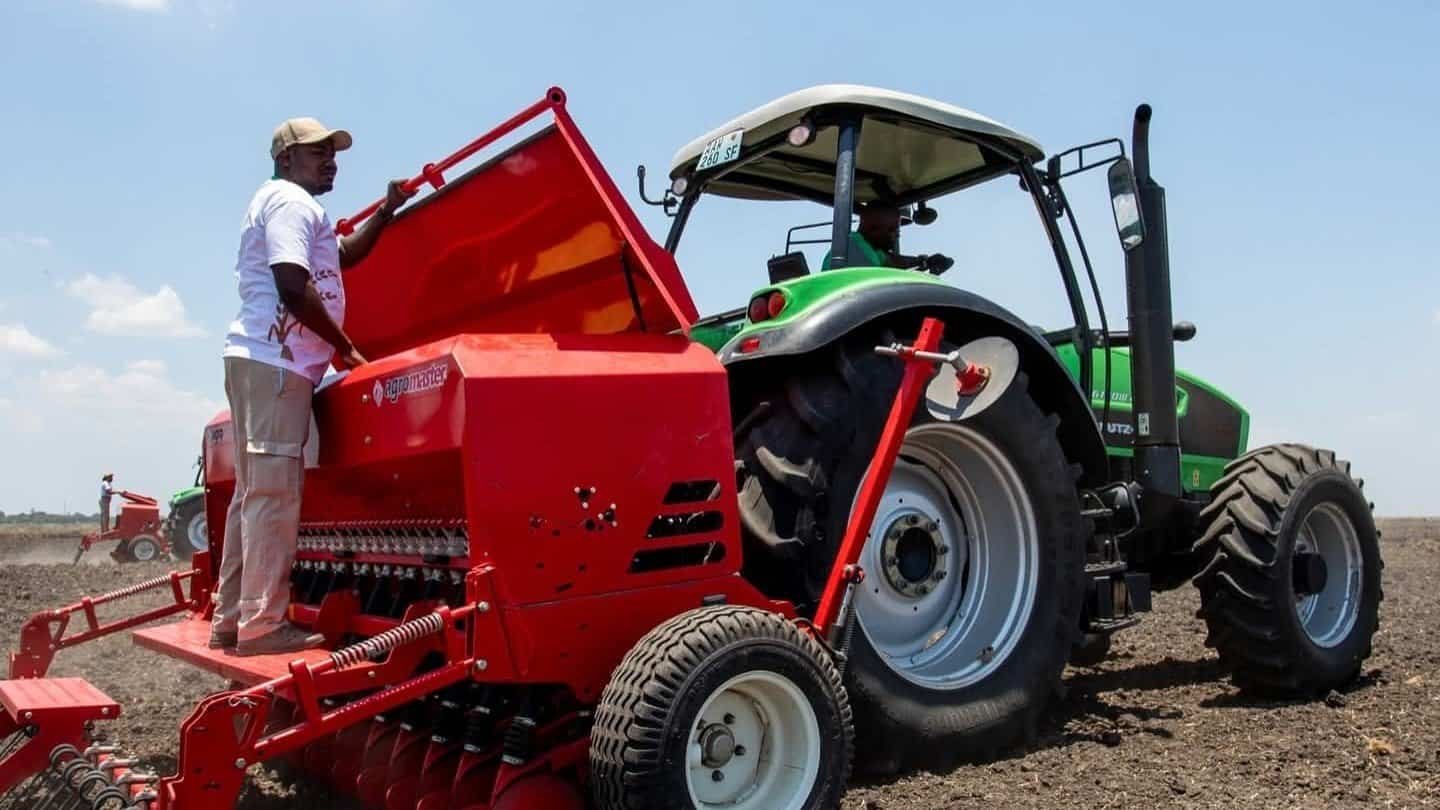
Mechanisation remains scarce. Irrigation infrastructure is limited. Access to finance, storage facilities, transport networks and technical assistance continues to lag behind regional ambitions.
Yet within these challenges lies enormous transformative potential.
Agriculture in Mozambique is not merely an economic activity; it is a social foundation. Women head 38% of agricultural holdings, underlining their central role in national food production and rural livelihoods. From cassava fields in Nampula to rice paddies in Zambézia and vegetable gardens surrounding Maputo, women remain at the centre of Mozambique’s food security.
From Survival Farming to Agro-Industry
The Government’s vision increasingly points toward agro-industrialisation — the idea that agriculture should not stop at production, but extend into processing, packaging, export and industrial value chains.
Mozambique’s current agricultural outlook suggests the country could be approaching a turning point. Authorities project a total agricultural output of approximately 21.3 million tonnes during the current second farming season, representing a 26% increase compared to the previous campaign.
Commercialisation is also expected to expand significantly, with around 14.6 million tonnes of agricultural products projected to enter the market this year. Key commodities include maize, cassava, beans, rice, vegetables, sesame and cashew nuts — crops that already sustain regional trade and domestic consumption.
If effectively linked to agro-processing industries, these commodities could generate employment, stimulate rural manufacturing and reduce dependence on imports.
For policymakers, the challenge is no longer simply increasing production. It is creating systems capable of transforming raw agricultural output into economic value.
The Backyard Economy
Mozambican President Daniel Chapo has in recent days intensified calls for families to strengthen household food production, promoting domestic gardens as a buffer against the rising cost of living.
His appeal reflects the realities facing many African economies exposed to global supply disruptions and fuel price volatility.
“We need to produce in our backyard,” the President said recently. “Because of the wars in the world, fuel prices are rising. And when fuel prices rise, almost everything becomes more expensive. One of the ways to protect ourselves is to increase food production and productivity.”
The message resonates strongly in a country where food prices are deeply tied to transport costs and imported inputs.
Backyard farming, once viewed merely as a subsistence activity, is increasingly being reframed as part of national economic resilience.
Livestock and Food Security
Beyond crops, the census also highlights the importance of livestock in sustaining rural livelihoods. Mozambique currently possesses approximately 2.4 million cattle, 4.2 million goats and nearly 16 million indigenous chickens.
For many rural families, livestock functions as both nutrition and financial security — a living savings account capable of cushioning households during periods of drought, economic hardship or failed harvests.
The prominence of local chicken breeds, in particular, reflects the continued importance of traditional farming systems in maintaining household food access across rural communities.
Mapping Mozambique’s Agricultural Future
The CAP 2023/2024 census itself represents one of the largest statistical operations ever conducted by Mozambique’s National Statistics Institute, carried out under guidelines established by the Food and Agriculture Organisation.
Conducted between December 2024 and June 2025, the exercise covered almost the entire national territory, excluding only six districts in Cabo Delgado province due to ongoing security concerns.
The findings provide far more than raw numbers. They offer a roadmap for national planning at a time when Mozambique is seeking pathways toward inclusive economic growth.
For decades, the country’s development narrative has often centred on natural gas, coal and mineral wealth. But the new agricultural census quietly suggests that Mozambique’s most powerful long-term resource may still be its land — and the millions of people who cultivate it.
The challenge ahead will be whether Mozambique can bridge the gap between potential and productivity.
If it succeeds, the transformation of its farms could become the transformation of the nation itself.