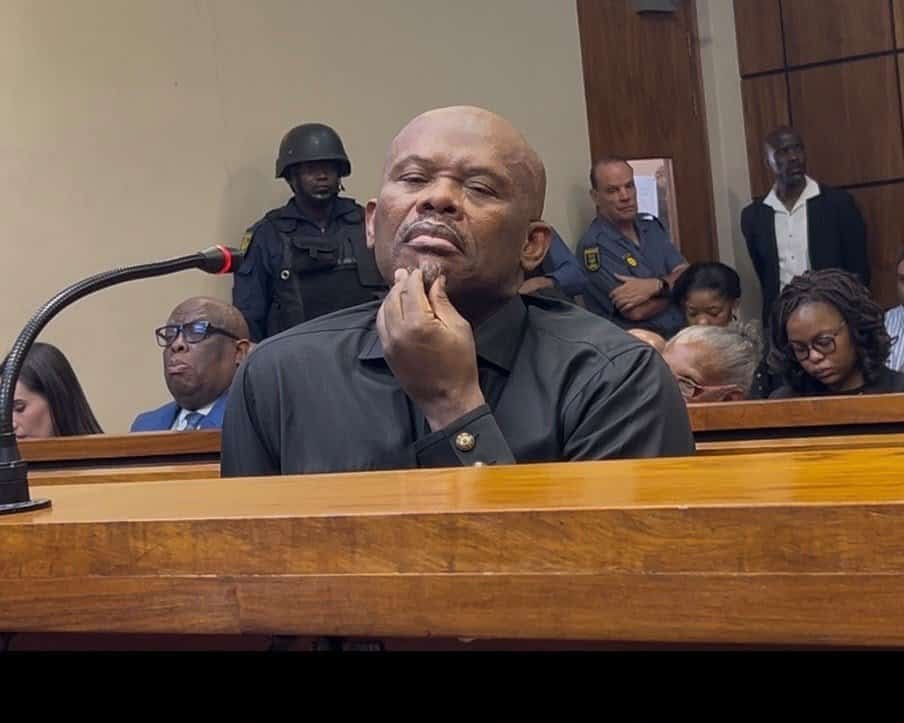
Former Deputy National Police Commissioner Shadrack Sibiya will remain behind bars after the Randburg Magistrate’s Court rejected his bail application on Tuesday, ruling that releasing him would not be in the interests of justice given concerns about witness safety and alleged interference with evidence.
Magistrate Hleziphi Mkhasibe found that Sibiya, who faces five charges, including rape, sexual grooming and human trafficking, had failed to demonstrate the exceptional circumstances required for his release in a Schedule 6 matter.
The ruling followed a lengthy bail application that stretched over 29 days, with the court examining arguments from both the defence and the prosecution before reaching its decision.
Sibiya, the former Deputy National Commissioner for Crime Detection in the South African Police Service (SAPS), has been in custody since his arrest on September 21 at The Grand restaurant and strip club in Sandton.
The charges relate to allegations involving an 18-year-old woman and a 16-year-old girl. Sibiya denies the allegations, and the trial court will ultimately determine his guilt or innocence.
In delivering her judgment, Mkhasibe raised concerns about the safety of witnesses, the alleged tampering with evidence and the potential for interference should the accused be released.
She said evidence before the court indicated that Sibiya had wiped information from his cellphone and that there were concerns about possible intimidation involving witnesses, including a man identified as Mr M and his teenage daughter.
The magistrate said the risk of interference with the minor was compounded by the victim’s concerns that her family could be exposed to harm.
The court also heard that there had been a request to delete chats involving the teenager, a matter Mkhasibe considered relevant when assessing the risks associated with bail.
The magistrate said these concerns weighed against Sibiya’s release, particularly given the vulnerability of the alleged victim.
The court heard that the minor was in witness protection. National Prosecuting Authority (NPA) spokesperson Izer Kganyago said the state had opposed bail and was satisfied with the outcome.
He said prosecutors believed the evidence presented was sufficient to justify the court’s decision.
“We will always be ready to deal with whatever appeal it is,” Kganyago said, adding that the NPA would defend the ruling if Sibiya’s legal team approached a higher court.
He said the investigation was nearing completion, with investigators finalising outstanding work before the matter could proceed to trial.
The defence has indicated that it intends to challenge the bail refusal in the High Court.
Mkhasibe also questioned Sibiya’s association with Mr M, whom the court heard had a history of fraud-related conduct, given the former police general’s senior position and responsibilities within law enforcement.
She said the relationship raised questions about Sibiya’s judgment and character.
The magistrate rejected the suggestion that Mr M would necessarily fabricate allegations of sexual offences to damage Sibiya’s reputation, while emphasising that the disputed allegations would ultimately have to be tested at trial.
On the human trafficking charge, Mkhasibe said it remained before the court for purposes of the bail proceedings, leaving the trial court to determine the issue fully. She similarly left the determination of the rape allegation to the trial process.
The court also considered concerns about Sibiya’s health and medication. Mkhasibe acknowledged submissions that he required chronic medication, although supporting medical records had not been presented to the court.
She said he would receive the medical treatment he needed while in custody.
Former senior police officer Jeremy Vearey said the judgment demonstrated the importance of examining each argument advanced in a bail application against the evidence placed before the court.
Vearey speaking with one of the broadcasters, said the magistrate had systematically addressed the defence’s submissions and that a High Court challenge would have to overcome the findings underpinning the refusal of bail.
He said the question of exceptional circumstances was particularly important in determining whether Sibiya could secure his release while awaiting trial.
Women and Men Against Child Abuse welcomed the ruling, describing it as an important step towards protecting alleged victims and witnesses.
The organisation’s Romy Morsner said the decision prioritised the safety of vulnerable people and the integrity of the justice system over the status of an accused person.
She said the court’s consideration of alleged witness intimidation and the potential risks facing the victims’ families was consistent with the organisation’s work to protect children from abuse.
Social activist Criselda Kananda also welcomed the decision, expressing concern about the allegations and the impact that the proceedings could have on the young people involved.
Her comments reflected the broader public scrutiny surrounding a case involving a former senior police official entrusted with investigating crime.
Sibiya’s arrest and continued detention come against the backdrop of his departure from the SAPS. He resigned while facing disciplinary proceedings, with his departure recorded as a dishonourable discharge.
Despite the seriousness of the allegations and the refusal of bail, the case remains before the courts.
The matter has been postponed to November 24, 2026, as the legal process continues.