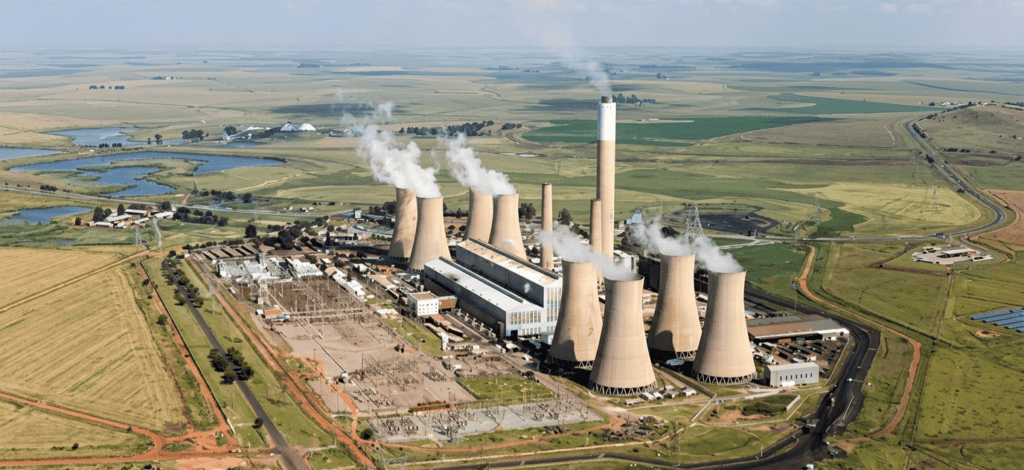
South Africa faces a real capacity cliff between 2029 and March 2030: roughly 9.5 GW of dispatchable capacity, driven mostly by coal retirements under Minimum Emission Standards and the expiry of the Cahora Bassa import contract. IRP 2025’s answer — around 6 GW of imported LNG-fired CCGT — solves the availability problem on paper, but converts it into an affordability and currency problem that current planning barely models. Worse, NERSA‘s new electricity Trading Rules (Version 3, May 2026) create a structural blind spot: they define non-bypassable charges for network costs, legacy REIPPPP, ancillary services, generation capacity, and subsidies, but contain no mechanism — or even vocabulary — for recovering variable fuel cost once the current RCA/MYPD regime expires. Long-term LNG offtake agreements running fifteen to twenty years are being negotiated against a successor framework that hasn’t yet decided whether fuel-cost overruns will be recoverable at all.
Between 2029 and March 2030, South Africa will lose 9.5 GW of dispatchable baseload capacity in twenty-four months: 8.4 GW of coal retiring under Minimum Emission Standards deadlines cemented by ministerial decision, and the simultaneous expiry of the 1.15 GW Cahora Bassa import contract [1]. In earlier work, the author introduced the Cliff Intensity Index (CII) to measure what that really means: a ratio of retirement velocity to replacement-integration velocity, adjusted for institutional friction. South Africa’s CII comes out at 2.16 — retirement outpacing integration by 116%, eight times Germany’s Energiewende peak — and the mismatch does not go away under perfect governance. Even then, the CII sits at 1.80, because transmission infrastructure needs construction timelines that no amount of policy reform can compress [1]. The capacity cliff, in other words, is a structural fact, not an administrative one.
The Integrated Resource Plan’s answer is 6,000 MW of gas-to-power capacity by 2030, running on imported liquefied natural gas [2]. On its own terms, that’s a reasonable response: combined-cycle gas turbines are dispatchable in a way solar and wind are not, and they can be built considerably faster than transmission corridors. But swapping coal baseload for LNG-fired flexibility doesn’t remove the risk the strategy is meant to solve. It converts it. A domestic supply problem becomes an imported price problem, and one layered with currency exposure on top: a global gas shock now hits the grid and the rand at the same moment. That compound vulnerability is what the planning framework has quietly assumed away.
Two Different Questions
Eskom‘s Medium-Term System Adequacy Outlook stress-tests two risks for the gas fleet: will it be built on time, and will it perform once built [3]. Both get serious analytical attention. Neither is the question that actually determines whether the strategy works as insurance against the 2030 cliff — that question is whether the fuel will be affordable when the country needs it most. Availability risk and affordability risk are not the same problem, and South Africa’s planning documents currently model only the first.
That’s not a small distinction. A 6,000 MW CCGT fleet running at a 51% capacity factor needs roughly 3.4 million tonnes of LNG a year [2]. At the IRP’s own baseline assumption of $10 per MMBtu, recovering that cost requires a tariff step-change of about 6.6% — against a NERSA-approved primary energy budget that currently makes no provision for LNG at all [2, 5]. That’s the floor. Under the price stress Europe experienced in late 2021, the step-change rises to roughly 14.0%; under conditions observed in the first half of 2022, it approaches 31.9%, with a resulting contribution to headline inflation of an estimated 1.57 percentage points, arriving 18 to 24 months after the shock once the Regulatory Clearing Account passes the cost through. These aren’t worst-case guesses — they’re the IRP’s own fleet parameters, run through NERSA’s own regulatory arithmetic and the Reserve Bank’s documented pass-through multiplier from the 2015 tariff cycle [2, 8].
Why the Risk is Real, Not Speculative
South Africa has never experienced the joint occurrence of a domestic wind-and-solar drought and a global LNG price spike, for the simple reason that it has never entered the LNG market at scale as a price-taking importer. It’s tempting to read that silence as evidence the risk is overstated. It isn’t. The absence of an observed event reflects the absence of the triggering conditions, not the absence of the mechanism itself. Two structural features make the co-occurrence plausible rather than remote. Large-scale anticyclonic blocking events can suppress South African wind output for days at a time, elevating net load precisely when the grid most needs gas to ramp [2]. And the global LNG market has been structurally tighter since 2021, as Europe’s shift away from Russian pipeline gas absorbed spare capacity that used to cushion smaller price-taking importers [2]. Neither mechanism requires South Africa to resemble Europe institutionally — only that a domestic circulation anomaly and a tight global market can occur together, which the historical record already suggests they can.
The Institutional Asymmetry
There’s a second problem, and it isn’t a modelling gap — it’s a drafting failure in the one regulatory instrument built to resolve exactly this exposure. LNG supply agreements at the scale the IRP requires typically run fifteen to twenty years [2]. The RCA/MYPD mechanism used to recover fuel cost applies only to the current build-out window; the Electricity Regulation Amendment Act sets a statutory deadline for a market-based successor, administered through vesting contracts and a defined schedule of non-bypassable charges [6, §11.1, §11.4]. That schedule lists six categories — network costs, legacy REIPPPP costs, ancillary services, generation capacity, government-mandated subsidies, system-wide regulatory costs. Variable fuel cost isn’t one of them.
It isn’t simply an absent line item, either. Across the full 41 pages of NERSA’s draft Rules, the words fuel, gas, LNG, coal, diesel, and primary energy don’t appear once [2, 6]. Every energy-cost concept the Rules do define — energy charges, the wheeling credit’s “cost of energy supply,” top-up energy’s energy rate, the System Marginal Price — sits on the demand or market-clearing side, never on generation-side variable input cost. The asymmetry is telling because it’s selective: legacy REIPPPP costs get an explicit, named recovery category, while fuel-based generation wasn’t drafted for at all, in mechanism or language. Recovery is deferred to a “Wholesale Tariff Methodology” the Rules name but don’t define, whose own existence depends on an approval still pending [2, 6, §9.3.1]. Nor does the clause grandfathering pre-reform power purchase agreements extend to tariffs predating the NBC reform itself [6, cl. 8.1.3(i)].
Put plainly: the instrument meant to tell a lender, developer, or ratepayer how an LNG fuel-cost overrun will be recovered after the post-2029 transition currently says nothing — not unclearly, nothing. Fleet-defining contracts are being signed now, during the only window in which a confirmed mechanism exists, against a successor regime that hasn’t decided whether fuel-cost recovery exists as a concept. That isn’t a risk the market can price, because there’s no provision to price. It’s a gap the drafters have had every opportunity to close, on a document sophisticated enough to name and protect a different cost category in full detail. An omission that is selective is not an oversight; it’s a choice about what was important enough to specify.
Who Sits in the Front Row
This isn’t a diffuse failure with no address. Three institutions sit in the front row, each with direct visibility of the gap above and the standing to close it before the contracts are signed. NERSA’s Energy Regulator, adopting the final Trading Rules, can see exactly what its own draft leaves out — the six named categories and the missing seventh aren’t hidden from the people voting to approve them. The Department of Electricity and Energy, formed from the DMRE’s 2024 split and the author of IRP 2025, and Eskom, the entity actually signing the fifteen-to-twenty-year offtake and LNG agreements — already underway, per Eskom’s 2026 foundation-customer agreement for 3,000 MW at the Zululand Energy Terminal [10] — are proceeding with fleet-defining commitments while the omission stands. National Treasury, ultimately exposed when Eskom’s contingent liabilities crystallise onto the sovereign balance sheet, has yet to commission the currency and fiscal-exposure assessment this analysis recommends. None of the three can plausibly claim the gap is invisible to them.
A Complex Tragedy
What makes this more than a filing cabinet problem is that the front row isn’t simply missing the gap — it’s actively narrating past it. Eskom markets its recovered Energy Availability Factor and the 365 consecutive days without load-shedding it marked in May 2026 — its first full year clear since 2018 — as proof the system has turned a corner [11, 12]; the 2026 State of the Nation Address commits to a 40% renewable share by 2030 without engaging the velocity constraint this analysis and its companion piece both quantify [13]. Neither claim is false on its own terms. Together, though, they tell a story of a problem solved, when what has actually happened is a problem converted — availability risk traded for a compound exposure nobody in the room has priced. That gap between the confidence being broadcast and the vulnerability sitting underneath it isn’t a communications failure to be smoothed over. It’s the shape institutional denial takes when reassurance costs less, in the short term, than candour. That is what makes this a complex tragedy rather than a simple oversight: every actor involved may be telling the truth as they understand it, and the exposure keeps growing regardless.
What the Cliff Paper Adds
None of this is reason to reflexively abandon gas-to-power, but it does mean gas isn’t the only lever on the table. The capacity cliff paper’s own sensitivity analysis shows that extending the coal retirement window is the most technically demonstrated intervention available — Camden, Hendrina, Grootvlei, Arnot, and Kriel have already shown it can be done — bringing the CII down from 2.16 to 1.08, at a cost of roughly R20–30 billion in maintenance capital and the risk of forfeiting JETP conditionality [1]. That’s a real, available alternative, and leaning on 6 GW of gas instead is a choice among options, not the only path through the cliff. Read together, the two analyses point to something narrower: the cliff is structural and can’t be governed away, and the instrument chosen to bridge it imports a second vulnerability that was never weighed against the coal-extension alternative sitting on the same table.
A Stagflationary Channel, Not a One-Off Price Event
This exposure deserves more than a line in a tariff schedule, because gas shocks behave differently from ordinary cost increases. Alessandri and Gazzani, using a decade of daily European gas-market data, find that a 10% gas price increase produces a persistent rise in core inflation alongside a decline in industrial output — the classic stagflationary signature, with effects that outlast the standard monetary policy transmission horizon [9]. Gas is the marginal, price-setting fuel in liberalised electricity markets, so its shocks propagate roughly three times more forcefully than an equivalent oil shock. South Africa’s Regulatory Clearing Account defers this dynamic rather than eliminating it, landing the inflationary consequence on the Reserve Bank’s desk eighteen to twenty-four months after the triggering shock — right when the economy is least prepared for a second one.
The currency leg compounds it further. South Africa has historically been a net energy exporter; a 6,000 MW LNG-fuelled fleet reverses that. LNG price spikes and rand depreciation tend to share the same global stress triggers, so the import bill is likely to peak exactly when the currency needed to pay it is weakest — and given how readily financial stress has migrated from Eskom’s balance sheet to the sovereign’s before, this is a fiscal exposure, not a peripheral one.
What Should Change
Four adjustments follow. The IRP and MTSAO should model compound price-availability vulnerability as an explicit scenario, using the 2021–2022 European experience as calibration data. LNG procurement should target exposure control rather than price control — ceiling-indexed contracts, strategic storage of at least thirty days’ dispatch, dual-fuel switching — none of it exotic; Europe mandated storage after 2021 for the same reason. Storage and demand-response allocations should be reviewed for multi-day, not merely multi-hour, capacity, since a four-hour battery can’t substitute for a week-long blocking event. Most actionable of all: NERSA can’t finalise Trading Rules with a total vocabulary gap on fuel cost. It needs a named NBC category for variable fuel cost, on the same footing as legacy REIPPPP — a fix requiring no new legislation, only the will to close a gap it has already had every opportunity to close.
A Closing Window
This isn’t a debate about megawatts on a spreadsheet. It’s a debate about sequencing, velocity, and institutional design — and the national electricity grid does not forgive planners who get those wrong. The terminals aren’t built. The contracts aren’t signed. The 6,000 MW isn’t yet committed. That’s precisely why this matters now: the gap is far easier to close before fleet-defining contracts are signed against a recovery mechanism already confirmed not to outlast them. Gas-to-power may still be a credible path through the 2030 capacity cliff — but not the only one, and not one planned against both of its defining risks while a regulatory instrument omits the second by design. Those in the front row should be asked why.
References
[1] Koko, M. (2025). South Africa’s 2030 Electricity Capacity Cliff: Institutional Frictions, Sociotechnical Inertia, and the Political Economy of Accelerated Coal Phase-Out. SSRN Working Paper. https://doi.org/10.2139/ssrn.5794522
[2] Koko, M. (2026). Compound Vulnerability and the Macroeconomic Transmission of Gas Price Shocks: Implications of South Africa’s LNG-Dependent Flexibility Strategy for the Post-2030 Electricity Transition (June 25, 2026). Available at SSRN: https://ssrn.com/abstract=6997259 or http://dx.doi.org/10.2139/ssrn.6997259
[3] National Transmission Company South Africa (NTCSA). (2025). Medium-Term System Adequacy Outlook 2026–2030.
[4] Department of Mineral Resources and Energy (DMRE). (2025). Integrated Resource Plan 2025. Government Gazette No. 53596, 28 October 2025. Published during the DMRE’s transition into the Department of Electricity and Energy (DEE), the department’s current successor.
[5] National Energy Regulator of South Africa (NERSA). (2025). Reasons for Decision: Eskom’s Sixth Multi-Year Price Determination (MYPD6) Application — Generation Business.
[6] National Energy Regulator of South Africa (NERSA). (2026). Draft Rules for Electricity Trading in South Africa, Version 3, 30 May 2026.
[7] Vinichenko, V., Cherp, A., & Jewell, J. (2021). Historical precedents and feasibility of rapid coal and gas decline required for the 1.5°C target. One Earth, 4(10), 1477–1490.
[8] South African Reserve Bank. (2015). Monetary Policy Review, November 2015.
[9] Alessandri, P., & Gazzani, A. (2025). Natural gas and the macroeconomy: Not all energy shocks are alike. Journal of Monetary Economics, 151, 103749.
[10] Eskom Holdings SOC Ltd. (2026). Eskom and Zululand Energy Terminal Sign Heads of Agreement to Advance Strategic Gas-to-Power Development. Media statement, June 2026.
[11] Eskom Holdings SOC Ltd. (2026). State of the System – Winter Outlook Briefing 2026. April 2026.
[12] Eskom Holdings SOC Ltd. (2026). Eskom Delivers 365 Days Without Loadshedding, Advancing the Economy, Competition and the Integration of Renewable Energy. Media statement, 16 May 2026.
[13] Ramaphosa, C. (2026). State of the Nation Address by President Cyril Ramaphosa. The Presidency of the Republic of South Africa.
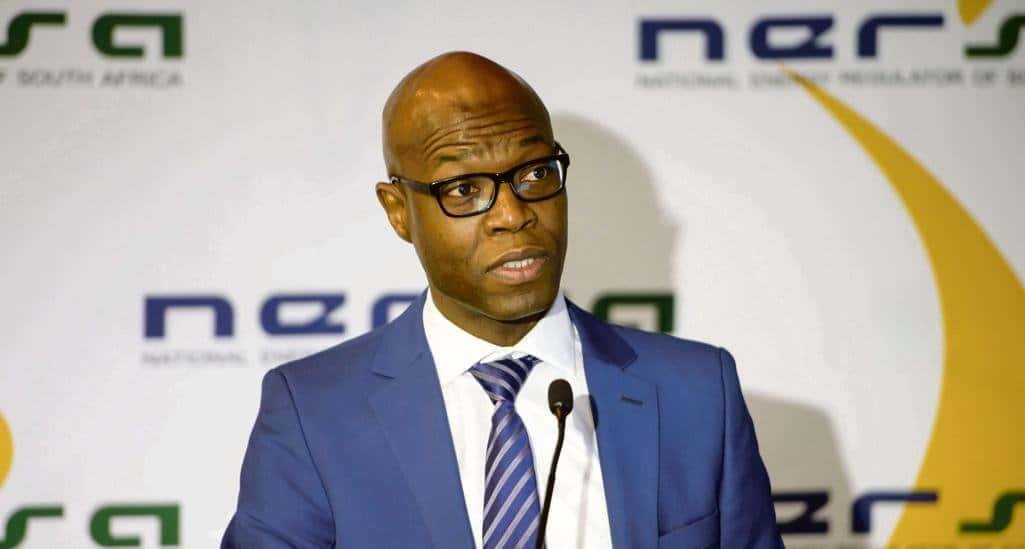
Matshela Koko is a Doctoral Candidate at the Graduate School of Business Leadership, UNISA, and Managing Director of Matshela Energy. He is the former Interim Group Chief Executive of Eskom (2016 to 2017). He writes in his personal capacity.