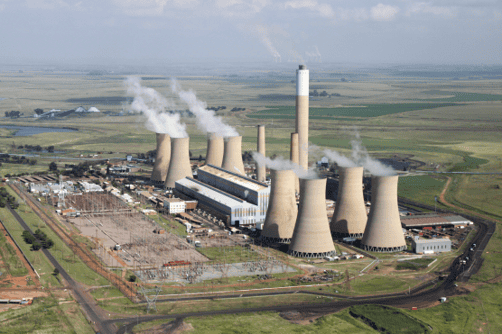
The South African state is currently engaged in a high-stakes gamble with the nation’s industrial backbone. Under the banner of “modernisation” and “liberalisation,” the Electricity Regulation Amendment Act (ERAA) is being touted as the panacea for the rolling blackouts which first appeared in 2008. In his 2026 State of the Nation Address, President Cyril Ramaphosa insisted that these reforms—specifically the unbundling of Eskom and the creation of an independent Transmission System Operator (TSO)—will proceed at all costs. In his budget speech, Minister Godongwana said, “We are stabilising electricity supply and building a competitive, reliable energy market.”
But behind the celebratory rhetoric of “investor certainty” and “competitive markets” lies a fatal structural flaw. The ERAA is not a blueprint for energy abundance; it is a sophisticated mechanism by which the state can distance itself from the inevitable collapse of the 2030 Electricity Capacity Cliff. It is a reform designed for a country with a surplus of power, being forced upon a nation in the throes of a scarcity crisis.
The Fatal Flaw: Markets Do Not Build Redundancy
The fundamental premise of the ERAA is that a competitive market will naturally provide for South Africa’s energy needs. This is an economic fantasy. Markets are designed for efficiency and profit-maximisation; they are not designed for national security or systemic redundancy.
In a liberalised energy market, private capital gravitates toward high-yield, low-risk projects—primarily variable-renewable energy such as wind and solar. While these are essential components of a modern grid, they do not provide “dispatchable” baseload power. No private investor will build a 6,000MW gas or nuclear plant—the kind of “heavy lifting” infrastructure South Africa needs to replace its ageing coal fleet—without massive, multi-decade state guarantees.
By stripping Eskom of its mandate to be the “Builder of Default,” the ERAA creates a vacuum. We are told the market will fill it. But as we have seen globally—from the Texas freeze to the European energy spikes—markets prioritise “just-in-time” delivery. They do not build the idle “reserve margin” that prevents a national blackout during a systemic failure. In South Africa, where the reserve margin is already non-existent, “market efficiency” is another word for “systemic fragility.”
The Section 34 Trap: Too Little, Too Late
Proponents of the Act point to Section 34 as the “Sovereign Backstop.” They argue that if the market fails, the Minister can still intervene and designate Eskom or another entity to build new capacity. This is the “Emergency Break” argument.
However, this logic ignores the reality of engineering lead times. The Minister can only trigger Section 34 after a market failure has been identified. In the world of energy infrastructure, a “market failure” identified in 2027 means a shortfall in 2027. But a new power station takes five to ten years to move from “determination” to “first fire.”
The ERAA essentially forbids the state from proactive planning. It forces the government to wait until the house catches fire before it is legally authorised to buy a fire truck. By the time the “Sovereign Backstop” is triggered, the 2030 Capacity Cliff will have already claimed the economy.
The 2030 Capacity Cliff: A Math Problem with No Solution
The math is brutal and unforgiving. Between now and 2030, South Africa is scheduled to retire nearly 8.4GW of coal-fired capacity. These plants are the “spinning inertia” that keeps the frequency of our grid stable.
The President’s “reform” strategy relies on a 40% renewable target and private “Independent Transmission Projects” (ITPs) to bridge this gap. But this ignores the “Transmission Paradox.” To integrate these renewables, we need R390 billion in grid expansion. By moving the grid assets into an independent TSO, the state is hoping to attract private capital to build the lines.
But why would a private company build a transmission line into the Northern Cape if there is no guarantee of long-term stability in the Generation sector? And why would a generator build a plant if the TSO cannot guarantee the grid will be ready? By fragmenting Eskom’s once-integrated “Plan-Build-Operate” model, the state has created a “circular dependency” in which no one moves because no one else has. This inertia is the primary driver toward the 2030 cliff.
Institutional Distance: The Politics of Blame-Shifting
If the technical flaws are so obvious, why is the Presidency so insistent on proceeding? The answer is not found in engineering; it is found in political risk management.
The creation of an independent TSO and the unbundling of Eskom represent the ultimate “Institutional Distance.” By fragmenting the energy sector into dozens of competing private and state-owned entities, the government ensures that, when the 2030 collapse occurs, there will be no single throat to choke.
If the lights go out in 2030, the Minister will point to the TSO; the TSO will point to the “market participants”; the market participants will point to the “regulatory environment”; and NERSA will point to the ERAA. The reform is a masterclass in the “diffusion of responsibility.” It turns a clear-cut duty of the state—the provision of electricity—into a complex contractual dispute between a thousand parties.
The Death of the Developmental State
The ERAA is the final nail in the coffin of the “Developmental State.” A developmental state uses its monopoly utilities to drive industrialisation, subsidise the poor, and guarantee national security. By “marketising” electricity, South Africa is treating energy as a luxury commodity rather than a fundamental right or a strategic asset.
We are told that the “Single Buyer” model is dead because Eskom failed. However, Eskom achieved record operational performance in 2017, with Energy Availability Factor reaching 78% (FY2017) and 86% (July 2017)—surpassing global benchmarks—while maintenance investment reached unprecedented levels at 12.99%. However, performance degraded sharply to 54.56% in 2023FY following the reform implementation in 2018, with the decline rate accelerating eightfold despite governance reforms. Eskom did not fail. The government collapsed Eskom. This is not a failure of the integrated model itself. Many of the world’s most stable and industrialised nations (including China and several European states) maintain strong, state-led integrated utilities because they understand that energy is too important to be left to the whims of quarterly profit cycles.
Conclusion: The Reckoning Awaits
As we approach the end of this decade, the “mirage of reform” will evaporate. The government may succeed in unbundling Eskom. It may succeed in creating a bustling trading floor for electricity. It may even succeed in attracting billions in “Green Finance.”
But none of these “successes” will matter if the electricity that is available on demand is gone. If the coal plants retire and the “market” fails to replace them with dispatchable power, the ERAA will be remembered not as a reform but as a suicide note.
The President insists that the reforms will proceed. He is right; they will proceed. But they are proceeding toward a cliff, and we have stripped ourselves of the only vehicle—a strong, integrated, state-led utility—capable of steering us away. The “fatal flaw” is not a bug in the system; it is the system itself. And in 2030, the math will finally settle the argument that the politicians refuse to hear.
Matshela Koko is the former acting Group CEO of Eskom. He writes in his personal capacity.