Residents of Thokoza in Ekurhuleni were jolted awake in the early hours of Thursday morning when the sounds of automatic gunfire and powerful explosions shattered the silence as ATM bombers struck again, leaving an already frustrated community fearing for their safety and access to cash.
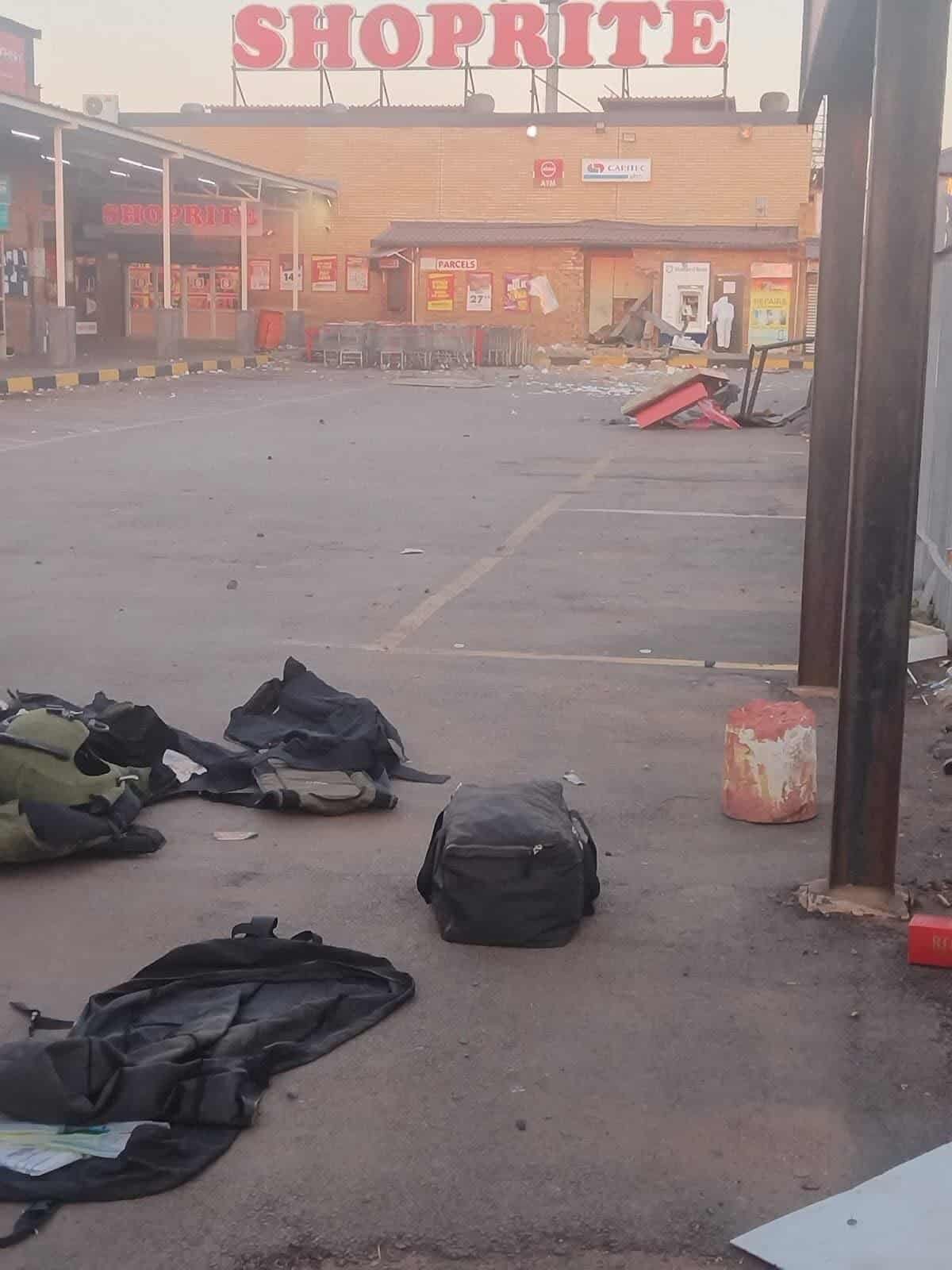
The incident, which happened at approximately 2 am on Thursday, November 12, saw about five suspects target ATMs belonging to three banks at a shopping centre in Thokoza Gardens along Khumalo Road.
The brazen attack has left residents furious, particularly because the machines were among the last remaining ATMs serving the community after four others were blown up in 2025 at the Engen garage on the corner of Khumalo and Yende streets.
For many residents, the latest incident is another blow to a community that has repeatedly watched its banking facilities disappear through criminal attacks.
Khumalo Road, where Thursday’s incident occurred, is also historically significant as one of the streets associated with the violence that claimed hundreds of black lives in Thokoza during apartheid.
Decades later, residents say they are once again confronted with violence, this time involving criminals using explosives and firearms to target businesses and banking infrastructure.
The seriousness of the incident was reflected in a crime-fighting community WhatsApp group, where residents shared their fears and frustrations as explosions and gunfire continued during the night.
Some described how the suspects appeared to have taken their time carrying out the robbery, despite the noise and potential risk of being caught.
Another resident claimed to have witnessed people from the surrounding community entering nearby shops and looting during the chaos.
Sylvia Lilala sarcastically described the robbery as one of the most relaxed criminal operations she had ever witnessed.
“Most relaxed robbery ever. Am sure the robbers were a crew like Fast and the Furious movie,” she said.
Palesa Selepe questioned how the suspects could allegedly spend so much time at the shopping centre, given that Thokoza Police Station is situated along the same road.
“My question, all this took something like an hour, and same street there’s police station, couldn’t they hear so many booms as well as gunshots? Ahhhhhh,” she said.
The attack has also reignited questions about the availability of explosives used in ATM bombings and how criminals continue to access them.
One resident, who did not want to be identified, questioned whether explosives were being smuggled into the country through poorly monitored borders.
“These explosives are smuggled through porous borders and are going to be used in ATM bombings. South Africa has become a playground for foreigners from all over the world to come here and operate criminal activities,” the resident said.
However, the allegations about the source of the explosives and the involvement of foreign nationals have not been established by police.
For ordinary residents, the immediate concern is where they will now withdraw money.
Busisiwe Ndlovu said the community had already been struggling following the destruction of the four ATMs in 2025, and the latest incident had made an already difficult situation worse.
“We are really in trouble. These were the last remaining ATMs. We now have to rely on spaza shops and Shoprite, which is known for long queues. I also feel sorry for senior citizens. This will affect them and all of us at large,” she said.
Residents who rely on spaza shops for cash withdrawals say they sometimes pay an additional R5 or R10 for the service, adding to the financial pressure on households already battling the rising cost of living.
Elderly residents, pensioners and people who depend on cash transactions are among those likely to feel the impact, as travelling to other shopping centres means additional transport costs and time.
During a visit to the shopping centre around midday on Thursday, the area appeared noticeably quieter than usual.
Bakkies were waiting to remove the damaged ATM infrastructure, a stark reminder of the destruction left behind by the overnight attack.
The latest incident comes against the backdrop of Gauteng’s history as a hotspot for ATM attacks.
According to the South African Banking Risk Information Centre’s (SABRIC) 2025 Annual Banking Crime Statistics, explosive-related ATM attacks nationally declined from 254 in 2024 to 107 in 2025, representing a 58% decrease.
Overall ATM attacks dropped from 301 to 163 during the same period.
Gauteng recorded 61 ATM attacks in 2025, compared with 201 in 2024. The province also recorded a decline in cash losses, from approximately R20.3 million to R2.6 million.
However, SABRIC’s 2024 report showed that Gauteng accounted for 67% of explosive-related ATM attacks nationally. Ekurhuleni accounted for 38% of incidents in the southern Gauteng breakdown highlighted in the report.
Despite the national decline, Thursday’s attack demonstrates that communities such as Thokoza remain vulnerable.
Gauteng police spokesperson Captain Tintswalo Sibeko confirmed that police had opened cases of ATM bombing and business robbery following the incident.
She said it was alleged that approximately five suspects bombed the ATMs, robbed the business of various items and took an undisclosed amount of cash before fleeing in different motor vehicles.
“No arrests have been made, and investigations are continuing to establish the circumstances surrounding the incident,” Sibeko said.
For Thokoza residents, however, the immediate consequences are already being felt.
Beyond the damaged machines and stolen cash, another community has been left struggling to access basic banking services, with elderly people and vulnerable households bearing the burden of a crime committed in the early hours of the morning.