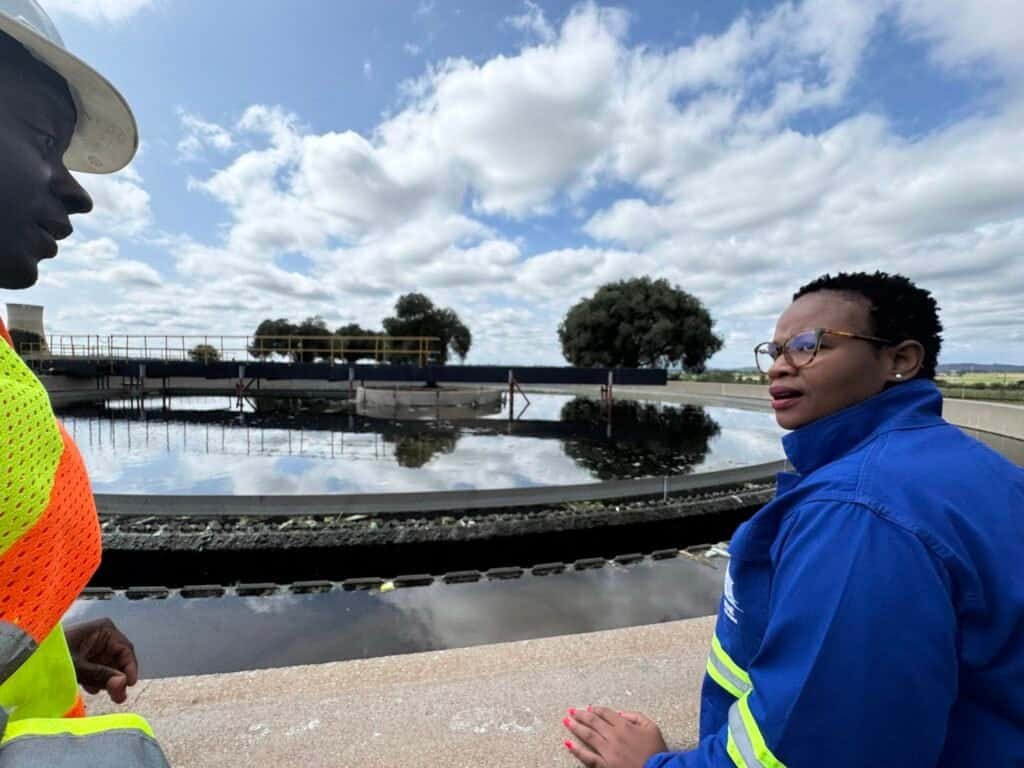
Fear is spreading through communities in Tshwane’s Region 7 after 408 people reported gastrointestinal illnesses amid revelations that residents were supplied with unchlorinated water for three weeks without being warned that it could be unsafe for domestic use.
The crisis has raised serious questions about municipal accountability, the protection of vulnerable children and why residents were not alerted when the City of Tshwane’s Bronkhorstspruit Water Treatment Works stopped chlorinating water supplied to surrounding communities.
Among those bearing the brunt are children under the age of four, who account for most of the reported cases of stomach cramps and diarrhoea recorded since October 7.
Although no deaths had been reported by Monday, October 19, authorities have warned residents in affected areas not to drink, cook with, wash with or bathe in tap water, even if it has been boiled.
For residents, the discovery that their household water may have been unsafe for weeks has revived painful fears of waterborne disease outbreaks and the possibility of losing loved ones to preventable illnesses.
Tshwane resident Karabo Shongwe said her household was taking no chances while investigations continued.
“We buy water for our household. We are not risking our lives. I only feel bad for those who cannot afford it,” she said.
Her concern highlights the unequal burden of the crisis, with households able to purchase alternative water supplies better positioned to protect themselves than those who depend entirely on municipal taps.
The affected communities include Zithobeni, Bronkhorstspruit, Dark City, Rethabiseng and Sokhulumi.
Speaking at a joint briefing in Pretoria, Water and Sanitation Minister Pemmy Majodina said preliminary tests conducted on October 14 detected extremely high levels of E. coli in water from the treatment works supplying the affected areas.
Further investigations are under way to establish the full extent of the contamination and its relationship to the illnesses.
A joint statement by the national departments of Water and Sanitation and Health, the Gauteng provincial government and the City of Tshwane said laboratory tests conducted by the National Institute for Communicable Diseases detected norovirus, Campylobacter and Shigella in patient stool specimens.
Water samples collected from the treatment works and the Ekandustria and Zithobeni reservoirs also showed extremely high levels of E. coli and total coliforms.
Although cholera bacteria were not detected in the water samples, authorities have cautioned against using the absence of cholera as a reason to dismiss the danger.
The combination of pathogens identified in patient specimens and the pattern of illnesses has strengthened suspicions that a common water supply may be involved.
However, investigations are continuing to establish the precise link between the water contamination and the reported cases.
Three weeks without chlorine
The most troubling finding is that the water supplied by the Bronkhorstspruit treatment works went without chlorination between September 24 and October 14.
According to the investigation by the Department of Water and Sanitation, the disruption followed difficulties involving the city’s chlorine supplier.
Tshwane executive mayor Nasiphi Moya acknowledged negligence by the municipality, saying the city had run out of chlorine after a dispute with its supplier over increased prices.
Moya said the supplier had increased its prices fourfold and that negotiations had failed to produce an agreement.
She also acknowledged that municipal officials had not informed the city’s political leadership about the chlorine shortage.
“We take responsibility for the negligence,” Moya said.
The mayor said action against officials responsible for managing the treatment works was under way through the city’s chief operating officer.
However, the admission raises a bigger question: why were residents not informed that the water was being supplied without chlorine, particularly when the treatment plant draws water from a river exposed to sewage pollution?
The Bronkhorstspruit River receives pollution from dysfunctional wastewater treatment works in Victor Khanye Municipality and municipal sewage pump stations, according to the investigation.
Chlorination is an important barrier against harmful microorganisms in drinking water. Its absence does not automatically mean every litre supplied was contaminated, but it significantly increases the risk when the source is already exposed to sewage pollution.
The investigation found that the city had failed to alert residents that the water was unchlorinated and unsafe for domestic use.
Authorities said this breached the 2025 Compulsory Standards for Water Services issued under the Water Services Act.
The failure to communicate the danger meant residents could have continued using the water for drinking, preparing food and personal hygiene without knowing the risks.
Children among the most vulnerable
The scale of the reported illnesses has placed particular attention on the safety of young children.
Between October 7 and 18, authorities recorded 408 gastrointestinal cases in the affected communities. The number of new cases peaked on October 13, when 72 were reported. Another 16 cases were recorded on Sunday.
Patients have received treatment at hospitals and local clinics, with symptoms including diarrhoea and stomach cramps.
Gastrointestinal infections can be particularly dangerous for young children because diarrhoea and vomiting may cause dehydration, which can become life-threatening if not treated promptly.
Health authorities are continuing to monitor the situation as further tests are conducted.
Residents experiencing severe diarrhoea, persistent vomiting, signs of dehydration or other concerning symptoms should seek medical attention promptly.
Political pressure mounts
The admission has also opened the municipality to renewed political scrutiny, with the Democratic Alliance indicating that it intends to pursue accountability over the handling of the crisis.
The party’s Cilliers Brink was expected to outline its next steps following the ministerial briefing, including measures to protect residents and investigate concerns raised by people with information about the matter.
The immediate priority, however, remains protecting households while authorities establish the extent of the contamination, address the chlorine supply failure and determine when the affected water supply will be safe to use again.
For communities already anxious about the possibility of a major waterborne disease outbreak, the crisis is about more than laboratory results and municipal explanations.
It is about whether residents can trust the water flowing from their taps and whether the authorities responsible for providing an essential public service will warn them when that water could put their health at risk.
Until authorities confirm that the supply is safe, residents in the affected areas have been urged to follow official water-use restrictions and use an alternative safe water source.