The University of South Africa (Unisa) has reinforced its position as a pioneering force in higher education, announcing a series of groundbreaking “firsts”, including plans to launch a university-owned airport, as it reflects on recent achievements and charts an ambitious future.
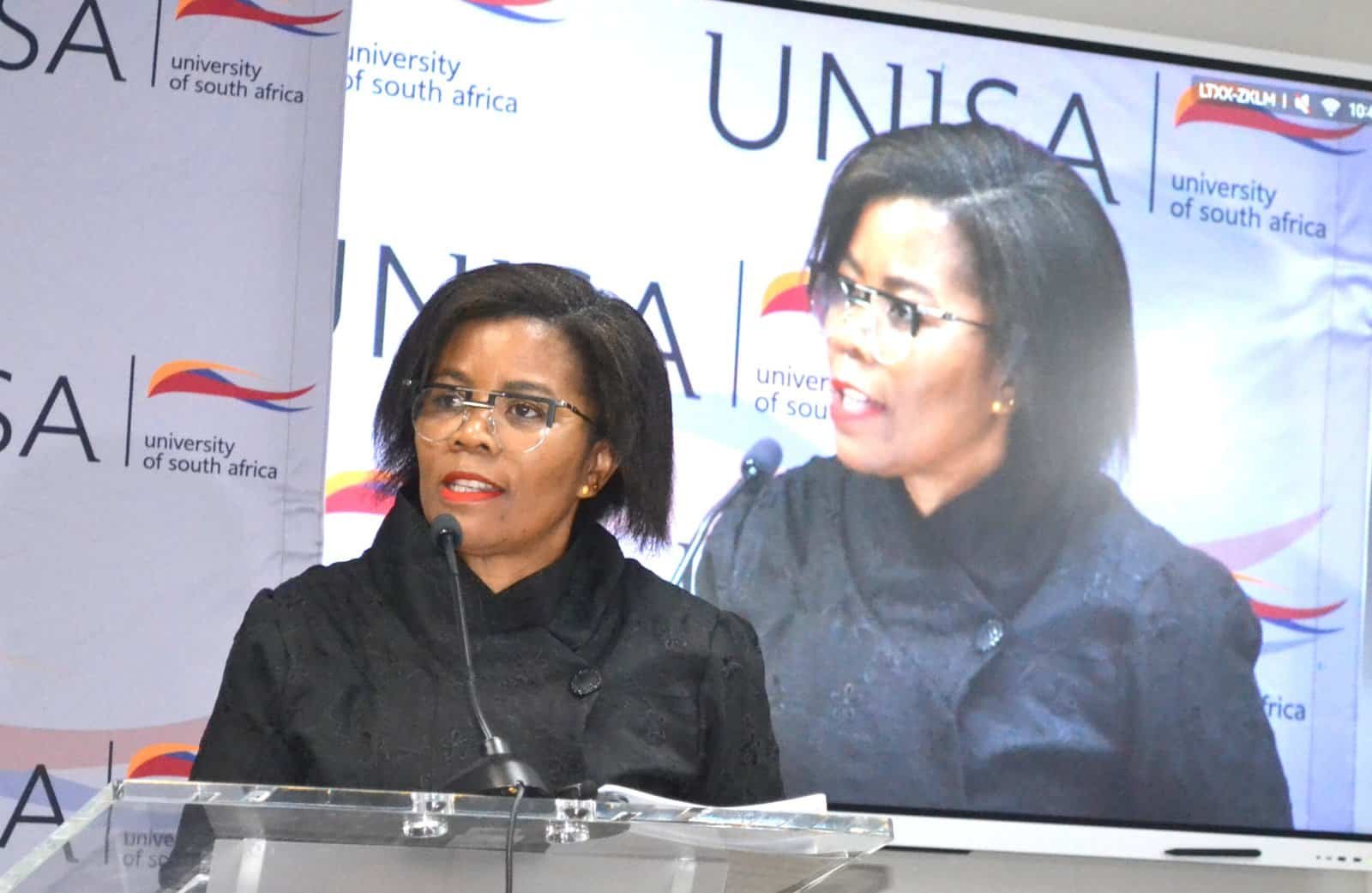
Speaking at a media briefing in Pretoria on Thursday, Principal and Vice-Chancellor Puleng LenkaBula described the institution as a trailblazer in distance learning, research innovation and academic transformation, with a legacy spanning more than 150 years.
LenkaBula said Unisa, widely recognised as one of the first universities in the world to offer distance education at scale, continues to shape access to higher learning across South Africa, the continent and globally.
“We are a university of firsts,” she said, pointing to its historic role in open and distance e-learning as well as its ongoing efforts to expand opportunities for students and academics.
Among the most striking announcements was the acquisition of an airport — a first for a university not only in South Africa but across the African continent. The facility, expected to be officially launched between April and May, will support training in aviation, aeronautics, drone technology and digital systems.
LenkaBula said the airport would serve as a strategic hub to develop scarce and critical skills, particularly in engineering and aviation, while supporting innovation in emerging technologies.
“This is history in the making,” she said. “It will open opportunities for our students, our academicians and society at large to advance skills in aviation and related fields.”
The airport project forms part of broader efforts by the university to integrate science, technology and practical training into its academic offering, positioning Unisa at the forefront of future-focused education.
The announcement builds on a strong performance period between 2021 and 2025, during which Unisa consistently produced more than 50,000 graduates annually. This includes over 500 doctoral graduates and more than 900 master’s graduates, underlining the institution’s role in producing high-level skills for the country.
The university also moved to restore dignity to students affected by the COVID-19 pandemic, hosting special graduation ceremonies in 2025 for more than 10,800 graduates from the disrupted 2020 and 2021 academic years.
On the research front, Unisa has made significant strides in both output and global recognition. The institution improved its standing in international rankings and is now counted among the top eight universities in South Africa and within the top 1,000 globally.
Nationally, its research output ranking has climbed, with growth driven by key focus areas such as digitalisation, biotechnology, renewable energy, social sciences and space science.
A flagship example of this innovation is Unisa’s partnership with the University of Namibia on the Africa Millimetre Telescope (AMT) — the first millimetre-wave radio telescope to be built on African soil. The project will integrate into the global Event Horizon Telescope network, contributing to cutting-edge research on black holes and the broader universe.
LenkaBula said the AMT positions Africa as an active contributor to global scientific discovery, while also strengthening the continent’s role in space science and astrophysics.
Beyond research and infrastructure, the university has placed strong emphasis on investing in people — particularly at a time when many institutions are facing financial pressure and staff reductions.
In a notable move, Unisa has recruited 863 adjunct academics over the past three months, creating opportunities for qualified scholars who were previously unemployed or underemployed. The initiative is aimed at building a pipeline of future academics, including doctors, researchers and professors.
“We are giving academicians an opportunity to claim their chance,” LenkaBula said. “We are investing in people, in science and in the transformation of our society.”
The university has also expanded its postdoctoral fellowship programme, strengthening research capacity and supporting the development of emerging scholars. These efforts are designed to enhance internationalisation and ensure that Unisa contributes meaningfully to global knowledge systems.
LenkaBula said these initiatives are part of a broader commitment to addressing South Africa’s socio-economic challenges, particularly unemployment, by equipping graduates and academics with relevant and future-ready skills.
At the same time, Unisa has maintained strong governance and financial stability. The institution achieved consecutive unqualified audit outcomes between 2021 and 2024, reflecting sound financial management and accountability.
Over the same period, the university significantly increased its financial reserves, growing from approximately R9 billion to more than R24 billion — a sign of institutional resilience and sustainability.
Governance reforms have also been introduced, including a new institutional statute, updated governance frameworks and strengthened supply chain management policies aimed at improving transparency and efficiency.
Digital transformation remains central to Unisa’s strategy. Through its Comprehensive Open Distance e-Learning model, the university has invested heavily in digital infrastructure, cybersecurity and online academic services, allowing it to deliver education at scale while improving the student experience.
Student support systems have been expanded to include academic advising, early warning mechanisms, psychosocial support and development programmes — ensuring that increased access is matched by improved success rates.
Looking ahead, LenkaBula outlined a vision anchored in innovation, inclusivity and global engagement. She said the university is committed to ensuring that no young person is left behind in the evolving knowledge economy.
“We will harness digital innovation not only to teach, but to transform lives,” she said.
She also emphasised Unisa’s role as a “science diplomat”, building intellectual bridges across borders and contributing to global academic collaboration, while advancing African knowledge systems and perspectives.
LenkaBula reaffirmed the institution’s commitment to ethical leadership, academic freedom and public responsibility, adding that Unisa would defend its autonomy and mandate if challenged.
Founded more than 150 years ago, Unisa has long been at the centre of shaping African scholarship, particularly in advancing decolonial knowledge, philosophy and scientific thought.
As it enters a new phase, the university is positioning itself as a key driver of Africa’s academic, scientific and technological future.
“The rise and rise of Unisa is manifest. It cannot be derailed,” LenkaBula said.
With its expanding academic programmes, growing research influence, bold investment in people and a first-of-its-kind university airport, Unisa is not only redefining higher education in South Africa — it is helping to shape the future of the continent.