
After years of relying on a residential house for policing services, the Villa Nora community in Limpopo now has a dedicated police station, with national police leadership promising improved service delivery, stronger crime prevention and greater accountability to residents.
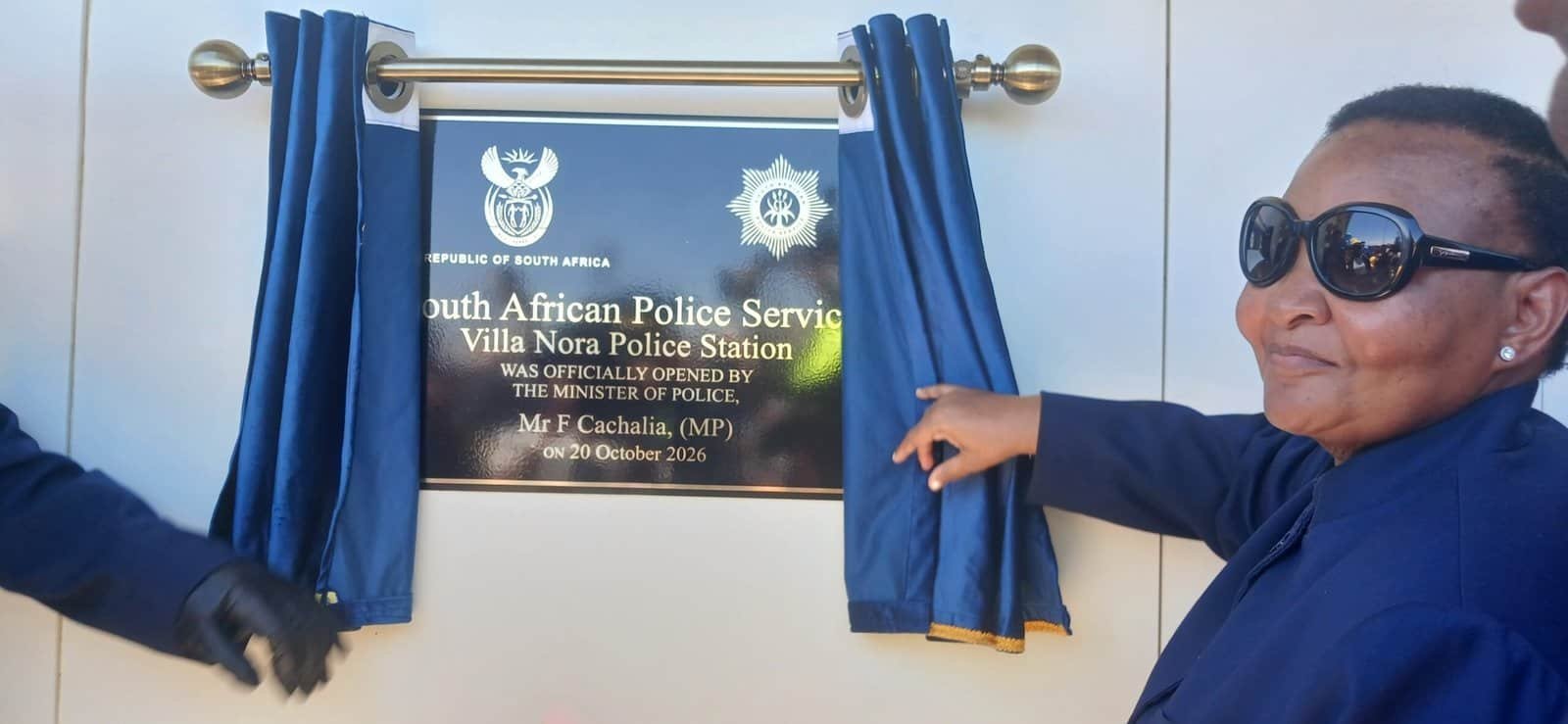
The new facility, officially opened on Tuesday by Deputy Minister of Police Dr Polly Boshielo and National Police Commissioner General Fannie Masemola, is expected to strengthen access to policing services in Villa Nora and surrounding rural communities in the Waterberg District.
Although the station consists of park homes rather than a permanent brick-and-mortar structure, Boshielo described it as an important improvement on the previous arrangement, under which officers operated from a residential property that was not designed to function as a police station.
“For many years, policing services in Villa Nora were provided from a residential house,” Boshielo said.
While officers had continued serving the community under those conditions, she said the former premises were not suited to the needs of a police station.
The new facility provides dedicated space for police officers to perform their duties and for residents to report crimes and seek assistance.
However, both Boshielo and Masemola stressed that the station’s success would depend on more than improved infrastructure. They said the quality of service, professionalism of officers and confidence of residents would ultimately determine whether the investment made a meaningful difference.
Masemola said a police station represented a commitment to protecting people’s safety and dignity, rather than simply providing a building.
He urged officers assigned to Villa Nora to demonstrate discipline, integrity and accountability, warning that the police uniform must never be used to shield misconduct.
“Our uniform must never shield misconduct; it must represent honour, service and public trust,” Masemola said.
His message placed the responsibility on station management and officers to ensure that the improved facility translated into a better experience for people seeking police assistance.
Call for better service and accountability
Masemola said the station commander and management would be expected to lead with integrity, enforce accountability and establish a culture in which every officer understood their constitutional responsibilities.
He said every complaint should receive attention, investigations should be conducted diligently, and people approaching the police should be treated with dignity and urgency.
Boshielo echoed the call, saying residents should be able to approach the station during vulnerable moments, report crimes without fear and receive professional and compassionate assistance.
She also emphasised the need to equip the facility with sufficient personnel, equipment and operational resources to support effective crime prevention and investigations.
The opening comes with a reminder that improved premises alone cannot guarantee safer communities without the capacity and commitment needed to respond to crime.
Masemola identified violent crime, gender-based violence and femicide, drug-related offences and robbery among the priorities requiring attention.
Boshielo said cases involving domestic violence, sexual offences and child abuse must be handled with urgency and sensitivity, with victims receiving appropriate support and their dignity protected throughout the investigation process.
She urged police officers to reject corruption, uphold the Constitution and honour the code of conduct they committed to when joining the South African Police Service.
Community urged to help fight crime
Both police leaders called for stronger cooperation between law enforcement and the communities they serve, emphasising that crime prevention cannot be left to the police alone.
Masemola urged Villa Nora police management to use community engagements to develop practical, intelligence-led interventions informed by local crime patterns.
Residents were encouraged to report criminal activity, share information with the police and participate in Community Policing Forums.
Businesses, schools, community leaders and neighbouring police stations were also identified as important partners in efforts to improve safety.
Boshielo said the police, in turn, had a responsibility to remain visible, responsive and accountable to residents.
She also appealed to the community to protect the new facility against vandalism and neglect, describing it as a public asset intended to serve both current residents and future generations.
Festive season and elections on police agenda
The station’s opening comes as the SAPS intensifies preparations for the 2026/27 Safer Festive Season, a period when police are expected to strengthen crime prevention and public safety operations.
Masemola said Villa Nora police would need to support visible policing, targeted operations, the execution of outstanding warrants and the recovery of illegal firearms.
He also called for cooperation with specialised police units and neighbouring stations to disrupt criminal networks and prevent crime.
The objective, he said, was to ensure that residents and visitors could travel, work, shop and celebrate safely.
With the country also preparing for the next local government elections, Masemola said the police had to remain operationally ready to protect the public and enable eligible voters to exercise their democratic rights freely.
He called on political parties, candidates and communities to promote tolerance and resolve disagreements peacefully.
The police, he said, would work with security partners to respond impartially to threats and incidents.
For Villa Nora, the opening marks an improvement in the infrastructure available to local policing, but the challenge now is to turn that investment into visible results.
The facility’s long-term value will depend on whether residents receive timely assistance, whether investigations progress effectively and whether officers earn the trust of the people they serve.
Boshielo thanked the SAPS, government departments, project teams, contractors and other stakeholders who contributed to the refurbishment of the station.
She reiterated the government’s commitment to strengthening policing capacity, particularly in rural communities where access to essential services remains important.
Masemola said the ultimate measure of success would be safer streets, effective investigations, improved service delivery and a community confident in its police service.
For residents, the expectation is clear: the new station must be more than a new address for the police. It must become a reliable place to turn when crime strikes and protection is needed.