South Africa’s 2026 Local Government Elections have officially drawn to a close, but the real political test is only beginning as parties prepare for coalition negotiations and newly elected councillors face mounting expectations to deliver services to frustrated communities.
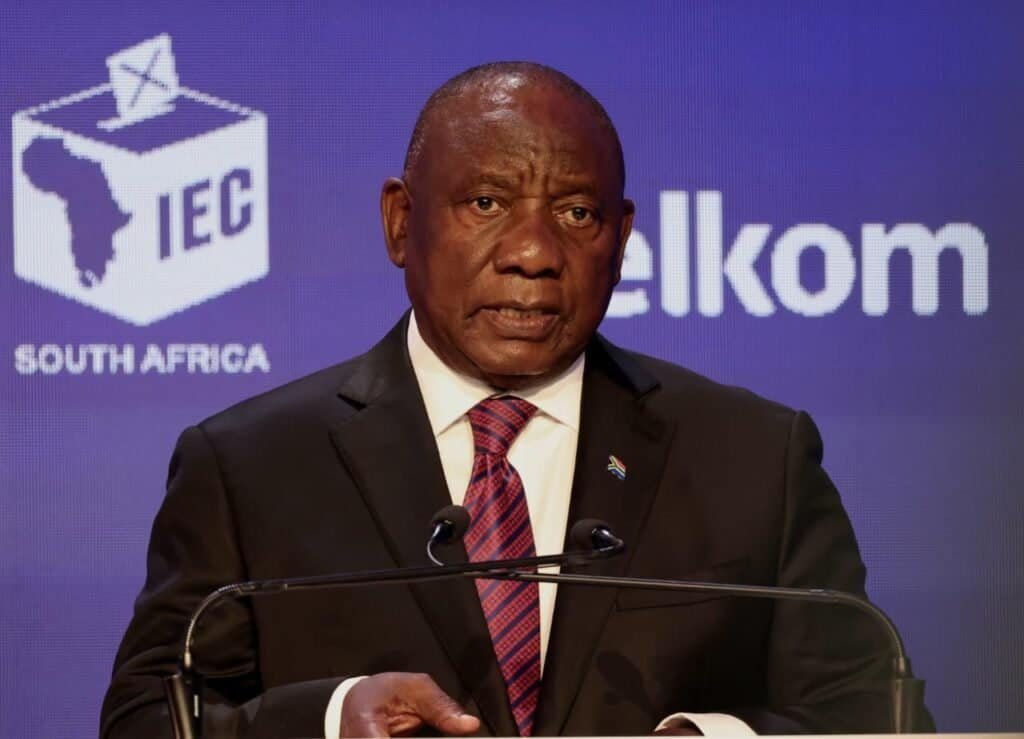
President Cyril Ramaphosa has warned political leaders that the electorate’s verdict must translate into action, insisting that the hard work of rebuilding local government must begin immediately.
“Now that the votes have been counted, the hard work must begin,” Ramaphosa said in a message to South Africans following the Independent Electoral Commission’s (IEC) announcement of the final election results.
His remarks come as political parties prepare to negotiate the formation of administrations in municipalities where no single party has secured an outright majority.
The negotiations are expected to test political relationships, particularly in hung councils where parties will have to find common ground to secure control of municipalities.
Ramaphosa said the election demonstrated that South Africa’s democracy remained active and vibrant, with millions of citizens participating in a contest involving hundreds of political parties and thousands of candidates.
The IEC reported that South Africa had 29.2 million registered voters, of whom approximately 14.9 million cast their ballots, translating into a turnout of 52%.
A total of 520 political parties and approximately 137,000 candidates contested the elections across 213 municipal councils.
The President congratulated the IEC for conducting the elections and thanked the police, defence force, government officials and political parties for their contributions towards ensuring that voting took place peacefully.
He said the improved voter participation and the number of parties and candidates reflected the continued evolution of South Africa’s democracy.
However, Ramaphosa stressed that voters had not simply participated in an electoral exercise but had delivered a clear message about what they expected from those entrusted with public office.
He said South Africans wanted employment opportunities, reliable and affordable water and electricity, properly maintained public spaces and safer neighbourhoods.
They also wanted municipalities that were financially stable, professionally managed and capable of delivering basic services.
“Through this election, the South African people are demanding that those entrusted with public service fulfil their responsibilities,” he said.
He warned that those elected to municipal councils would have to prove themselves worthy of the confidence placed in them by voters.
Ramaphosa also called on political parties to cooperate in good faith during the negotiations for the election of office-bearers, saying councils needed to be constituted without unnecessary delays.
He said political differences should not prevent parties from finding common ground in the interests of effective and accountable local government.
The President further highlighted the importance of the revised White Paper on Local Government, which sets out proposals to strengthen municipal finances, improve infrastructure maintenance and ensure more reliable service delivery.
Meanwhile, civil society organisation NotInMyName International has issued a strong warning to political leaders against allowing coalition negotiations to become exercises in political self-interest.
The organisation said the outcome of the elections placed a responsibility on elected leaders to prioritise communities rather than positions and political power.
In a statement, its president, Themba Masango, said South Africans expected ethical and competent leadership capable of keeping communities safe and delivering services fairly, regardless of race, class or geographical location.
“Please remember that this process is about serving the people of this country, not about serving your own interests or the narrow interests of your political elites,” Masango said.
He warned that the trust placed in political parties by voters should not become a bargaining chip during negotiations.
“The time for political theatre is over; the time for genuine, selfless leadership is now,” he said.
The organisation said communities were watching the negotiations closely and expected political leaders to demonstrate honesty, accountability and a commitment to service delivery.
The election period also highlighted the importance of the electoral process in determining political representation.
MK Party deputy president Duduzane Zuma said the party respected the IEC and the rule of law, adding that its representatives were attending the official results announcement.
His remarks come after the party’s participation in an election that has further shaped the country’s changing political landscape.
In the Free State, DA provincial chairperson Werner Pretorius highlighted how electoral disputes and recounts could influence the final outcome.
Pretorius said the party had secured a ward after lodging a complaint with the IEC and requesting a recount.
According to him, the DA had initially lost the ward by two votes, but the recount subsequently placed the party ahead by 41 votes.
The development underscored the importance of the IEC’s procedures in resolving electoral disputes and ensuring that the final outcome reflects the votes cast.
As the curtain falls on the 2026 elections, the IEC has thanked voters, political parties, independent candidates, observers, security services, the media, civil society and its employees for their contributions.
Vice-chairperson Commissioner Janet Love extended appreciation to the institutions and individuals who helped make the elections possible, while chief electoral officer Sy Mamabolo highlighted the operational capacity, technological innovations and human resources that supported the process.
But beyond the successful conclusion of the electoral process, the biggest question facing South Africa is whether the political parties entrusted with power can translate their promises into tangible improvements.
With coalition negotiations approaching and communities expecting better roads, reliable water, electricity, jobs and safer neighbourhoods, the message from voters is clear: winning an election is only the beginning. Governing effectively is the real test.