
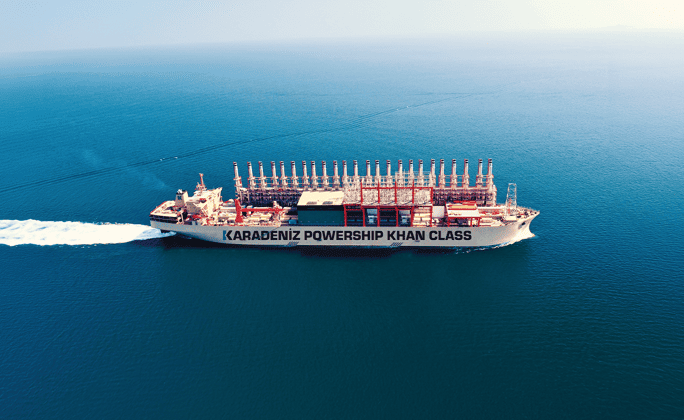
South Africa escaped a 20-year, dollar-indexed gas bet on 1 220 MW of floating power. No one in authority stopped it; it collapsed after missing a deadline. The same unexamined bet is now being placed at five times the scale.
On 31 July 2025, the Pretoria High Court set aside the three generation licences NERSA had granted in September 2021 to Karpowership’s Coega, Richards Bay and Saldanha Bay projects.[4] NERSA signed a settlement recording that the matter had become academic, and the order was taken on the unopposed roll.[4]
That quiet ending hides how close we came.
NERSA licensed the three Karpowerships to generate 141.4 TWh over twenty years.[1–3] For Saldanha Bay, its reasons disclose how the fuel was to be priced: in US dollars per million British thermal units, set off the Japan-Korea Marker, the spot price for liquefied natural gas delivered to North-East Asia.[3] The equivalent paragraphs for Coega and Richards Bay are redacted.[1, 2]
Run NERSA’s own heat rate and generation figures through that formula and the arithmetic is unforgiving. For Saldanha Bay alone, every one-dollar rise in the Asian spot price would have added about US$321 million to the fuel bill over the life of the contract, before regasification and storage charges.[3] Why only Saldanha Bay? Because that is all the public was allowed to see. In the published reasons for Coega and Richards Bay, the charge rates and financial figures are blacked out, and no fuel price formula appears at all.[1, 2]
When objectors complained that redaction made meaningful comment impossible, NERSA replied that financial information is confidential.[1] When the record went to court, NERSA filed it heavily redacted, a choice the High Court found was made “in accordance with Karpowership wishes”.[5] The redaction problem forces an assumption, so I state mine plainly: the Saldanha Bay formula applied at all three sites. It is the reasonable reading of what NERSA did disclose.
All three plants share the same heat rate, the same fuel charge covering “the LNG molecule only”, and the same Karpowership fuel-supply company buying from the same supplier.[1–3] On that assumption, every one-dollar rise would have cost the three plants together about US$1.23 billion over twenty years: some R18.1 billion at 2021’s average exchange rate of R14.78 to the dollar, the year the licences were granted, or R21.9 billion at 2025’s average of R17.88.[19] If the redacted reasons say otherwise, NERSA holds the documents that would prove it.
The charge rates were struck against a base date of 1 April 2020.[3] That month, the Japan-Korea Marker set its all-time low of US$1.825.[8] In January 2022, four months after the licences were granted, it averaged US$35.87.[9] At that price, the LNG molecule alone works out at about 31 US cents per kilowatt-hour. NERSA published Saldanha Bay’s 2022 tariff as R1.48 per kilowatt-hour, escalating with inflation.[3] At 2021’s average exchange rate of R14.78 to the dollar, the gas alone comes to about R4.58 per kilowatt-hour: roughly three times the entire tariff.[19]
That is the bullet. We dodged it by accident: it missed.
Then came Hormuz
The risk was never hypothetical. Had the Karpowerships been built to the programme’s timetable, which required commercial operation by December 2022,[1] they would have been three years into their twenty-year contracts when the Strait of Hormuz closed on 28 February 2026.[20]
The closure affected about 20% of global LNG supply, mostly from Qatar’s Ras Laffan; the International Energy Agency describes almost 20% as lost for the time being.[20, 21] QatarEnergy declared force majeure on 4 March, and no laden LNG vessel is known to have crossed the strait between 1 March and 24 April.[20] In March, Asian and European spot prices reached their highest monthly average since January 2023. The Japan-Korea Marker, the index in NERSA’s Saldanha Bay formula, traded near US$21, with volatility near 300%.[21] By the week ending 24 April, the front-month Japan-Korea Marker futures price was still 51% above its pre-closure level, at US$16.02.[20]
Run the Karpowerships through March. At their licensed output, and assuming the Saldanha formula applied to all three plants, the gas bill would have roughly doubled, from about US$53 million a month at the pre-closure price to about US$106 million at March’s level. The increase alone, about 9 US cents per kilowatt-hour, is about R1.61 at 2025’s average exchange rate: more than NERSA’s entire published 2022 tariff for Saldanha Bay, before inflation escalation.[3, 19, 20, 21] That cost would have landed on Eskom as the buyer. The reasons treat the fuel charge as compensation for the LNG molecule, paid alongside a payment for dependable capacity, and NERSA itself told objectors that Eskom was insulated because all programme costs would be pass-through.[1] Passed through Eskom’s Regulatory Clearing Account, the cost reaches consumers 18 to 24 months later.[18]
And that is only the price. Each plant depended on an LNG carrier unloading into its floating storage unit every 25 to 40 days.[1] In the same months, the closure forced Asian buyers, who import more than 80% of Qatar’s gas, to compete for spot cargoes on global markets.[20] South Africa’s cargoes would have been in that contest. Physical supply, not just its cost, would have been in question.
Critics did not dream up this scenario. It happened this year, while the contracts would have been in force.
The regulator that did not save us
The comfortable story is that the system worked: the regulator scrutinised the deals and the courts held it to account. Neither happened. The Electricity Regulation Act charges NERSA with safeguarding the interests of present and future electricity customers.[7] NERSA licensed all three projects.[1–3] No court ever ruled on whether it was rational to do so; the licences were set aside by agreement, once the projects had collapsed and there was nothing left to decide.[4] What ended the Karpowerships was the calendar. On 31 December 2023 the bids expired without reaching legal and commercial close, and preferred-bidder status terminated by operation of law.[6] The regulator did not stop them, and no court did. The deadline did.
NERSA’s reasons show what it knew. It licensed three power stations that lacked the approvals needed to build or run them: environmental authorisation had been refused for all three sites, and port rights, gas licences and fuel supply agreements were still outstanding.[1] NERSA also recorded its own past practice. It said it had treated applications that depended on matters outside its jurisdiction as incomplete. This time it dismissed the objection without explaining why that practice no longer applied.[2, 3] A regulator that departs from its own practice owes the public a reason. NERSA gave none.
Asked to wait for the outcome of the environmental appeal, NERSA declined. Its reasons set “no harm suffered by NERSA” against “irreparable harm” to the applicant.[1] On one side of the scale sat the regulator; on the other, the company. The electricity customer, whose interests the Act expressly directs NERSA to safeguard, did not appear in the balance at all.[1, 7]
Warned that the tariff was indexed to the US dollar, NERSA responded by citing the licensee’s right to recover its costs.[1] That was not the objection. The objection was about who will bear those costs if gas prices or the rand moved, and they never take it up. The closest they come is saying Eskom is insulated because it passes through all programme costs.[1] That does not remove the risk. It hands it to the customer. The same deference ran through the litigation. In June 2024, the High Court found that NERSA had filed a heavily redacted record “in accordance with Karpowership wishes”, and held that, as an independent entity, it should have assessed its own position.[5]
A prescription for the wrong disease
The deeper failure was diagnostic.
NERSA’s reasons are candid about why the emergency procurement existed. The 2019 Integrated Resource Plan, they record, identified a risk of load-shedding “due to the Eskom plants’ low Energy Availability Factor”.[1] By the regulator’s own account, the problem was the availability of plant South Africa already owned.
Eskom’s audited annual report puts its Energy Availability Factor at 78% for 2017/18 and 85.9% for July 2017.[10] It later fell as low as 54.56% for FY2023.[11] If low availability caused the shortfall, as NERSA’s reasons say, the cure was to fix the fleet, not to bet on ships.
Instead, South Africa prescribed twenty-year contracts for imported-fuel power, dispatchable daily from 05:00 to 21:30[1] and licensed to run at about 66% of capacity over the year.[1–3] A twenty-year, dollar-priced cure for a condition that proved temporary.
The evidence arrived without the Karpowerships. Eskom’s availability, the very measure NERSA’s reasons said was failing, recovered to 65.16%.[1, 11] Load-shedding fell by about 76% in 2024.[12] On 16 May 2026, Eskom reported a full year without load-shedding, a milestone last achieved in September 2018.[11] Not one megawatt of that recovery came from a ship.[6]
Locking in large, multi-decade, dollar-indexed LNG exposure to solve a problem the existing fleet could have addressed with better performance was a mismatch between instrument and diagnosis, and it was foreseeable. The instrument that failed is being proposed again — at larger scale, against a tighter timetable. Retirement dates are now fixed in law while replacement dates remain assumptions, and the next plan would repeat the same fuel-price and infrastructure-delivery risk at roughly five times the scale.
The second act is already written
If the Karpowership saga were a closed chapter, this would be history. It is rehearsal.
The Department of Electricity and Energy records that IRP 2025 provides 6 000 MW of new gas capacity by 2030 and that it is designing models with National Treasury for LNG imports, pipelines, and generation assets.[13] The gas is meant to fill a real gap. The system operator projects 5.26 GW of Eskom coal capacity shutting down in 2029 and a further 3.14 GW of coal in 2030, while the 1.15 GW Cahora Bassa supply contract is assumed to end in March 2030.[14] That is roughly 9.5 GW gone in two years.
That cliff is self-inflicted. Ministerial decisions set the retirement dates based on Minimum Emission Standards deadlines, and the replacement capacity was not built to match them.[17] Transmission is the binding constraint: the national transmission company says its plan requires a fivefold increase in delivery over the next decade compared with the last.[15] My research measures the mismatch with a Cliff Intensity Index: retirement velocity runs 125% ahead of the system’s capacity to integrate replacements, 8.3 times Germany’s peak during its Energiewende.[17] As that research concludes, setting a 24-month retirement window against a five-year integration lead time has foreseeable constitutional consequences.[17]
Now look at the prescription. For a shortfall caused by replacement arriving too slowly, the plan leans on a remedy that is itself exposed to delay. The system operator warns that the 6 GW of gas could be delayed beyond 2030, and that the delay would mean more than 4 TWh of unserved energy that year.[14] Lazard’s 2026 cost benchmark reports that gas turbine supply is constrained, extending development timelines well beyond historical norms.[16]
And once again, nobody has priced the fuel. The system operator’s adequacy outlook treats the gas fleet as a capacity assumption and tests its delay. It does not mention LNG at all.[14]
My research quantifies that gap from NERSA’s own regulatory arithmetic. A 6 000 MW combined-cycle fleet at the IRP’s planned capacity factor needs about 3.4 million tonnes of LNG a year. At a sustained Asian price of US$20, recovering the fuel alone requires a gross step of about 14% on the average standard tariff; at US$40 with a 20% rand depreciation, about 32%. Through the Regulatory Clearing Account, that bill reaches consumers 18 to 24 months after the shock.[18]
What must change
This is not an argument against gas. It is an argument against signing fleet-defining contracts on a diagnosis no one has interrogated and a price exposure no one has modelled. Three things should happen first.[18]
First, the next IRP and adequacy outlook must model price availability alongside physical availability: what happens when plants are ready, and gas is unaffordable.
Second, procurement must cap exposure, not just secure volume: ceiling-indexed contracts, strategic storage for at least thirty days’ dispatch, and demand response as the first line of flexibility, so the system isn’t forced to buy spot cargoes at the worst moment.
Third, Parliament should commission an independent assessment of what large-scale LNG imports mean for the rand, the current account and the state’s contingent liabilities. The power purchase agreements themselves came with a government support package behind the buyer’s payment obligations.[1]
We escaped Karpowership by accident. The gas fleet is not yet built.[14] This time the evidence is in hand in advance. Ignoring it would make the next shortfall self-inflicted twice over.
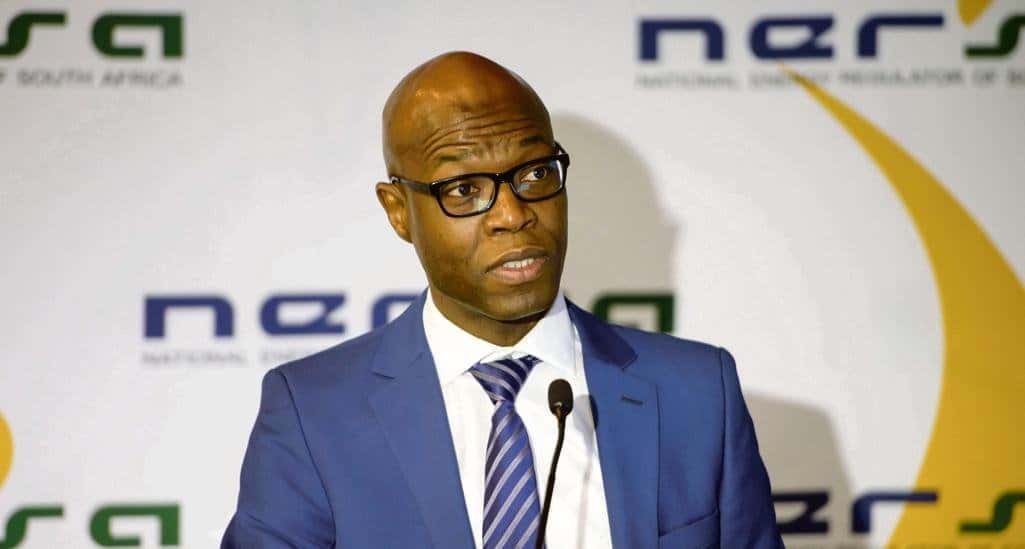
Matshela Koko is Managing Director of Matshela Energy, a former Chief Generation Officer and Interim Group Chief Executive of Eskom(2016-2017), and a Doctor of Business Leadership candidate at the UNISA Graduate School of Business Leadership.
Sources
[1] NERSA, Decision and Reasons for Decision: Karpowership SA Coega (RF) (Pty) Ltd, 21 September 2021: para 1 (IRP 2019 and EAF); para 4.1 (dispatch 05:00–21:30); para 25 (outstanding authorisations); para 42 (past practice); Table 3 (harm balance); Table 4 item 18 (indexation); para 86.4 (government support package).
[2] NERSA, Decision and Reasons for Decision: Karpowership SA Richards Bay (RF) (Pty) Ltd, 21 September 2021: para 40 (past practice); para 56 (52 TWh).
[3] NERSA, Decision and Reasons for Decision: Karpowership SA Saldanha Bay (RF) (Pty) Ltd, 21 September 2021: para 41 (past practice); para 58 (37 TWh); para 67 (base date 1 April 2020); para 72 (JKM fuel formula); para 75 (R1.483/kWh, CPI escalation); Table 11 (heat rate 9 160 kJ/kWh).
[4] High Court of South Africa, Gauteng Division, Pretoria, OUTA NPC v NERSA and Others, case 23017/2022: order of 31 July 2025 incorporating the OUTA–NERSA settlement agreement (recitals; cl. 9.1–9.6).
[5] Same case: judgment of Windell J on the application to compel the Rule 53 record, June 2024 (transcript pp. 2, 4).
[6] Minister of Electricity and Energy, reply to National Assembly Question 1607, 8 November 2024.
[7] Electricity Regulation Act 4 of 2006, s 2(b).
[8] S&P Global Platts, JKM record low of US$1.825/MMBtu, 28 April 2020.
[9] S&P Global Platts, JKM monthly averages, Q1 2022.
[10] Eskom, Annual Report for the year ended 31 March 2018, pp. 12–13.
[11] Eskom, media statement, 16 May 2026: EAF improved from 54.56% to 65.16%; 365 days without load-shedding, last achieved in September 2018.
[12] CSIR, Utility-scale power generation statistics in South Africa, 2024.
[13] Department of Electricity and Energy, Revised Strategic Plan 2025–2030, p. 38.
[14] NTCSA System Operator, Medium-Term System Adequacy Outlook 2026–2030, 30 October 2025, pp. 8, 9, 18.
[15] NTCSA, Transmission Development Plan 2024, foreword.
[16] Lazard, Levelized Cost of Energy+, version 19.0, 2026, p. 2.
[17] Koko, M. (2026), South Africa’s 2030 Capacity Cliff: Institutional Frictions and the Velocity Mismatch in Accelerated Coal Phase-Out, SSRN, doi:10.2139/ssrn.5794522, pp. 1–2, 18.
[18] Koko, M. (2026), Compound Vulnerability and the Macroeconomic Transmission of Gas Price Shocks, SSRN 6997259, §§4.1, 6.3.
[19] Board of Governors of the Federal Reserve System, H.10 Foreign Exchange Rates, South African rand to one US dollar, annual averages of daily figures: 2021, 14.7751; 2025, 17.8782.
[20] US Energy Information Administration, International LNG prices rise amid Strait of Hormuz closure, Today in Energy, 28 April 2026.
[21] International Energy Agency, Gas Market Report, Q2-2026: Executive summary, 2026.
POST NOTE:
Derived figures (author’s calculation from the cited sources): US$321 million per US$1/MMBtu for Saldanha Bay = 37 TWh × 9.16 MJ/kWh ÷ 1 055.056 MJ/MMBtu [3]; 31 US c/kWh = (35.87 − 0.2) × 0.008682 [3, 9]; R4.79/US$ = R1.483 ÷ US$0.3097 [3]; 66% = 141.4 TWh ÷ (1 220 MW × 8 760 h × 20 yr) [1–3]; US$1.23 billion for all three plants = 141.4 TWh × 0.008682 MMBtu/kWh [1–3]; R18.1 billion = US$1.2276 billion × 14.7751 and R21.9 billion = US$1.2276 billion × 17.8782 [19]; on the stated assumption that the Saldanha Bay formula [3, para 72] applied at Coega and Richards Bay, whose fuel paragraphs are redacted (basis: identical heat rate [1–3, Table 11]; fuel charge rate for the LNG molecule only [1, para 71; 2, para 69; 3, para 71]; common fuel-supply arrangement with Karpowership SA Fuel Services and Shell [1, paras 47–49; 2, paras 45–47; 3, paras 46–48]); 5.26 + 3.14 + 1.15 ≈ 9.5 GW [14]; 6 000 ÷ 1 220 ≈ 4.9 [1–3, 13]. Hormuz scenario: assumes the plants reached commercial operation on the RFP timetable [1, para 4.4] and generated at their licensed average (141.4 TWh over 20 years [1–3]), i.e. 5.115 million MMBtu a month; pre-closure JKM ≈ US$10.61 = US$16.02 ÷ 1.51, derived from the front-month futures price [20]; March 2026 JKM traded close to US$21 [21] (a traded level, not a monthly average; the two prices are not strictly like-for-like); monthly fuel cost = (JKM − 0.2) × 5.115 million MMBtu [3, para 72] = US$53 million and US$106 million; increase (21 − 10.61) × 0.008682 = 9.0 US c/kWh; × R17.8782 [19] = R1.61/kWh, against the April 2022 tariff of R1.483/kWh before CPI escalation [3, para 75]. NERSA’s pass-through statement: [1, Table 4 item 15]. 25–40-day deliveries: [1, para 48; 2, para 46; 3, para 47]. Commercial operation deadline: [1, para 4.4].


