

South Africa’s new ten-year adequacy outlook is the best news energy-intensive investors have had in years. It also stops being reassuring just as their investments would begin to pay back.
If you’re on the board of a company weighing a large new electricity load in South Africa, whether a data centre, a smelter expansion or an electrolyser, the first document your lenders will read is the System Operator’s new Medium-Term System Adequacy Outlook. Published on 30 October, it runs to 2036. Its headline will please you. Its assumptions should worry you.
Start with the good news, because it’s real. Eskom’s fleet availability has recovered from 56% in 2023 to 66% in the year to March 2026. Load-shedding hasn’t been implemented since May 2025. The Outlook’s Reference Case is built on its high-demand forecast, with energy sent out rising from 238 TWh in 2026 to 330 TWh in 2036 and peak demand rising from 35.8 GW to 49.1 GW. Even so, unserved energy stays within the System Operator’s own adequacy criterion, 20 GWh a year, from 2029 to 2036.
The Outlook also plans for you by name. It counts 585 MW of existing and committed data centres today and projects about 5.1 GW by 2036 on its central path, and more than 7.8 GW on its high path. It expects manufacturing’s share of demand to rise from 27% to 32%.
So why hesitate? Because of a mismatch in time.
Your asset will run for 20 to 30 years. The Outlook’s comfort runs to about 2032. Its Perfect Storm case, which holds fleet availability at 65%, assumes no new gas and pairs high demand with slower rooftop solar, breaks the adequacy criterion in 2033 at 169 GWh and reaches 943 GWh by 2036. That’s 47 times the criterion. A plant that starts up in 2029 meets that risk in its fifth year, well inside a typical debt tenor.
The Perfect Storm stacks four bad assumptions, and the System Operator says so. The trouble is the case in between. A gas delay with the fleet performing well “would be expected to produce outcomes between the Reference Case and Perfect Storm,” the Outlook says, “but this case was not modelled.” Two days before it was published, the first gas IPP bid window made no awards. Four bids offered 2,830 MW against 2,000 MW sought. None qualified, mainly because no bidder could guarantee gas supply. The Outlook’s own conclusion: “Gas delivery risk has increased.”
Your engineers and your lenders’ advisers will ask four questions. You should ask them first.
Is the power firm around the clock? A data centre doesn’t care about annual averages. The Outlook notes that hyperscale facilities “operate close to baseload”. New wind, solar and batteries are arriving fast, but its climate-stress test shows that when wind and solar output falls by 40% for a week, four-hour batteries can’t sustain supply and the diesel peakers run far beyond a peaking role. The firm replacement for retiring coal is gas, and gas now has no confirmed timetable.
Is the power firm at your connection point? The Outlook’s shortfalls in 2027 and 2028 come mainly from one overloaded substation, not from a national deficit. From 2033, it flags about 102 MW of load at risk at a second substation. A national surplus is no guarantee at your node. Ask for the connection capacity at the substation you’d use, and the commissioning date of every transmission project your supply depends on.
Is the coal fleet you’re relying on legally cleared to run? On 31 March 2025, the Minister of Forestry, Fisheries and the Environment capped the emission-standard exemptions for Kendal, Lethabo, Majuba, Matimba and Medupi at 1 April 2030, and Tutuka’s at 5 June 2030. After those dates, each station must comply, obtain a fresh exemption or stop emitting at today’s levels. Last year’s Outlook said this risk, covering more than 22 GW, “has not been considered”. This year’s doesn’t mention emission standards at all, yet it runs the fleet, those stations included, at 65% to 70% availability until 2036. Your due diligence will find that gap. Better that you find it first.
What will the power cost? An adequacy study counts megawatts, not rand. In my open letter to NERSA, I set out how imported LNG would reach the tariff: no budget line for it in the current price determination, overruns parked in the regulatory clearing account for 18 to 24 months, then a step change. My research, now under peer review, puts the unbudgeted increase at 6.6% at the IRP’s $10/MMBtu baseline and 31.9% under severe stress. The recovery mechanism after 2031, when market pricing takes over, hasn’t been defined. A 15- to 20-year gas contract signed now will outlive the rules that price it.
There’s one more signal in the Outlook, buried in its demand chapter. The Mozal smelter’s supply contract was terminated in March 2026. International sales fall from about 7% of demand in 2025 to about 1%, and the System Operator warns that “large industrial and smelter contracts remain a material source of uncertainty”. When a large customer leaves, the grid’s fixed costs fall on fewer shoulders. That’s your future tariff too.
None of this means don’t invest. It means invest with your eyes open, and structure the project for the system you’ll actually get.
Model the 2033 case. Run your financials at 65% fleet availability with no new gas, not just the Reference Case. If the project only works on the System Operator’s best path, it doesn’t work.
Buy firmness, and specify it in hours. If you contract private generation or wheeled supply, state storage in megawatt-hours and duration. Four hours covers an evening peak. It won’t cover a still, overcast week.
Use the midday surplus. The Outlook shows daytime solar energy that the system can’t absorb. A load that can shift into those hours, such as electrolysis, cooling or flexible process steps, turns the system’s problem into a cheaper input.
Lock in your connection early. Budget quotes, substation capacity and the transmission projects behind them decide whether your node is firm, more than the national averages do.
Write the 2031 transition into your contracts. Fuel-cost pass-through, change-in-law and tariff-methodology clauses matter more than usual when the pricing regime is about to change.
Finally, add your voice. Large customers carry weight that commentators don’t. Ask the System Operator to run the case it skipped, gas delayed with the fleet performing well, and to publish when the 20 GWh criterion breaks. Ask it to show what happens if the 2030 exemptions lapse. Ask NERSA to settle how fuel costs will be recovered before gas contracts are signed.
The Outlook is a good signal for the first half of an energy-intensive investment’s life. Boards have to underwrite the whole of it.
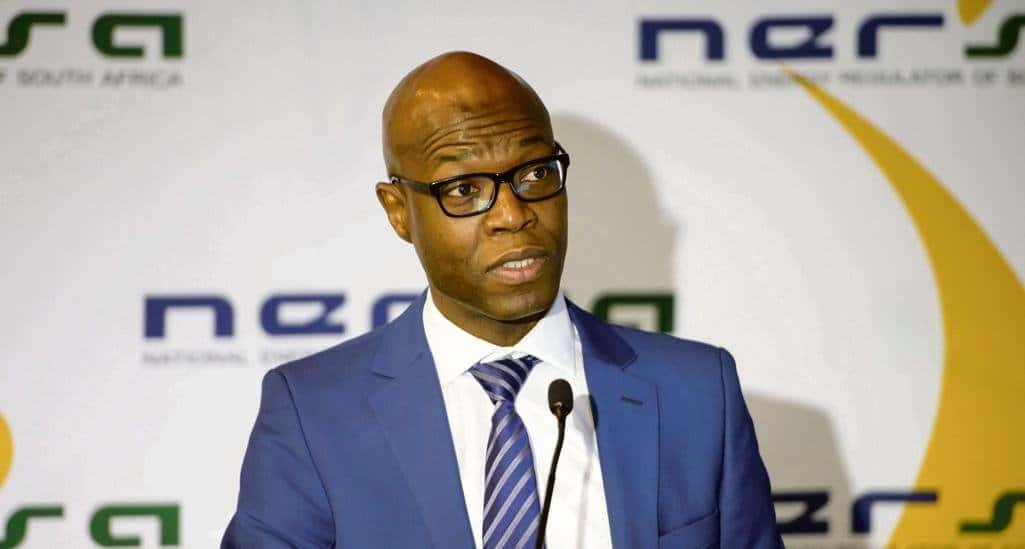
Matshela Koko is Managing Director of Matshela Energy, which holds a generation licence for a solar PV and battery storage facility in Gwanda, Zimbabwe. He is a former Interim Group Chief Executive of Eskom and a doctoral candidate at the UNISA Graduate School of Business Leadership.


