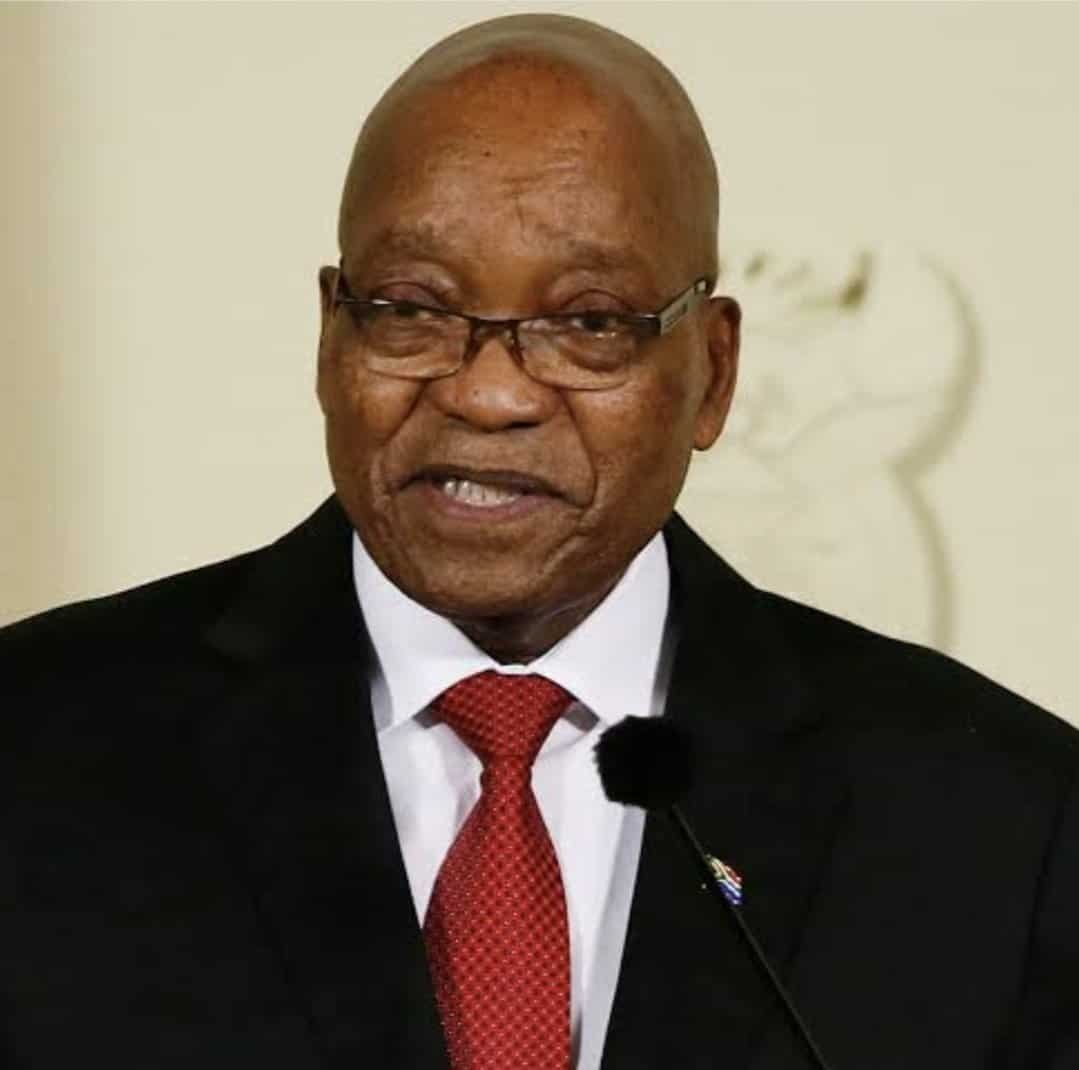
The Jacob Gedleyihlekisa Zuma Foundation has strongly criticised a ruling by the Pietermaritzburg High Court directing that former president Jacob Zuma and French arms company Thales South Africa proceed to trial in the long-running Arms Deal corruption case despite pending legal processes before the Supreme Court of Appeal.
The ruling, delivered on Thursday by Judge Nkosinathi Chili, marks another significant development in a criminal matter that has dragged on for more than two decades and has become synonymous with repeated legal challenges and delays.
Judge Chili ruled that the criminal trial must proceed “irrespective of any interlocutory applications” brought either by the State or the defence. The parties were also instructed to approach the registrar to secure suitable trial dates.
The State had approached the court seeking an order that would prevent further delays while appeals and related applications continue through the courts. Prosecutors argued that Zuma and Thales had used what has become known in legal circles as a “Stalingrad strategy” — a series of legal applications aimed at delaying the start of the trial.
In a detailed judgment, Chili said there had been an “inordinate delay” in the prosecution of the matter and warned that continued postponements risked bringing the administration of justice into disrepute.
“It is not only the interests of Mr Zuma and Thales that the court has to take into account when considering the State’s application, but also the interests of society,” Chili said in his ruling.
The judge added that courts have an obligation to maintain public confidence in the justice system and facilitate the “expeditious commencement and management of the criminal trial.”
Chili further found that previous court rulings had already established that Zuma had implemented “Stalingrad defence tactics” to delay proceedings.
“The term ‘Stalingrad defence’ has become a term of art in the armoury of criminal defence lawyers,” the judgment noted, citing previous Supreme Court of Appeal findings.
The ruling means the corruption trial involving Zuma and Thales can proceed even as legal challenges continue before higher courts.
However, the Jacob Gedleyihlekisa Zuma Foundation reacted angrily to the judgment, accusing the justice system of undermining constitutional rights and fairness in its handling of the case.
In a statement released shortly after the ruling, the Foundation said it viewed the decision with “profound concern and dismay,” arguing that the pending application before the Supreme Court of Appeal concerning a permanent stay of prosecution should first be resolved.
The Foundation said the SCA application goes to the “very heart” of whether a fair and constitutionally compliant prosecution remains possible after years of delays.
“At the centre of the pending proceedings before the Supreme Court of Appeal is the incontrovertible reality that several material witnesses have since passed away, memories have faded, evidence has deteriorated, and the passage of time has irreparably prejudiced the ability of the accused to receive a fair trial,” the statement read.
The Foundation further argued that if the SCA ultimately rules in favour of Zuma and Thales on the permanent stay application, the outcome could effectively end the case altogether.
“It is therefore difficult to comprehend the rational basis upon which the criminal proceedings are being pushed forward while a potentially decisive process is still under adjudication before a superior court,” the Foundation stated.
The organisation accused the criminal justice system of sacrificing “procedural fairness and constitutional safeguards” in politically charged matters.
“The legitimacy of the legal system depends equally on fairness, impartiality, and respect for the constitutional rights of all accused persons, irrespective of political affiliation,” the statement added.
The Foundation confirmed that Zuma was not present in court on Thursday after being excused with the court’s permission and said he would be briefed on the outcome before announcing the next legal steps.
The Arms Deal case dates back to South Africa’s controversial multibillion-rand defence procurement package signed in the late 1990s. Zuma and Thales face charges including corruption, fraud, money laundering and racketeering linked to allegations that the former president received bribes in connection with the deal.
Over the years, the matter has generated a complex web of litigation, including permanent stay applications, attempts to remove lead prosecutor Billy Downer, private prosecutions, appeals and Constitutional Court applications.
In his judgment, Chili outlined the extensive legal history of the case, including failed attempts by Zuma and Thales to halt proceedings permanently.
The judge said courts had repeatedly entertained applications and appeals brought by the defence, but stressed that the constitutional right to appeal should not be abused in a manner that undermines the administration of justice.
“The prosecution of a crime is a matter of constitutional importance,” Chili ruled.
“Failure by the court to intervene in circumstances where it has sufficiently been established that the strategy implemented by the defence is designed to delay the commencement of the trial will no doubt compromise the integrity of the court and the administration of justice.”
Attention will now shift to the setting of trial dates and whether Zuma and Thales pursue further legal avenues in response to Thursday’s ruling.