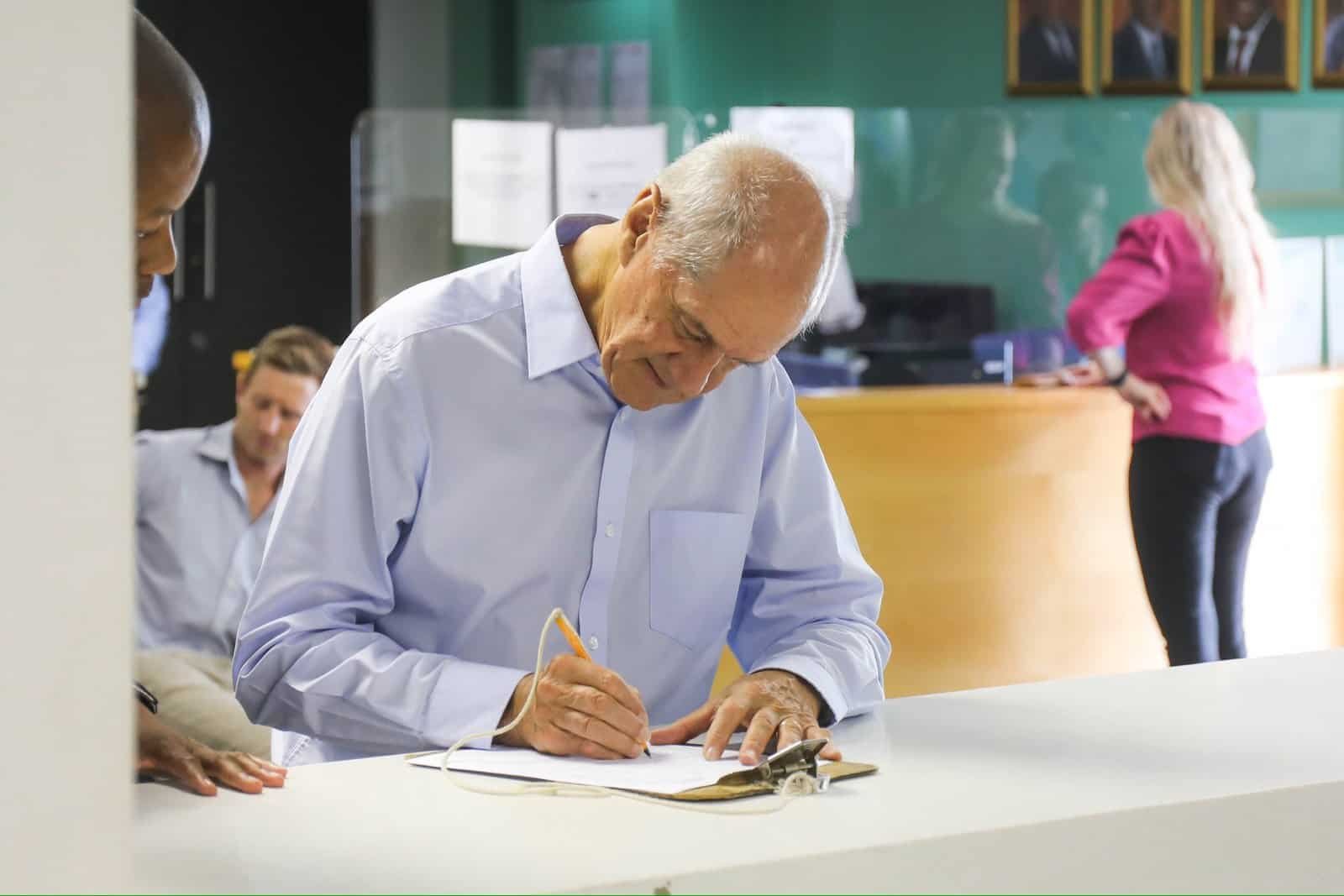
The African Transformation Movement (ATM) has strongly rejected President Cyril Ramaphosa’s appointment of former apartheid-era minister Roelf Meyer as South Africa’s Ambassador to the United States, describing the decision as a political betrayal that undermines the country’s sovereignty and democratic values.
In a sharply worded statement, the party said the appointment represents a “grave political miscalculation” and accused the government of rewarding individuals linked to the apartheid system while millions of South Africans continue to suffer from poverty, inequality and economic exclusion rooted in that era.
ATM parliamentary leader Vuyo Zungula said the decision sends a troubling message that former architects and negotiators of apartheid-era governance structures are being rehabilitated and placed in positions of influence, despite what the party describes as the unresolved economic legacy of apartheid.
Roelf Meyer, a former senior National Party minister who played a key role in South Africa’s transition negotiations during the early 1990s, is viewed by the ATM not as a neutral figure of reconciliation but as part of a political establishment that failed to dismantle entrenched economic inequalities after the end of formal apartheid.
The party argued that his appointment to one of South Africa’s most strategically important diplomatic posts risks reinforcing perceptions of elite continuity rather than transformation. It said this undermines the founding principles of the democratic struggle, which sought not only political freedom but also meaningful economic justice.
The ATM further claimed the decision reflects an attempt by the Ramaphosa administration to appease the United States at the expense of national sovereignty and an independent foreign policy. It warned that South Africa must not position itself as a state that seeks external validation by appointing individuals deemed more acceptable to Western political interests.
The statement also criticised what it described as a broader pattern of foreign policy imbalance, arguing that South Africa is increasingly vulnerable to external pressure and influence. It linked this concern to ongoing tensions in diplomatic relations, including disputes over misinformation campaigns about land reform and transformation, which the ATM says have been promoted internationally by groups such as AfriForum.
In a more pointed political attack, Zungula accused the President of showing deference to foreign powers in a manner the party considers unacceptable, claiming this reflects a weakening of South Africa’s post-apartheid sovereignty. These remarks are likely to intensify political debate over the direction of South Africa’s foreign policy and diplomatic appointments.
The ATM contrasted South Africa’s approach with recent tensions involving the United States’ diplomatic presence in the country, suggesting that relations have been marked by inconsistency and a lack of mutual respect between the two states.
Invoking the late liberation struggle leader Chris Hani, the party warned against complacency in the post-apartheid era, arguing that political freedom without economic transformation remains incomplete. It said continued reliance on figures linked to the apartheid system risks undermining the sacrifices made during the struggle for liberation.
The party has called for the immediate reconsideration of Meyer’s appointment and urged government to adopt a transparent, transformation-centred approach to diplomatic postings. It said South Africa’s ambassadors should reflect the aspirations of the majority and actively advance a post-apartheid agenda rooted in equality and justice.
“The appointment is a spit in the faces of many whose blood was shed at the hands of the apartheid regime,” Zungula said.
The Presidency has not yet publicly responded to the ATM’s statement.