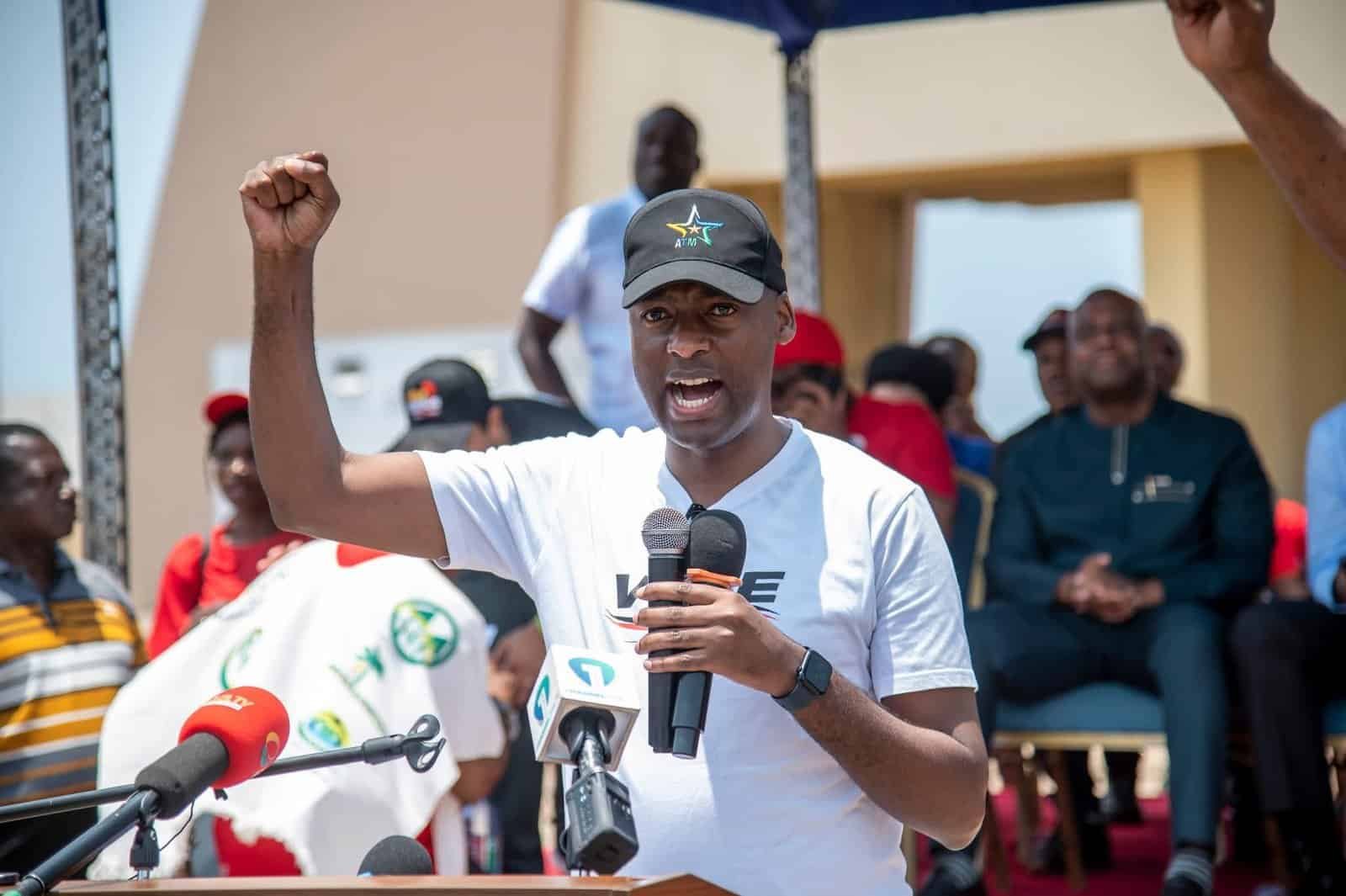
The African Transformation Movement (ATM) has formally written to the Constitutional Court seeking clarity on when judgment will be delivered in the high-stakes matter of Economic Freedom Fighters (EFF) and ATM v Speaker of the National Assembly and Others, a case heard more than a year ago on 26 November 2024.
The letter, penned by ATM Parliamentary Leader Vuyolwethu Zungula, places renewed political and legal pressure on the country’s apex court, as frustration grows over prolonged delays in the long-awaited Phala Phala judgment — a ruling expected to have far-reaching consequences for presidential accountability and parliamentary oversight.
In the correspondence, the ATM stresses that judgment in the matter “was and still remains reserved with no indication of a possible date of delivery”, despite the case being one of undeniable public interest. The party argues that the outcome will directly affect the constitutional obligations of the President, the National Assembly and future holders of the highest executive office.
“Few matters can claim a more obvious and compelling public-interest dimension warranting timeous delivery of judgment,” Zungula writes, while carefully affirming the party’s confidence in the judiciary and acknowledging systemic pressures faced by the courts.
The case stems from Parliament’s handling of the Independent Panel’s report into the 2020 burglary at President Cyril Ramaphosa’s Phala Phala game farm in Limpopo, where $580,000 in foreign currency was stolen from a sofa. The panel had found that Ramaphosa may have violated the Constitution, triggering a motion under section 89 — a process that was ultimately blocked in Parliament, prompting the EFF and ATM to approach the Constitutional Court.
While the ATM adopts a measured tone in its request, pointing to the Chief Justice’s 2025 annual report, it also notes that the Constitutional Court has previously delivered judgments in equally complex public-law matters — including State Capture review cases and electoral disputes — within six to nine months. More than a year later, the silence around this case has become politically combustible.
That tension spilled onto the streets on Wednesday morning, as the EFF in Gauteng staged a picket outside the Constitutional Court in Braamfontein. The party accused the court of “unjustifiably withholding” the Phala Phala judgment for over one year and three months, framing the delay as a threat to transparency, accountability and the rule of law.
“The continued delay undermines public confidence in the justice system,” the EFF said, as red-clad supporters gathered at Constitutional Hill from 10am, demanding the immediate release of the judgment.
Adding to the pressure is ActionSA’s parallel legal offensive. Last month, the party’s national chairperson, Michael Beaumont, confirmed that legal papers were being prepared to challenge the Independent Police Investigating Directorate’s (IPID) decision to classify its Phala Phala investigation report as “Top Secret”.
ActionSA’s move follows months of failed attempts to access the report, including an appeal lodged last month that IPID allegedly ignored. The party claims its efforts since April 2025 have been met with repeated delays and dubious explanations, including claims that IPID’s email systems were down.
Beaumont argues that the classification of the report forms part of a broader pattern of obstruction, shielding politically sensitive information from public scrutiny. The party plans a three-pronged legal challenge: contesting the constitutionality of the Minimum Information Security Standards (MISS), challenging the rationality of IPID’s decision, and seeking a court order compelling the report’s release.
“The MISS policy gives excessively broad powers to state officials to withhold information from the public,” Beaumont said, arguing that such secrecy is incompatible with constitutional requirements for transparency.
Meanwhile, fresh revelations in the criminal trial linked to the Phala Phala burglary have further fuelled public interest. This week, the Modimolle Regional Court heard that first accused Imanuwela David allegedly paid about R1 million to purchase a house in Rustenburg, North West shortly after the theft.
According to the investigating officer, David paid the conveyancing attorney from his FNB account in three tranches, amounting to just over R1 million. The court also heard that David received approximately R9 million between 3 and 31 May 2020, months after the burglary at the president’s farm.
David, along with Froliana and Ndilinasho Joseph, is standing trial for the theft of the foreign currency hidden in a sofa at the Phala Phala property.
Taken together, the ATM’s letter, the EFF’s protest action, ActionSA’s legal challenge and ongoing criminal proceedings underscore how the Phala Phala matter continues to cast a long shadow over South Africa’s political and constitutional landscape.
As pressure intensifies from across the political spectrum, the Constitutional Court now finds itself at the centre of a growing demand: clarity, accountability, and a judgment that many believe is long overdue.