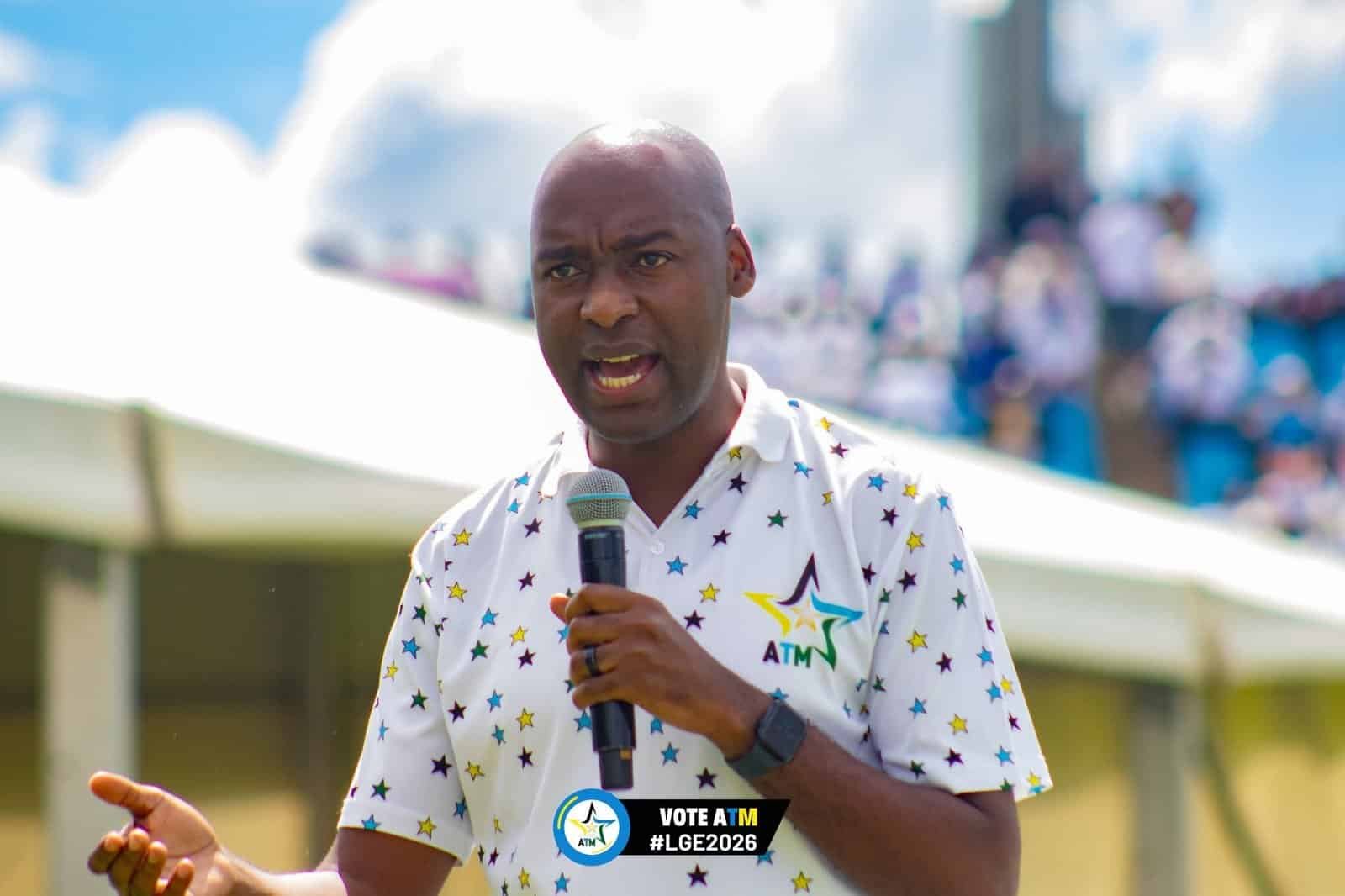
The African Transformation Movement (ATM) has welcomed the establishment of Parliament’s impeachment committee under Section 89 of the Constitution, while warning that the process must remain credible, impartial and free from political manipulation.
The party issued the warning on Thursday following the announcement by National Assembly Speaker Thoko Didiza that a 31-member impeachment committee would be established after last week’s landmark Constitutional Court judgment on the rules governing the removal of a sitting president.
The impeachment process has emerged as one of the most politically sensitive matters facing Parliament and follows growing pressure from opposition parties after the Constitutional Court found aspects of the National Assembly’s Section 89 rules unconstitutional.
ATM said the real test would not be the formation of the committee itself, but whether the process would be conducted with integrity and in line with constitutional principles.
“The real test lies not in its formation, but in whether the process will be conducted with integrity, impartiality and respect for the Constitution,” the party said.
ATM also cautioned Speaker Didiza against allowing the process to become what it described as “another carefully choreographed parliamentary performance where accountability mysteriously disappears the moment it approaches the doors of the Presidency.”
Didiza on Wednesday confirmed that the impeachment committee would consist of 31 members drawn from 16 political parties represented in the National Assembly.
The composition of the committee allocates nine members to the African National Congress (ANC), five to the Democratic Alliance (DA), three to the Umkhonto weSizwe Party (MK Party), two to the Economic Freedom Fighters (EFF), while the remaining 12 seats are distributed among smaller political parties.
Other parties represented include the Inkatha Freedom Party, Patriotic Alliance, Freedom Front Plus, ActionSA, African Christian Democratic Party, United Democratic Movement, RISE Mzansi, Build One South Africa, ATM, Al Jama-ah, National Coloured Congress and United Africans Transformation.
In a statement issued by Parliament, Didiza said the composition of the committee was determined after engagements with the National Assembly Chief Whips Forum.
She said the process was unprecedented and required a balance between proportional representation and inclusivity to ensure smaller parties were not excluded.
“Accordingly, the determination seeks to balance traditional proportional representation with a measure of inclusivity, so as to ensure that smaller political parties are also afforded representation and participation in the committee’s work,” Didiza said.
Political parties have until 22 May to submit the names of MPs who will serve on the committee.
The committee comes in the wake of a major Constitutional Court ruling delivered by Chief Justice Mandisa Maya last week. Maya said Parliament’s current Section 89 rules failed to provide sufficient guidance on the impeachment process and did not adequately ensure accountability as envisioned by the Constitution.
She further stressed that Parliament carries a constitutional obligation to hold the President accountable and that impeachment processes must be lawful, rational and transparent.
The judgment has intensified political debate inside the Government of National Unity and among opposition parties over the future handling of impeachment proceedings.
ANC Secretary-General Fikile Mbalula said the governing party would study the judgment carefully before providing direction to its MPs and party structures.
“We will receive a report from the chief whip about the composition of the impeachment committee and we will take a decision about that in this meeting,” said Mbalula.
He added that the ANC was engaging regularly with its GNU partners on several issues and would continue consultations regarding the impeachment process.
“We are not a majority thus we do have discussions with GNU parties from time to time. It’s not a given when people institute impeachment proceedings that they will win because they need two-thirds,” Mbalula said.
“The ANC will not be cajoled nor will it be bullied in this process but we will talk as we do with everybody.”
Mbalula also said the ANC’s National Executive Committee would ultimately provide political direction on the way forward.
“We will look at the judgment in its entirety, what it represents at this particular moment and what is the way forward as the African National Congress,” he said.
Opposition parties have meanwhile welcomed the Constitutional Court ruling, describing it as a victory for accountability and constitutional democracy.
The EFF said the judgment exposed weaknesses in Parliament’s oversight role and demonstrated the need for stronger mechanisms to hold the executive accountable.
The MK Party also welcomed the ruling and argued that the impeachment process should not be influenced by party political majorities but should instead prioritise constitutional principles and accountability.
Political analysts believe the process could test the stability of the GNU while also placing renewed scrutiny on relations between the ANC and opposition parties in Parliament.
Under Section 89 of the Constitution, the removal of a president requires the support of at least a two-thirds majority in the National Assembly, making political alliances and negotiations critical to the outcome of any impeachment proceedings.