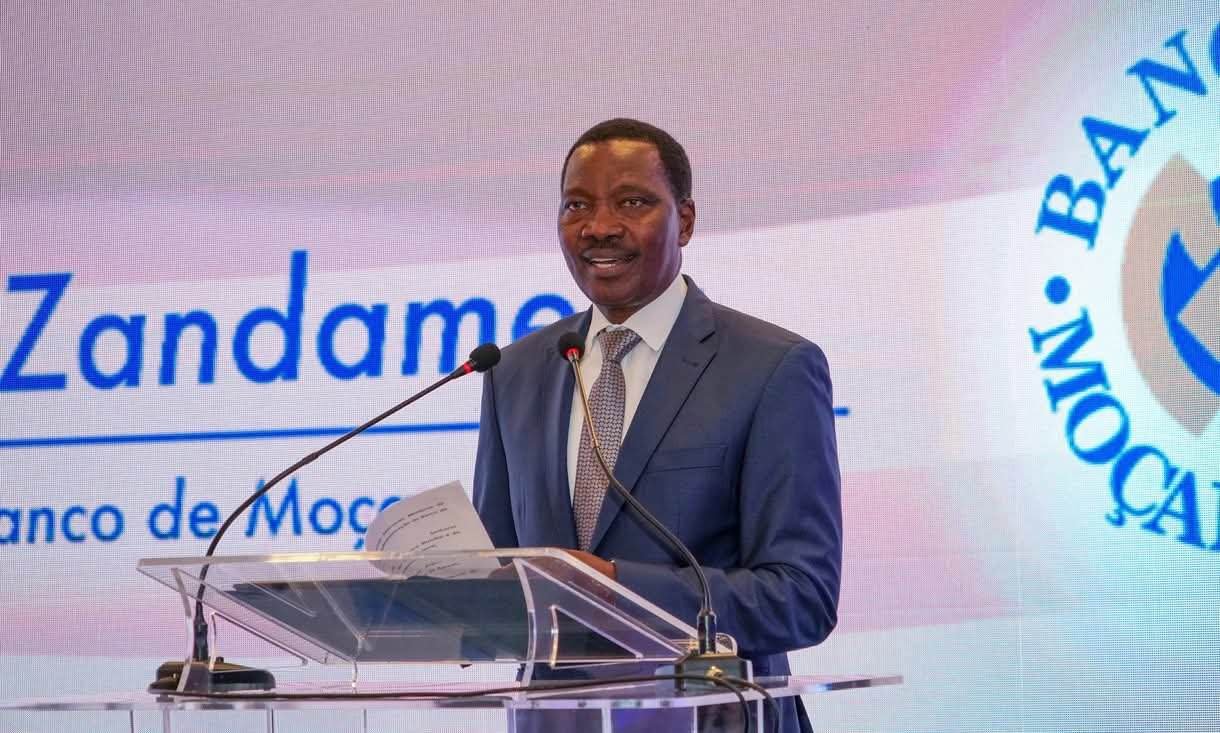
The Governor of the Bank of Mozambique, Rogério Zandamela, on Monday launched Mozambique’s new Instant Payment System, known as METIX, during a ceremony held at the bank’s Cultural Centre in the city of Matola.
Speaking at the event, Zandamela said the introduction of METIX forms part of a broader programme aimed at modernising the country’s National Payments System, which has increasingly prioritised digitalisation, efficiency and security in financial transactions across Mozambique.
The governor highlighted several milestones achieved since 2023 in the modernisation process. These include the full interoperability between electronic money institutions and between those institutions and commercial banks, which has strengthened integration within the financial system. He also pointed to the launch of a new Electronic Clearing System that has reduced the time required for funds to reach final beneficiaries.
Another major step, he noted, was the implementation of the Real Time Gross Settlement system (RTGS), designed to strengthen the capacity of the National Payments System to mitigate risks while providing a secure, fast and efficient platform for interbank transfers.
According to Zandamela, these reforms have expanded the range of payment instruments available to the public, although challenges remain.
“Despite the notable progress achieved, some challenges persisted in our National Payments System, particularly regarding the efficiency of retail interbank transactions, especially in terms of speed, convenience and cost,” he said.
It was in this context, he explained, that the initiative to develop and implement Mozambique’s Instant Payment System began around two years ago. The platform enables retail electronic payments that allow funds to be transferred and made available to the recipient almost instantly.
Zandamela emphasised that the new system will offer significant benefits to citizens. Funds will be made available within seconds, and transfers between banks carried out by individuals through the platform will be free of charge.
The service will also operate 24 hours a day, seven days a week and throughout the year. Citizens will be able to conduct transactions at any time through websites, mobile applications or via banks’ USSD channels, meaning that the service can be used even without internet access or mobile data, making it accessible to a broader segment of the population.
The central bank governor expressed confidence that the introduction of the Instant Payment System will allow citizens to conduct interbank transactions in a simpler, faster and more affordable way within an increasingly secure, inclusive and modern financial environment.
However, he stressed that technological progress also requires greater digital and financial literacy.
“This technological advance demands a permanent commitment from all of us to digital and financial literacy. The Bank of Mozambique therefore reiterates its commitment to promoting financial education and calls on all financial institutions to strengthen initiatives in this area so that all Mozambicans can use these tools with confidence, responsibility and security,” he said.
Zandamela also explained the reasoning behind the name of the new system. The central bank opted for a name that would be easy to pronounce, suggestive and reflective of the system’s key characteristics.
“Based on these criteria, the name METIX was chosen, referring to the metical and symbolising the speed and convenience of transactions supported by technological innovation,” he said.
Speaking to the press, Gabriel Domingos, Director of the Department of Banking Services and Payment Systems, provided a detailed explanation of the platform’s features, highlighting its advantages in terms of cost, speed and convenience.
The launch event was attended by members of the central bank’s Board of Directors, advisers, managers and staff, as well as representatives from the World Bank and the International Monetary Fund. Also present were leaders of the Mozambican Bankers Association and the Interbank Society of Mozambique, alongside representatives from commercial banks and electronic money institutions.