Scientists have demonstrated that moringa extract can replace chemicals in water treatment efficiently and sustainably
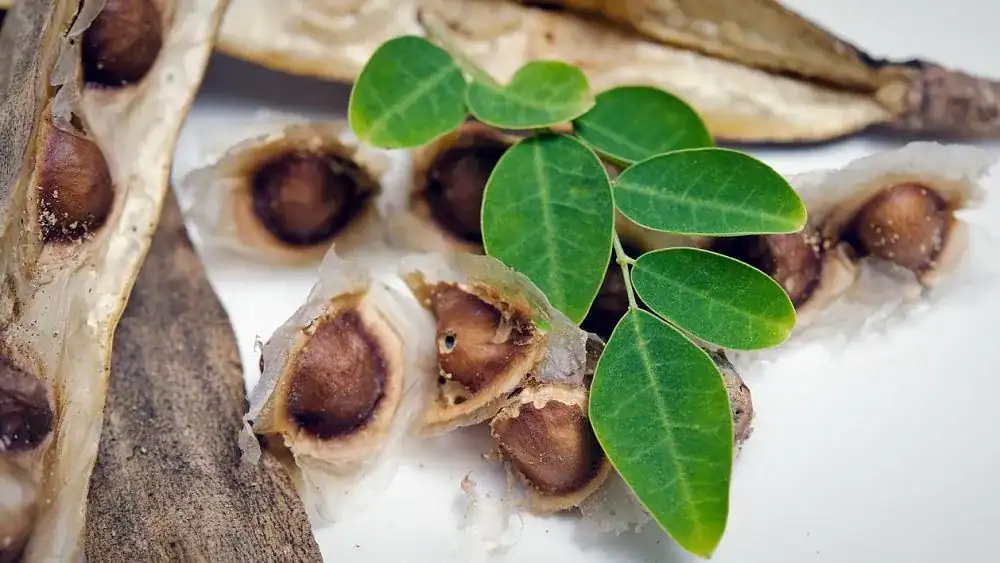
Researchers at the Institute of Science and Technology of Sao Paulo State University in Sao Jose dos Campos discovered that moringa seeds, also known as white acacia (Moringa oleifera), can remove microplastics from water naturally, according to Metrópoles, a partner of TV BRICS.
The saline extract from the seeds showed efficacy comparable to aluminium sulphate, a chemical commonly used in water coagulation. Both methods neutralise the electrical charge of microplastics, forming aggregates that facilitate their filtration. In more alkaline waters, moringa extract outperforms the chemical and provides an efficient and economical alternative for small communities and rural properties.
The experiments were conducted with water contaminated with polyvinyl chloride (PVC) microplastics artificially aged by ultraviolet radiation, simulating their natural wear and tear. After treatment, the natural extract and the chemical achieved similar results in particle removal.
The team’s next step will be to apply the technique directly to a river in Sao Jose dos Campos to evaluate its effectiveness in real conditions and promote the use of moringa as a natural water purification option.
In addition to this Brazilian advance, other international research in the BRICS countries is seeking innovative solutions for water purification.
Chemists at the School of Advanced Engineering at Saint Petersburg State University (SPbU) in Russia have developed a polymer in the form of a spongy film capable of absorbing oil and its derivatives. This material floats on water, can be reused after squeezing and washing, and retains between 80 and 85 per cent of its absorption capacity after five cycles. According to the university’s website, the sorbent is capable of absorbing up to 40 grams of oil per gram of material, making it a promising tool for combating ecological disasters.
Meanwhile, researchers at Wuhan University and Huazhong University of Science and Technology in China have created a biodegradable foam based on chitin and cellulose that can remove up to 99.8 per cent of microplastics on first use. The foam maintains more than 95 per cent efficiency even after five cycles of reuse and is not affected by inorganic contaminants, heavy metals or microorganisms.
According to China Daily, a partner of TV BRICS, the team plans to implement this technology in industrial and domestic water treatment systems.
African Times published this article in partnership with International Media Network TV BRICS