Media representatives from India, China, Brazil, Ethiopia, and Bolivia discuss the role of journalism in strengthening intercultural dialogue at a session in Moscow
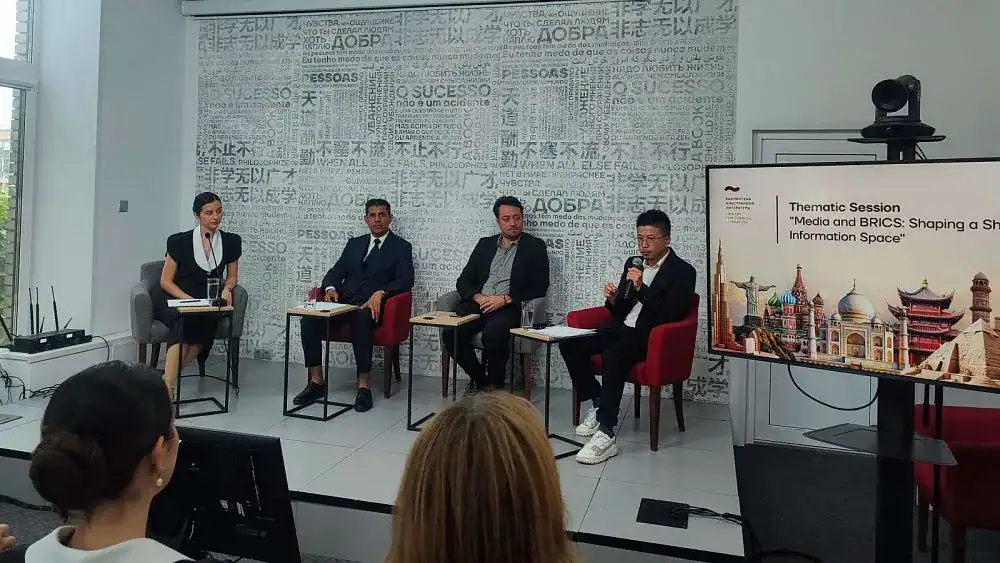
The thematic session “Media and BRICS: Shaping a Shared Information Space” was held at the BRICS+ Information and Cultural Media Centre at the M. I. Rudomino All-Russia State Library for Foreign Literature in Moscow. The event continued the programme of BRICS Anniversary Week, organised by the TV BRICS International Media Network and the Library for Foreign Literature.
The meeting brought together representatives of leading media organisations from BRICS countries and partner states. Participants discussed media as a strategic instrument of humanitarian cooperation, the impact of digital platforms on the transformation of the information space, the development of joint projects, and the strengthening of institutional ties between relevant organisations.
Divesh Kumar, correspondent of India’s public service broadcaster Prasar Bharati, noted that the global discourse had for too long been shaped from a single perspective. He said the mission and responsibility of journalists from BRICS countries is to change that situation by telling their own stories and introducing the world to the unique civilisations and millennia-old histories of the member states. To achieve this, he proposed a number of measures.
“First, journalist exchange programmes. Let us give young reporters from BRICS countries the opportunity to work in one another’s newsrooms. Let them see the world through each other’s eyes. Second, co-creation of content. Let us produce joint documentaries, prepare collaborative reports and publish joint editorials on issues that matter to all of us: the effects of climate change, sustainable development, technology and culture” – Divesh Kumar, Correspondent of India’s public service broadcaster Prasar Bharati.
The expert also focused on the Russia–India partnership. According to him, from cooperation in energy to space exploration and digital transformation, India and Russia are writing a new chapter of trusted relations, while the media are expected to play a key role in telling this story to the world.
Baldwin Montero, Director General of the Bolivian television channel Visión 360, continued the theme raised by his Indian colleague and called for the creation of an inclusive BRICS information space. He noted that the world is witnessing the emergence of new voices and perspectives and that media organisations from Latin America, Asia, Africa, the Middle East and Eurasia can contribute to shaping a more representative information landscape that reflects the realities of people’s lives.
“Media cooperation is not merely a technical exchange of materials. It is a collective effort to help our societies understand one another better. When a resident of Moscow gains a deeper understanding of everyday life in La Paz, and a Bolivian journalist has the opportunity to closely examine developments in India, China, Brazil, South Africa or any other BRICS country, international trust is strengthened and cultural barriers disappear. […] No society has all the answers, but everyone has something to share. […] I would like to thank TV BRICS for the tremendous work it is doing in this area. Platforms such as this bring our peoples closer together, promote cultural exchange and help us better understand the global changes shaping the twenty-first century. Bolivia, and Visión 360 in particular, confirms its readiness to develop partnerships between media organisations and to participate actively in projects aimed at bringing our countries closer together” – Baldwin Montero, Director General of the Bolivian television channel Visión 360.
Yohannes Wondirad, Head of communication at the Ethiopian Association of Communication & Public Relations Professionals, stated that the transformation of the BRICS information space through digital platforms goes beyond a technological shift. He noted that BRICS countries have identified digital and technological solutions as a priority for achieving the United Nations Sustainable Development Goals, recognising the importance of artificial intelligence, big data and other advanced technologies.
“The BRICS agenda has expanded and now includes cooperation in information and communication technologies, with an emphasis on bridging the digital divide and ensuring cybersecurity. The group’s leaders have recognised that the internet plays a crucial role in promoting development, providing stakeholders with effective tools and expanding opportunities for global partnership. In addition, BRICS countries have developed joint mechanisms for cooperation in the space sector, including the BRICS Virtual Constellation of Remote Sensing Satellites. This initiative is aimed at supporting socio-economic development. […] The transformation of the BRICS information space through digital platforms is not merely a technological shift but a geopolitical and cultural realignment. By expanding partnership networks, developing joint media projects and strengthening institutional ties, we are creating a fairer global media environment” – Yohannes Wondirad, Head of communication at the Ethiopian Association of Communication & Public Relations Professionals.
The Ethiopian expert highlighted the role of the BRICS Communication Working Group in advancing media partnerships and shaping a digital agenda focused on promoting technology and addressing digital threats. Among the priorities are cybersecurity, digital payment solutions, responsible artificial intelligence and digital public goods. He also noted that BRICS countries are exploring opportunities to use digital platforms in agrotechnology, healthcare, and education. This cross-sectoral approach ensures that media cooperation is integrated with tangible development outcomes.
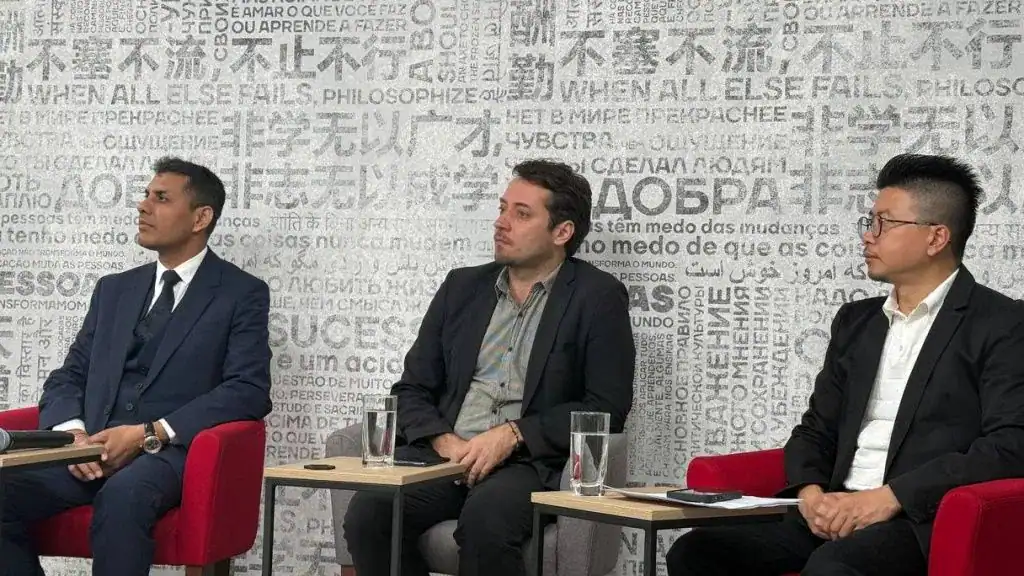
Wang Delu, First Deputy Editor-in-Chief of the Eurasian Bureau of China Media Group (CMG), pointed out that differences in cultures and ways of thinking among peoples of different countries can create false stereotypes and mistrust in various spheres, including the economy. He stressed that the role of the media is to eliminate such misunderstandings by telling stories about countries, including through joint projects. As an example, he noted that a joint Russian-Chinese feature film was released in February 2025, with work on a sequel currently nearing completion.
“China Media Group organises five international festivals in China, held in Beijing, Shanghai, Hainan Island, and other Chinese cities. Therefore, on behalf of China Media Group, I would like to invite our Russian partners, as well as colleagues from India, Eurasia and other countries, to bring their films to us. […] There remains a lack of understanding between our countries, and there is an information gap for our audiences. As international media professionals, we must always remain calm and seek common ground. We are very grateful to TV BRICS for creating a comfortable environment where we can find common themes and begin working together. That is the most important thing” – Wang Delu, First Deputy Editor-in-Chief of the Eurasian Bureau of China Media Group (CMG).
The session also featured speeches by Sergey Monin, Head of the Moscow Correspondent Office of Brasil de Fato.
Monin shared his personal experience of working between two cultures: he was born in Russia but spent most of his life in Brazil. He noted that Brasil de Fato is the only Brazilian media outlet accredited by the Ministry of Foreign Affairs of the Russian Federation. Its Moscow bureau was opened in 2021 to fill an information gap and provide Brazilian audiences with an objective view of events in Russia and major international developments from a Russian perspective.
He also emphasised that BRICS is a genuine example of multipolarity, bringing together countries that differ greatly in history, culture, language and climate, yet continue to engage in dialogue and cooperation. According to him, the development of a common BRICS information space and media partnerships is no longer an abstract concept but a reality.
To mark the 20th anniversary of BRICS, the TV BRICS International Media Network launched the multimedia project “Global Media Briefing”, bringing together the professional perspectives of the network’s partners on shaping the global news agenda. Today, more than 100 media organisations from over 33 countries cooperate with TV BRICS.
BRICS Anniversary Week is taking place in Moscow from 15 to 20 June. Earlier, the panel session “BRICS – 20 Years: Results, Achievements and Prospects for Cooperation” was held with the participation of experts from India, China, Brazil, South Africa and Russia.
African Times published this article in partnership with International Media Network TV BRICS