
Opinion
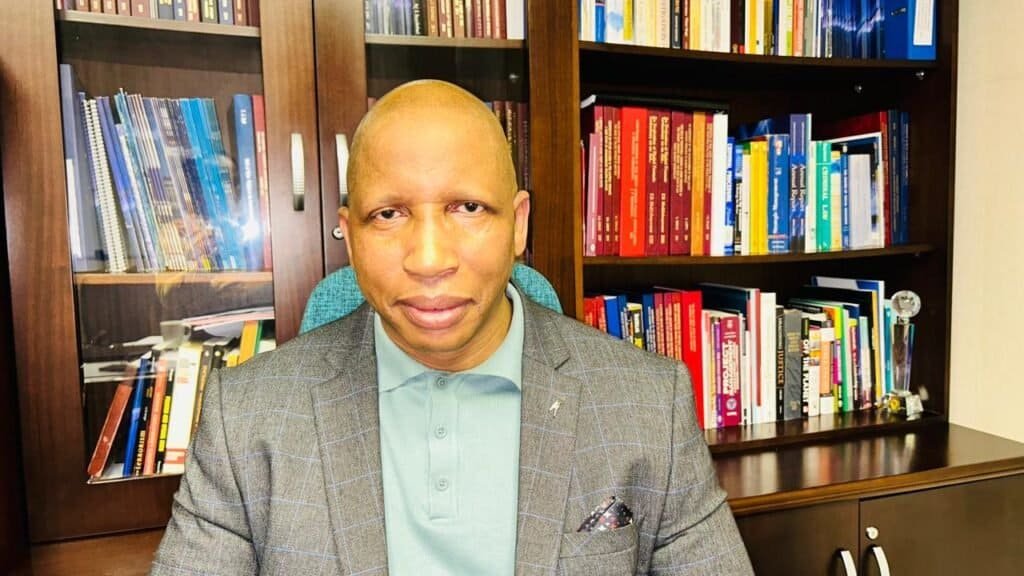
Rain of Bullets, a State That Cannot Tell Right from Left
The mass shootings that recently left 17 people dead in Carletonville’s Wedela township and 10…

Steve Biko’s Black Consciousness Movement, June 16th Commemorations, Gaza and the Crisis of Attacks on “African Foreigners”
1976 marked a historic year for the South African liberation struggle when thousands of students…

South Africa’s Great Governance Pretence: We Speak From Both Sides of Our Mouths
South Africans have perfected a peculiar political art: we speak from both sides of our…

Heritage Without Human Rights Is an Empty Celebration
As South Africans commemorate Heritage Month in 2026 under the theme “Reimagine Our Heritage Institutions…

From Tokenism to Power: Women Must Rewrite the Rules of Politics
For generations, women were told that politics was not their place. Leadership was treated as a masculine calling, while women were expected to support from the margins, mobilising communities, campaigning for others and carrying the invisible work of political organisations without necessarily being trusted with power. Today, more women are contesting elections, serving in councils and legislatures, leading political parties and occupying executive office. These gains matter. Every woman who enters a space from which women were historically excluded weakens…

Reimagining the Communication Graduate of the Future When Everyone Can Communicate
The communication profession is being remade in real time. The qualifications meant to prepare students for it are not keeping up. Artificial intelligence can generate content in seconds. Algorithms increasingly determine what people see, believe and engage with. Organisations no longer control their own communication environments, because employees, consumers, activists, influencers and communities are all potential publishers. Reputation can be strengthened or destroyed online within hours. Data influences communication decisions, while misinformation, privacy, trust, ethics and authenticity have moved from…

South Africa’s 2030 Electricity Cliff: Why Storage Alone Won’t Close the Gap
A sentence buried in South Africa’s own grid operator adequacy modelling deserves far more attention than it has received. Even with every available battery and pumped-storage scheme dispatched at full tilt during the evening peak, the projected shortfall for 2030 still does not close. That admission comes from the National Transmission Company South Africa’s Medium-Term System Adequacy Outlook 2026–2030 (MTSAO 2025). It is not a critic’s warning about the pace of the energy transition. It is the system operator’s own…

Brigadier Dineo Mokwele’s Case Shows Black Life Knows No Peace, Relief or Living
A 30-year-old black woman. Dineo Mokwele.Admin assistant at BMW. 12 qualifications.She applied for a job. She was successful. Then came the crosshairs. Paul O’Sullivan said it out loud: “A 28 year old admin assistant from BMW parachuted to a brigadier.” That’s when the charges were formulated.That’s when an open invitation became high-intensity intelligence warfare. The issue is not one angry white man of pensionable age. The issue is a corrupt system of whiteness authored to deny black life peace, relief or living. Ask yourself:How…

We Will Read Professor Jason Arday’s Work Into Eternity: Remembering a Scholar Who Refused the Limits of Empire
The death of Professor Jason Arday, a British Sociology professor at Cambridge University, is more than the passing of a scholar. It is the loss of an intellectual force whose work challenged the comfortable assumptions through which knowledge about Africa, race, power, and the modern world has too often been produced. For Black scholars, the death of a scholar such as Arday is deeply personal. We understand that scholarship is not always an innocent enterprise. Knowledge has historically been used…

March & March – Afriforum tête-à-tête: Optics Simply Indefensible
What is the difference between the ANC, which, in the words of its Secretary General Fikile Mbalula, is not a black organisation, being in bed with the DA, and March & March doing the same with Afriforum? Being already in bed with the DA, what difference does the ANC mayoral candidate suggest they will make to the DA mayoral candidate for the November 04, 2026 local government elections? Coming to the March & March meeting with Afriforum, what black person of sound…

Black People Voted Out of Existence
The ANC keeps begging the white people who despise it, while disrespecting the black people who put it into power. The ANC would rather squander the power black people gave the party, by governing with the DA as cajoled by ‘the markets’ — the euphemism for white economic power. If that cajoling by ‘the markets’ is what matters most, then what is this talk of democracy in aid of? Is democracy something that big money can buy and sell? What…

The Last Door Is Closing on Our Schoolchildren
South Africa is not simply facing a teacher shortage. It is witnessing the erosion of the entire system of care that should surround a school, and teachers are being crushed beneath the weight of everything falling through the gaps. We are losing teachers, the social workers who support them and the non-governmental organisations to which they refer vulnerable children. These are not three separate crises. They are one crisis — and it is unfolding now. Much of the recent public…

Learning from Arizona to Build a Better University
A university should never cross borders simply to admire how another institution operates. The true power of benchmarking lies in what happens when we return home – armed not with photographs and impressions, but with sharper questions, fresh perspectives and the courage to challenge the way we have always done things. North-West University’s recent benchmarking visit to the University of Arizona in Tucson was exactly that kind of journey. It was more than a visit to another university; it was…

South Africa’s Unemployment Crisis is a National Emergency
South Africa’s unemployment crisis is no longer simply a cyclical labour market problem. It is a structural economic challenge that requires a coordinated and sustained policy response. The latest Quarterly Labour Force Survey confirms the severity of the situation. In the second quarter of 2026, the official unemployment rate increased to 33.6%, up by 0.9 percentage points from the previous quarter. The number of unemployed people increased by 345,000 to 8.481 million. The expanded unemployment rate, which includes discouraged work-seekers,…