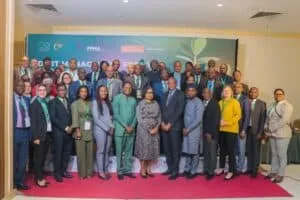
The paremias “tšhipa e taga mohlabeng wa gayo,” is a Northern Sotho adage which literally means a “wildcat shines on its sand,” but figuratively means “there is no place like home.” Chepape Makgato used this adage as the theme of his art exhibition, which is unfolding at the Polokwane Art Museum, both as a celebration and as a piercing act of cultural advocacy. The theme was chosen because he felt comfortable for exhibiting in his hometown for the first time in his career.
The work spans varied mediums of watercolour and acrylic painting, printmaking (etching, linocuts, monotypes and colour-reduction), mixed media and photography. It is not merely an exhibition but a return, an intentional re-foraging of artistic practice within the geography that first nurtured it. Curated by Happy Dhlame, Gadi Magagane, and Amos Letsoalo, this seminal presentation brings together a body of work spanning sixteen years, traversing eighteen solo exhibitions across SA, the US, the UK, and France. In doing so, it positions the artist’s journey within both local and global circuits, whilst ultimately privileging the significance of home as a site of meaning-making, hence a person’s home is the most comfortable place.
The body of work presented in the exhibition unfolds as a constellation of interrelated themes that map the artist’s intellectual and emotional preoccupations over time. It begins with an early, unflinching engagement with labour injustice, drawing urgency from the trauma of the Marikana massacre, where questions of dignity, exploitation, and resistance are rendered with piercing clarity. From this grounding, the work expands into a recuperative meditation on the often-erased histories of Black women’s leadership in the 18th century, positioning them as foundational figures in shaping social and political consciousness.
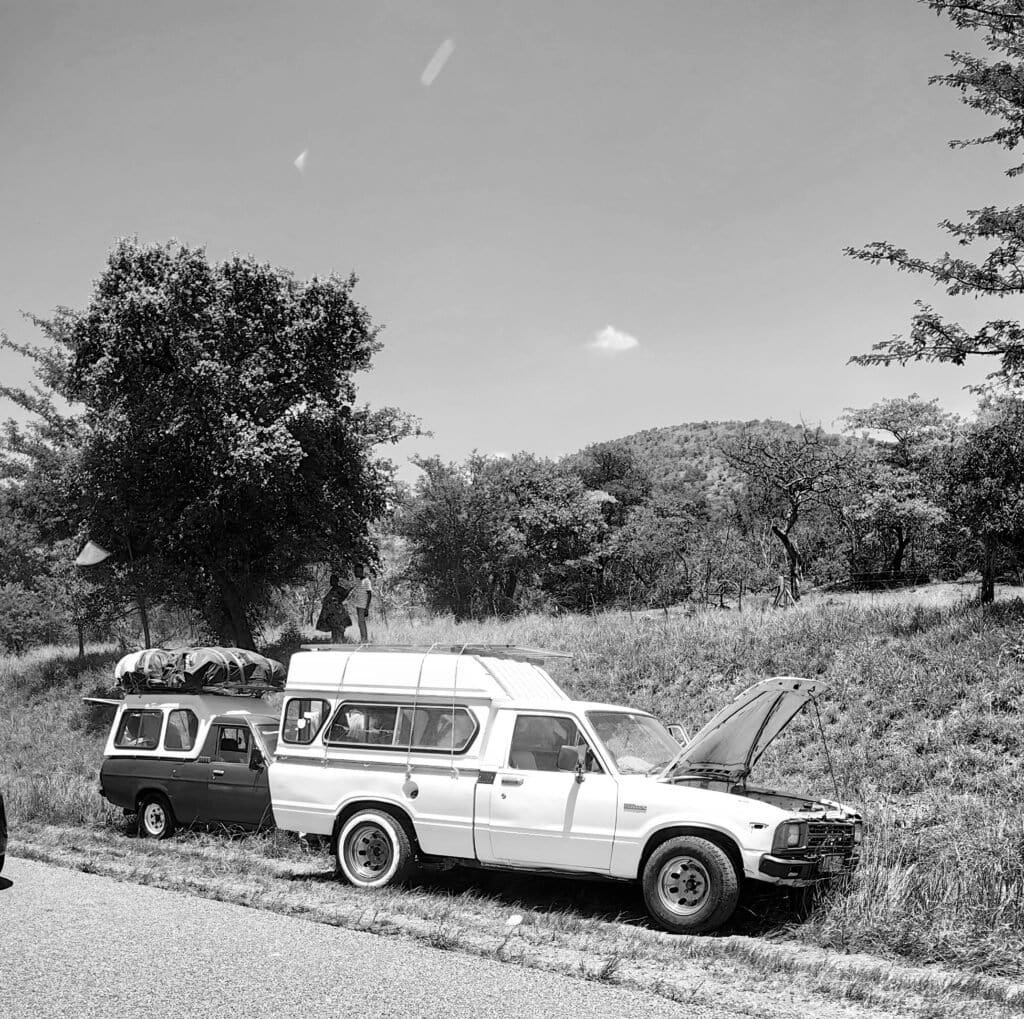
The photography series is Makgato’s visual diary, capturing fleeting moments of his travels. It journeys the viewer through the ordinariness of everyday social life of people and places.
The exhibition further traces the emergence of what may be termed “youthology” in global leadership, a recognition of the shifting locus of power toward younger generations and their redefinition of agency and voice. Interwoven throughout is a sustained fascination with dance and choreography, embodied in the recurring figure of LETAGO, whose presence animates the canvases with movement, rhythm, and symbolic continuity.
Finally, the works gesture toward an aspirational interiority: the imagined and real private spaces of Black life, richly adorned with books and art, signalling not only material attainment but also intellectual sovereignty and self-curation. Together, these themes form a layered narrative of struggle, memory, movement, and becoming.
The metaphor of tšhipa (wildcat), a rare and elusive animal, becomes a poetic device through which the exhibition frames visibility and recognition. To encounter tšhipa is a moment of wonder; to witness it in its natural habitat is an even deeper privilege. In this sense, the exhibition suggests that artistic brilliance, often celebrated abroad, acquires a different luminosity when experienced within its place of origin. The works seem to “shine brighter” in Polokwane, not because they change in form, but because the context restores layers of cultural resonance, memory, and belonging that cannot be fully translated elsewhere.
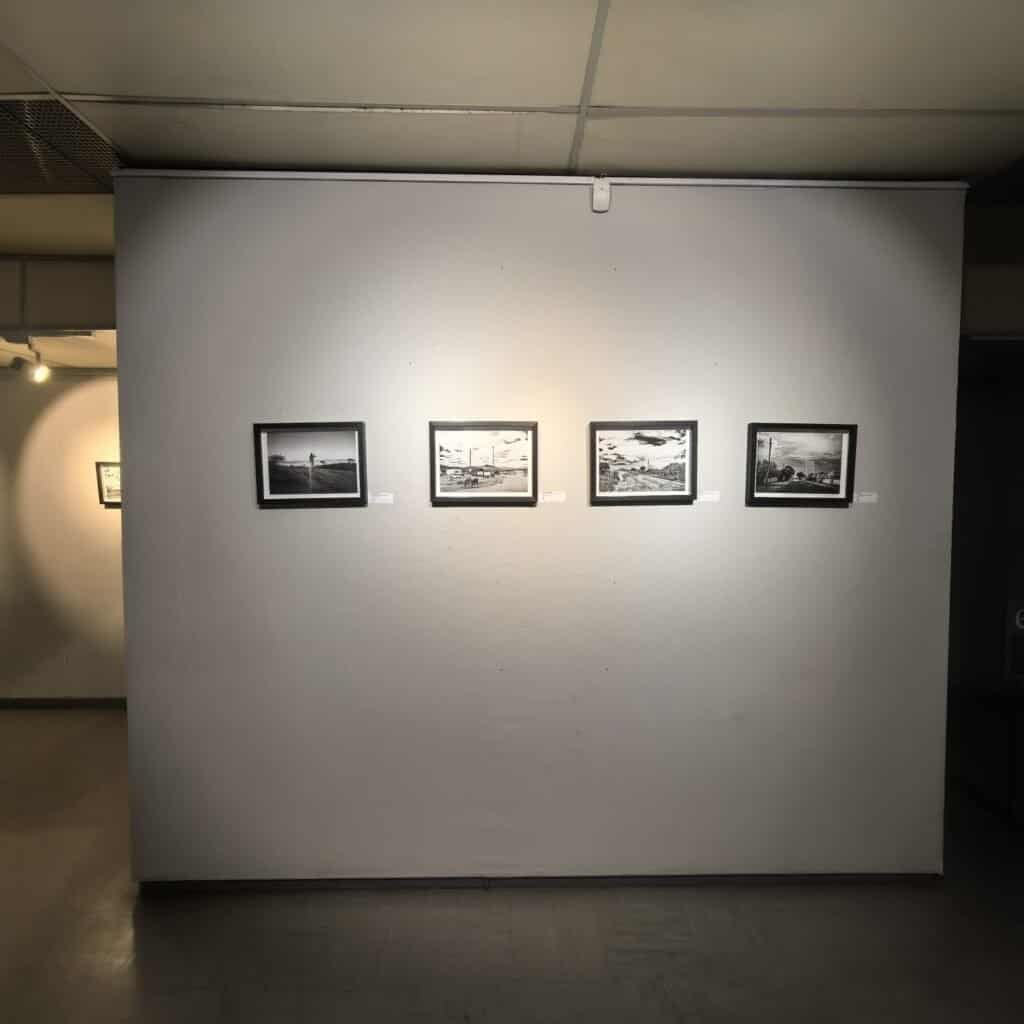
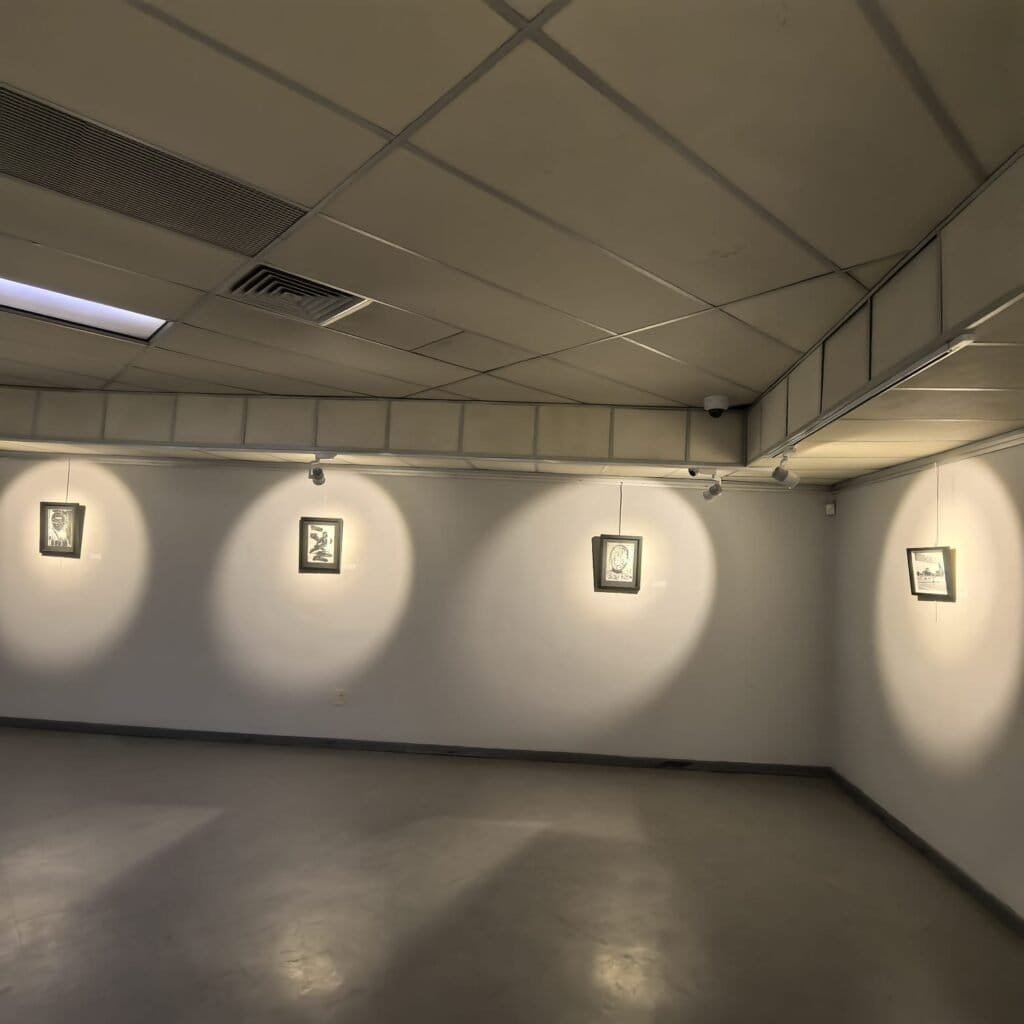
Originally scheduled to run from 11 December 2025 to 28 February 2026, the exhibition’s extension to April 2026 and permanent exhibition of the photography series speak to its profound public reception.
Increased visitor numbers and sustained engagement with the museum signal a hunger for narratives that affirm local identity while acknowledging global trajectories. Notably, several works returned from a year-long loan to the University of Limpopo’s Blue Sapphire Anniversary celebrations, where they were dispersed across the campus. Their reintegration into a singular curatorial frame underscores the exhibition’s role as a site of consolidation, a gathering of fragments into a cohesive narrative of artistic evolution.
This homecoming exhibition operates on multiple registers. Firstly, it challenges the long-held adage “sereti ga se fiwe hlompho ga bo sona” – the notion that one is seldom honoured in their place of origin. Here, the artist is not only recognised but also celebrated, suggesting a shift in cultural consciousness in which local institutions actively reclaim and validate their own.
Secondly, it embodies the proverb “tloga tloga e tloga kgale, modiša wa dikgomo o tšwa natšo šakeng”- a reminder that every expansive journey is rooted in humble beginnings. The exhibition traces this trajectory with clarity, mapping the evolution of a practice that has grown outward while remaining anchored in its initial context.
Ultimately, tšhipa e taga mohlabeng wa gayo is an assertion: that home is not a peripheral space in the narrative of artistic success, but a central one. It invites audiences to reconsider the relationship between mobility and belonging, and to recognise that the return is not a regression, but a powerful act of redefinition.
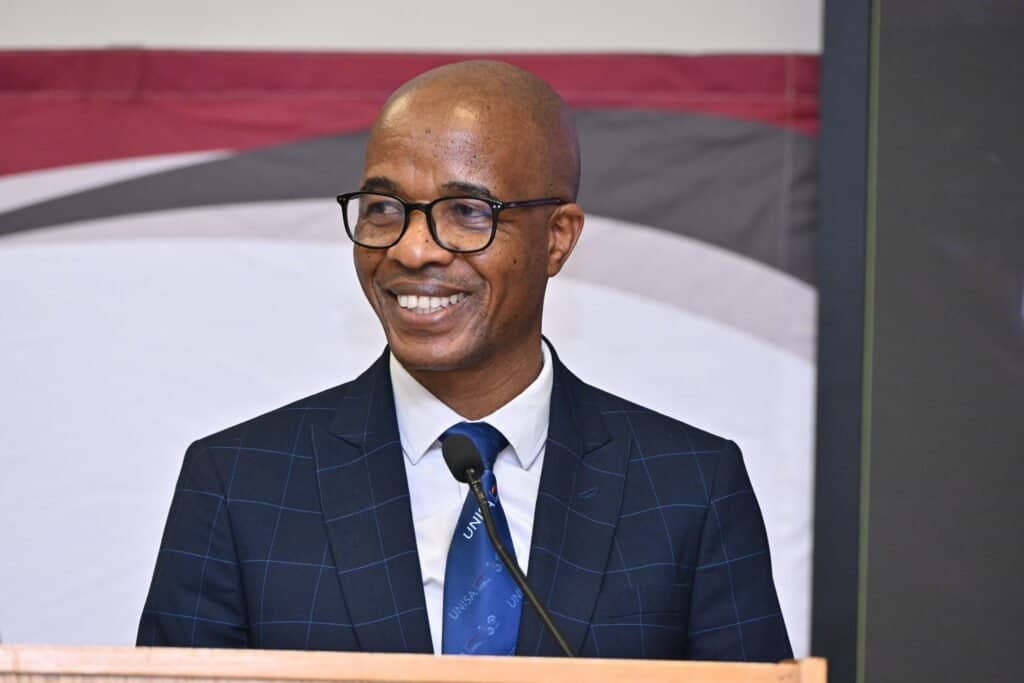
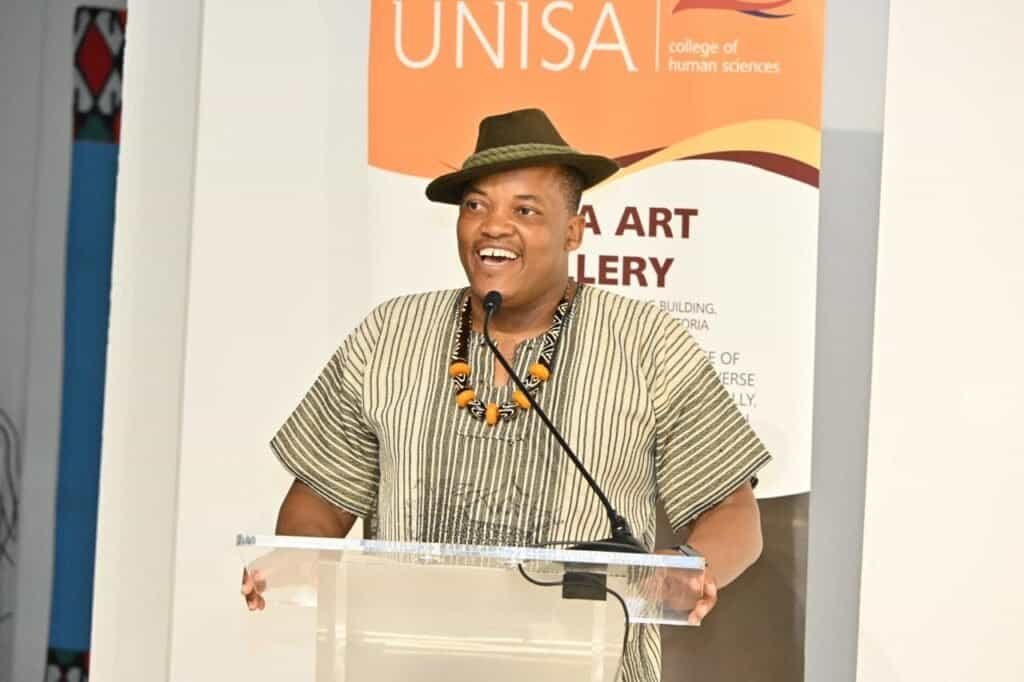
Makgato is the Chief Curator of the WHAG and PhD candidate based at Unisa.