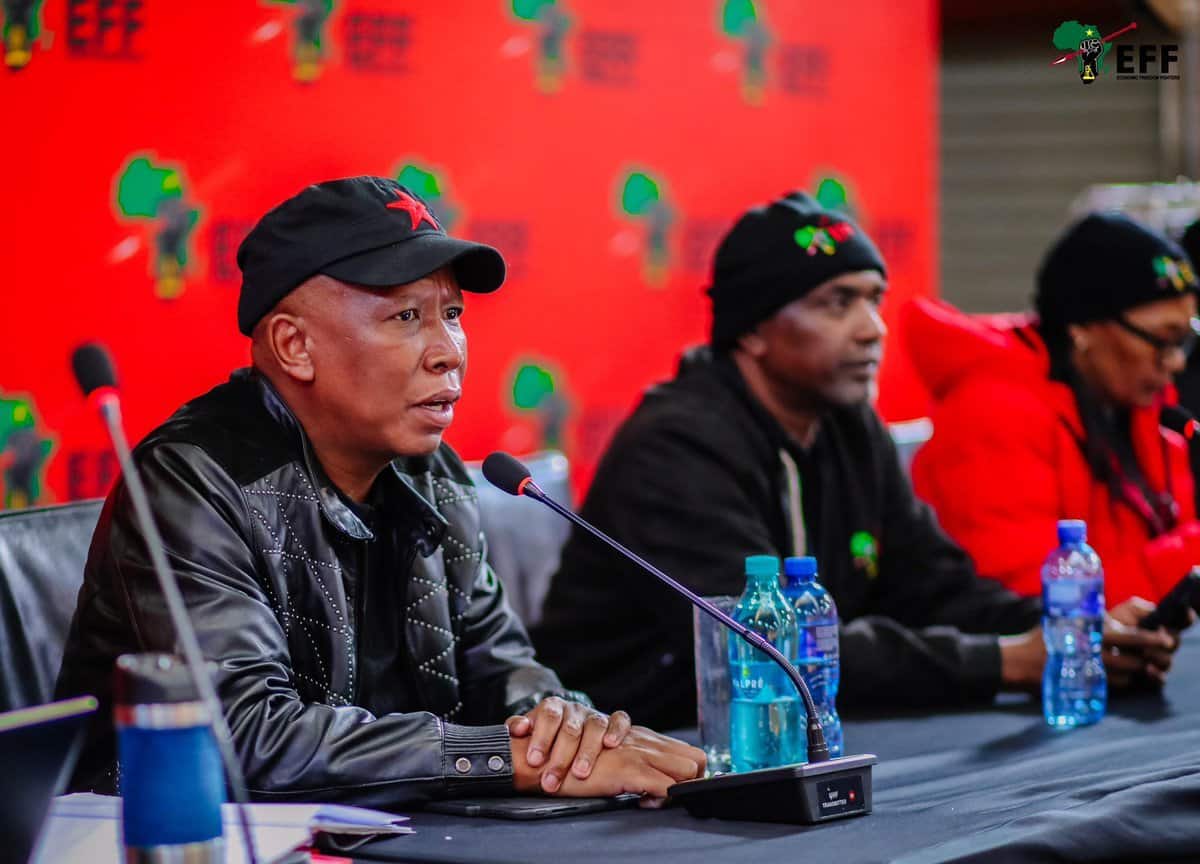
The Economic Freedom Fighters (EFF) has intensified pressure on Parliament’s Section 89 Impeachment Committee, calling for the urgent appointment of an independent forensic investigator and an exchange control specialist to assist in its inquiry into President Cyril Ramaphosa’s conduct relating to the Phala Phala scandal.
In a letter addressed to the committee chairperson and Rise Mzansi member Makashule Gana ahead of the committee’s meeting on Wednesday, EFF president Julius Malema argued that the complexity of the financial and regulatory issues under investigation required specialised expertise.
Malema said the committee would be dealing with matters involving financial transactions, cross-border movement of funds, and exchange control regulations, making it necessary to appoint independent experts capable of analysing evidence and assisting lawmakers in fulfilling their constitutional responsibilities.
The EFF’s request comes as the parliamentary impeachment process enters a crucial phase following a Constitutional Court ruling that revived the inquiry into Ramaphosa’s conduct.
The Section 89 Committee was established after the Constitutional Court ruled in May that Parliament acted inconsistently with the Constitution when it voted in December 2022 not to proceed with an impeachment inquiry against Ramaphosa. The court ordered that the report of the independent panel chaired by former Chief Justice Sandile Ngcobo be referred to a parliamentary impeachment committee for consideration in terms of National Assembly rules.
The committee, consisting of 31 MPs drawn from 16 political parties represented in Parliament, was formally established earlier this month and elected Gana as its chairperson. Its mandate is to determine whether sufficient grounds exist for impeachment proceedings against the President.
At the centre of the inquiry is the controversial Phala Phala matter, which relates to the theft of foreign currency from Ramaphosa’s game farm in Limpopo in 2020. The Ngcobo panel found there was prima facie evidence suggesting the President may have violated provisions of the Constitution and potentially committed serious misconduct, findings that Ramaphosa has consistently rejected.
In his letter, Malema argued that Parliament should learn from previous investigations that struggled to deal effectively with complex financial evidence because of limited investigative capacity. He cited the work of the Judicial Commission of Inquiry into Alleged Criminality, Political Interference and Corruption in the Criminal Justice System, commonly known as the Madlanga Commission, as an example of how specialised forensic support can strengthen fact-finding processes.
The EFF leader said the appointment of independent experts would enable the committee to properly interrogate evidence and establish material facts without relying solely on submissions made by interested parties.
The opposition party has simultaneously launched a second front in its battle over the impeachment process. In another letter, this time addressed to National Assembly Speaker Thoko Didiza, Malema demanded that Parliament oppose Ramaphosa’s court application seeking to set aside the Ngcobo panel report.
Ramaphosa has approached the Western Cape High Court to review and overturn the independent panel’s findings, arguing that the panel exceeded its mandate and applied the wrong legal test in reaching its conclusions. He maintains that the report is flawed and should not form the basis of impeachment proceedings.
The President has also launched an urgent application to interdict the Section 89 Committee from continuing with its work until his review application has been finalised. The Western Cape High Court is expected to hear the matter in July.
However, the impeachment committee has already indicated that it intends to oppose Ramaphosa’s attempt to halt the inquiry. Following legal advice, committee members resolved last week that they have a constitutional obligation to continue their work and defend the committee’s mandate.
The committee’s legal advisers reportedly told members that the Section 89 process is not discretionary but a constitutional duty flowing directly from the Constitutional Court judgment. They further advised that opposing the President’s interdict would not compromise the committee’s impartiality, provided it confines itself to defending its constitutional role rather than expressing any view on Ramaphosa’s guilt or innocence.
In his correspondence to Didiza, Malema accused the Speaker of failing to adequately defend Parliament’s authority. The EFF argued that Parliament should actively oppose Ramaphosa’s review application because allowing the institution’s own accountability mechanisms to be challenged without resistance could undermine the authority and integrity of the National Assembly.
The party also raised concerns about delays in determining Parliament’s legal position in the ongoing litigation and warned that it could seek court intervention if Parliament failed to act decisively.
The developments set the stage for another potentially contentious meeting of the impeachment committee on Wednesday, with members expected to consider both procedural matters and the EFF’s proposal for specialist investigative support.
As the legal and political battles surrounding Phala Phala continue to unfold, the Section 89 Committee remains at the centre of one of the most significant constitutional accountability processes facing a sitting South African president since the advent of democracy. The outcome of the committee’s work, together with the pending court challenges, could have far-reaching implications for both Ramaphosa’s presidency and Parliament’s oversight role in South Africa’s constitutional democracy.