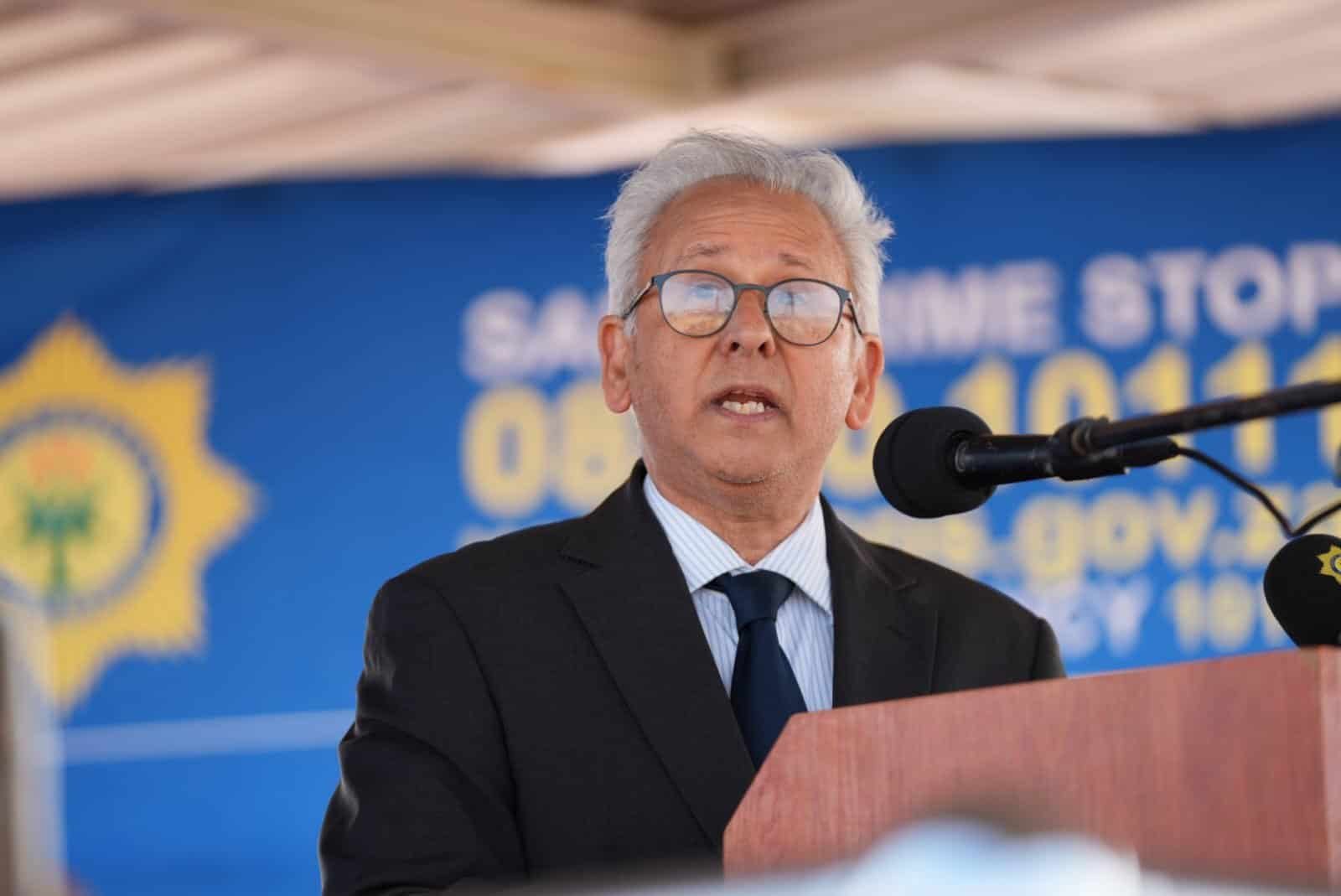
The Economic Freedom Fighters (EFF) has launched a blistering attack on Acting Minister of Police Firoz Cachalia, accusing him of “dangerous political interference” in investigations into political killings in KwaZulu-Natal.
In a statement issued on Saturday, the red berets condemned Cachalia’s comments on the 121 case dockets of political murders and related crimes that were controversially removed from the Political Killings Task Team earlier this year, only to be reinstated by National Police Commissioner General Fannie Masemola this week.
The dockets, which include politically motivated murders, attempted murders, and cases of intimidation, had been central to the work of the task team established to tackle spiralling political violence in KwaZulu-Natal.
The province has long been regarded as the epicentre of political assassinations in South Africa, with councillors, activists, and party operatives routinely targeted in deadly feuds.
The controversy over the 121 dockets erupted when Deputy Commissioner Shadrack Sibiya ordered their removal from the task team’s custody earlier this year. At the time, the decision was justified as an “administrative restructuring,” but critics within the police viewed it as an obstruction of justice.
In July, KwaZulu-Natal Provincial Commissioner Lieutenant General Nhlanhla Mkhwanazi dropped a political bombshell when he publicly accused former Police Minister Senzo Mchunu of personally interfering in the task team’s work.
Mkhwanazi alleged that Mchunu had played a direct role in sidelining investigators and weakening the unit’s capacity to pursue politically connected suspects. His revelations triggered the establishment of a judicial commission of inquiry into political interference in the criminal justice system — a move that underscored the seriousness of the allegations and highlighted the fragility of police independence.
This week, General Masemola sought to reverse the damage by returning the dockets to the task team, declaring that investigators should proceed with their work. His decision was broadly welcomed as a step toward restoring the integrity of the investigations and addressing widespread concerns that justice for victims of political killings was being delayed.
But instead of supporting the National Commissioner’s move, Acting Minister Cachalia publicly criticised it. He argued that he had requested a detailed report on the task team and insisted that decisions about the dockets should wait until the commission of inquiry had completed its work.
The EFF described this position as “irrational, dangerous and deeply irresponsible,” warning that it effectively provides cover for assassins and delays justice.
“A commission of inquiry cannot replace police investigations,” party spokesperson Sinawo Thambo said. “While the commission examines political interference, the police must continue their duty to investigate crime. To suggest that the return of 121 murder-related dockets should wait for the outcome of a commission gives reprieve to assassins and undermines the very purpose of the SAPS.”
The EFF further accused Cachalia of using his first days in office not to strengthen the fight against crime, but to frustrate it.
“Cachalia has revealed himself to be an obstacle to justice,” Thambo read. “Just last month he spoke against police who use necessary force to confront violent criminals, and now he seeks to stall the investigation of political killings.”
The controversy over Cachalia’s role comes amid confusion in the police ministry itself. South Africa currently finds itself in the unprecedented position of effectively having two ministers of police.
President Cyril Ramaphosa suspended Senzo Mchunu in July following Mkhwanazi’s damning claims of interference, but Mchunu has continued to insist he remains minister. In the meantime, Ramaphosa controversially appointed Firoz Cachalia as Acting Minister — a designation not explicitly provided for in the Constitution, according to critics.
The result has been a fractured ministry at a time when the country is grappling with surging violent crime, rising public distrust in the police, and escalating political killings ahead of the 2026 local government elections.
In its statement, the EFF commended National Commissioner Masemola for standing firm and returning the dockets to the task team.
“His action demonstrates leadership in the face of interference and ensures that the work of investigating political violence continues,” the party said, urging police officers across the ranks to resist political manipulation and speak out against Cachalia’s attempts to derail investigations.
The EFF warned that if political interference is allowed to persist, it will embolden assassins who depend on delays and political shielding to evade justice.
“The people of South Africa, who live daily under the threat of political violence, deserve swift investigations and arrests, not endless reports and academic debates,” the party said.
The clash over the dockets underscores the deepening crisis within South Africa’s law enforcement agencies. Analysts say the dispute reflects broader tensions between political authority and police independence, with senior officers increasingly caught between serving justice and navigating political pressure.
For communities in KwaZulu-Natal that continue to lose loved ones to political violence, the stakes could not be higher. As one community activist in Umlazi told African Times, “We have been burying councillors and comrades for years. All we want is justice. If politicians fight over files while killers walk free, then nothing will ever change.”
With the commission of inquiry set to proceed in the coming months, the political storm over Cachalia’s role has added yet another layer of uncertainty to an already volatile situation. What remains clear, however, is that the victims’ families are demanding answers, and accountability, far sooner than any commission may deliver.