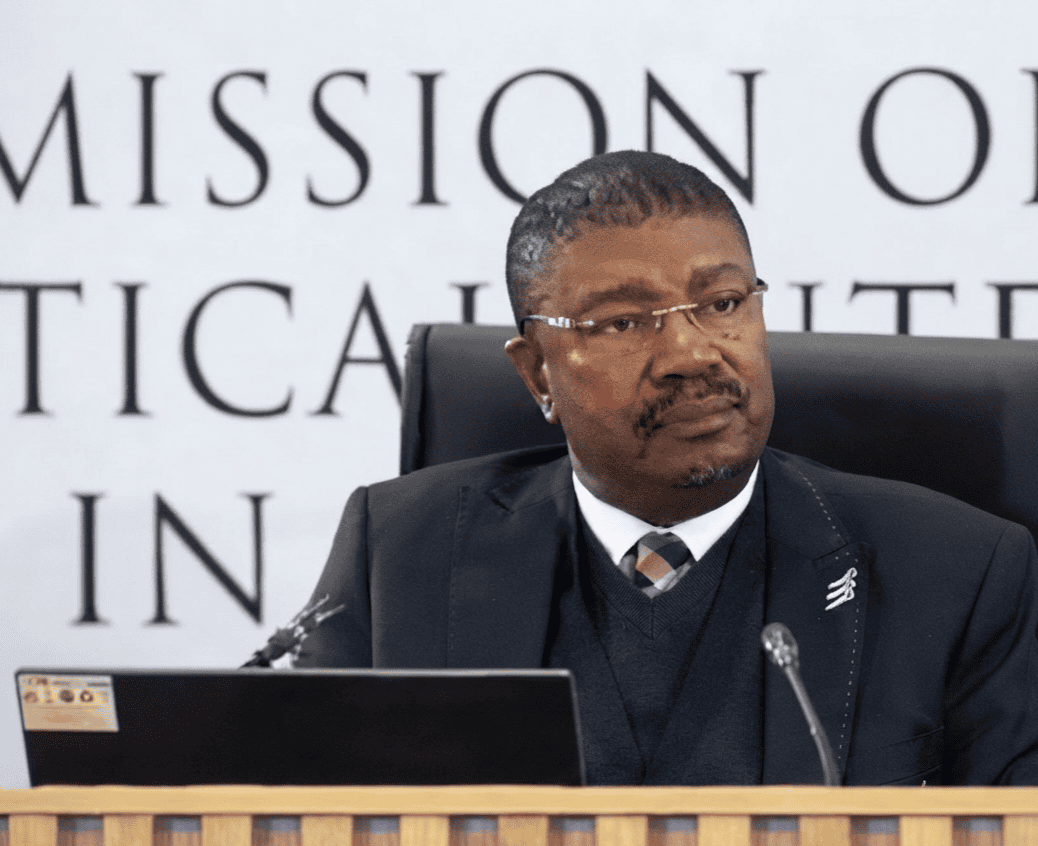
Sensitive investigations within the Investigating Directorate Against Corruption (IDAC) were routed directly to former Investigating Director Advocate Andrea Johnson, bypassing the unit’s normal operational processes, the Madlanga Commission heard on Thursday.
Matthews Sesoko, IDAC’s Head of Investigations and Operations, testified that after returning to work in January 2026 following his kidnapping in November 2025, he found that the directorate’s reporting structures had changed significantly and that many of his responsibilities had been removed.
The commission, chaired by Acting Deputy Chief Justice Mbuyiseli Madlanga, is investigating allegations of criminality, corruption and interference within South Africa’s criminal justice system, including claims concerning the leadership and operations of IDAC under Johnson.
Sesoko told the commission that IDAC’s mandate is to investigate complex corruption, financial crime and other high-profile cases.
He said that before his absence, chief investigators reported directly to him and he chaired the Operational Management Committee (OMC), which monitored investigations and operational matters.
However, when he returned to work after spending about two months recovering from his kidnapping and robbery, he found that the structure had changed.
“I was not informed of the changes,” Sesoko told the commission.
He said Deputy Directors of Public Prosecutions had begun rotating as chairpersons of the OMC instead of him, while chief investigators such as Dylan Perumal and Booi were now reporting directly to Johnson.
“As time went on, no investigators were reporting to me,” Sesoko testified.
He explained that Deputy Directors of Public Prosecutions, including Advocate Peter Serunye, reported directly to the Investigating Director rather than through his office, leaving him with a largely operational support role.
The commission is examining whether the restructuring affected oversight and decision-making within IDAC, particularly in investigations involving Crime Intelligence.
Sesoko testified that some sensitive investigations bypassed established processes altogether.
“There were cases that I would not be told about because they came from Advocate Johnson’s office and they were regarded as sensitive. It was on a need to know basis,” he said.
He told the commission that although he sometimes questioned Johnson’s decisions, he generally accepted them and continued with his work.
Sesoko also said he was unaware that Johnson had authorised the investigation involving Member of Parliament Fadiel Adams without discussing the decision with him, despite his position as Head of Investigations and Operations.
He further testified that his previous experience at the Independent Police Investigative Directorate (IPID) influenced how he approached investigations at IDAC.
Sesoko said his experience at the police watchdog taught him not to unnecessarily insert himself into investigations, adding that he would later explain the reasons for that approach during his testimony.
Reflecting on his working relationship with Johnson, Sesoko described it as difficult at times.
“Working with Advocate Andrea Johnson might have been such a devastating situation. She will claim to forget about important issues,” he told the commission.
His evidence adds to testimony from several current and former IDAC officials who have raised concerns about changes to the unit’s internal operations, reporting lines and decision-making under Johnson’s leadership.
Johnson has previously denied allegations of misconduct and has defended her management of the directorate during her own appearance before the commission.
Sesoko’s testimony is expected to continue as the commission probes whether internal structural changes at IDAC weakened oversight and allowed sensitive investigations to be handled outside normal reporting channels.
Adjustment for tea break. The commission to continue