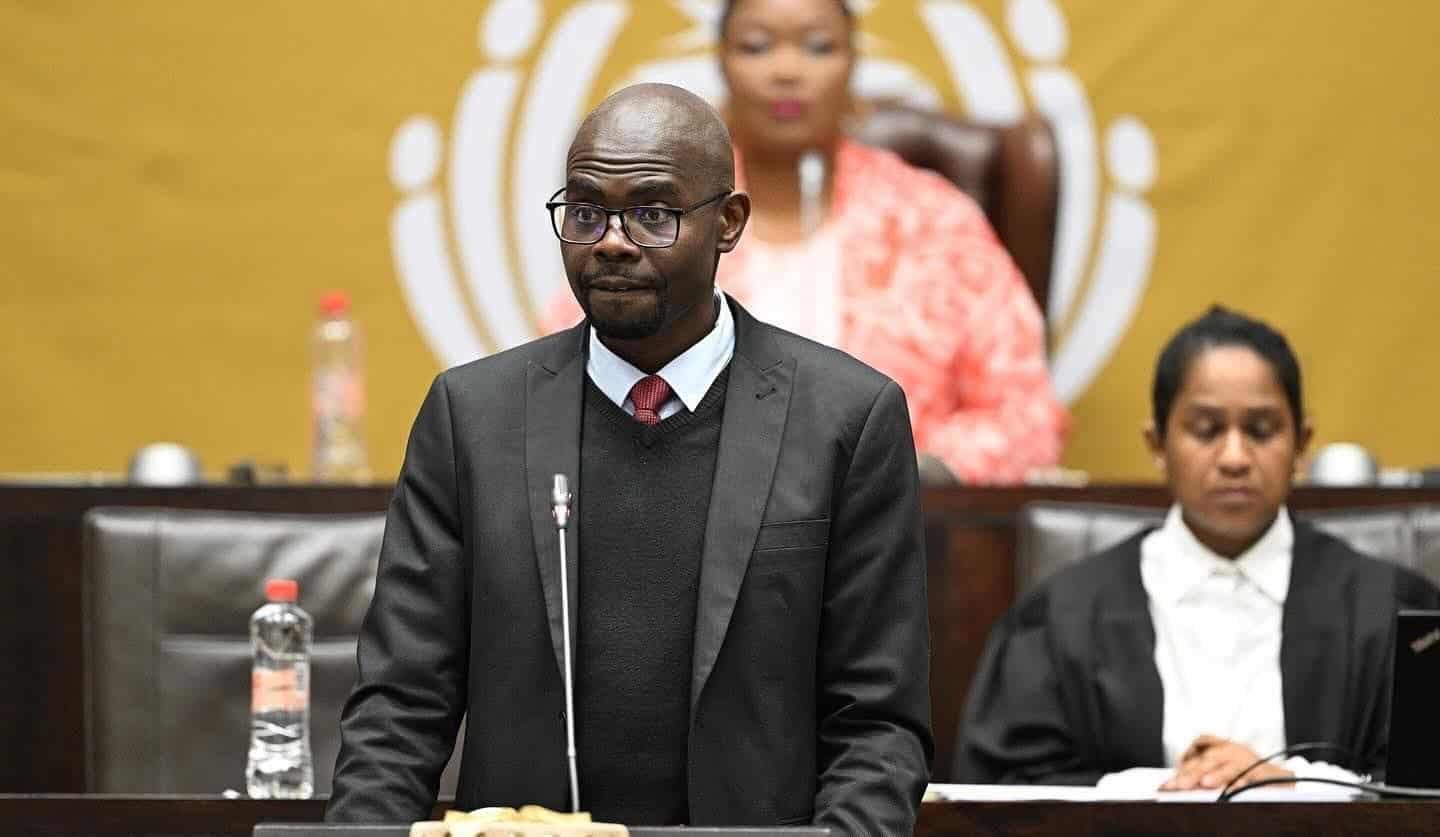
Parliament has taken a major step in one of the most politically significant processes of South Africa’s democratic era after RISE Mzansi Member of Parliament Makashule Gana was elected chairperson of the impeachment committee tasked with probing President Cyril Ramaphosa’s conduct in the Phala Phala saga.
Gana secured 19 votes during the election held on Monday at the Good Hope Chamber in Cape Town, defeating Dr Lehlohonolo Wonderboy Mahlatsi, president of the United Africans Transformation (UAT) political party, who received 12 votes. The committee consists of 35 members, although only 32 members were present and eligible to vote during the proceedings.
His election places him at the centre of the first parliamentary impeachment process involving a sitting South African president since the dawn of democracy in 1994.
Accepting the nomination, Gana said the committee’s work would begin immediately despite ongoing processes to amend parliamentary rules following a landmark Constitutional Court judgment.
“I want to thank all the members, want to thank everyone who participated in this process. The work has just begun. The Section 89 committee work is now in progress, and the things that are in our control will ensure that they are done,” Gana said.
He added that procedural matters being addressed in Parliament would run parallel to the committee’s work and would not delay the investigation.
“So we will be in communication with all the members of the committee in terms of the next processes that will be taken,” he said.
The committee’s establishment follows a dramatic Constitutional Court ruling delivered on 8 May 2026, which revived the long-running Phala Phala controversy and ordered Parliament to establish an impeachment inquiry into President Ramaphosa’s conduct.
The judgment stemmed from a legal challenge brought by the Economic Freedom Fighters (EFF) and the African Transformation Movement (ATM), which argued that Parliament acted unlawfully when it voted in December 2022 against adopting the findings of an independent Section 89 panel that had investigated the Phala Phala matter.
At the centre of the controversy is the theft of a large amount of foreign currency from Ramaphosa’s Phala Phala game farm in Limpopo in 2020. The burglary only became public in 2022 after former State Security Agency director-general Arthur Fraser laid criminal complaints against the president, alleging that the theft was concealed and that state resources may have been improperly used to investigate the incident. The matter triggered intense political debate and calls for Ramaphosa’s removal from office.
An independent Section 89 panel chaired by former Chief Justice Sandile Ngcobo later found that there was prima facie evidence suggesting Ramaphosa may have violated provisions of the Constitution and his oath of office. The panel also raised concerns about possible breaches of the Prevention and Combating of Corrupt Activities Act.
However, in December 2022, the ANC used its parliamentary majority to vote against adopting the report, effectively preventing the impeachment process from moving forward. That decision became the focus of a lengthy legal battle that ultimately reached the Constitutional Court.
In a landmark judgment delivered by Chief Justice Mandisa Maya in May, the Constitutional Court ruled that Parliament’s decision not to proceed with the Section 89 report was irrational and unconstitutional. The court found that the parliamentary rule requiring MPs to vote on whether the report should proceed effectively undermined accountability and transparency.
The apex court subsequently ordered that the report be referred directly to an impeachment committee and instructed Parliament to amend the rule that had blocked the process.
The newly elected committee will now be responsible for investigating the findings contained in the Section 89 report and determining whether sufficient grounds exist for the National Assembly to consider removing Ramaphosa from office under Section 89 of the Constitution.
While the establishment of the committee does not mean the president will be impeached, it represents the most serious parliamentary scrutiny of Ramaphosa’s conduct since he took office.
Any final decision to remove a president would require the support of at least two-thirds of the National Assembly, a threshold that remains politically difficult to achieve.
For now, all eyes will be on Gana and his committee as Parliament embarks on a historic process that could have far-reaching consequences for the presidency, the governing ANC and the country’s political future.