In an exclusive interview with TV BRICS, the Editor-in-Chief of African Times discusses South Africa’s economic progress, education achievements, and international collaboration
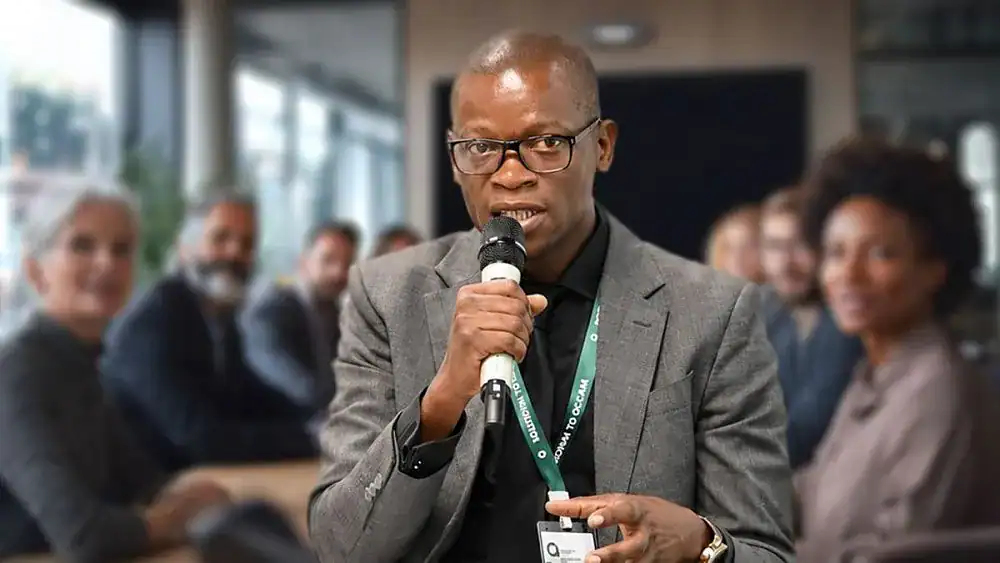
African Times / TV BRICS
The TV BRICS International Media Network presents a special project for the 20th anniversary of BRICS: “Global Media Briefing.” Expert commentary from representatives of the leading media of BRICS+ countries, partners of the media network, covers issues of shaping a unified global agenda, building a multipolar system of global media communications, current trends and key events of the past 20 years for the development of media discourse, and forecasts for the further evolution of the media landscape.
Which themes should shape the agenda of the Global South countries, and how can a truly unified information space be built? – in a BRICS Interview with Mahasha Piet Rampedi, Editor-in-Chief of African Times.
What has been the most vivid and creative event of the past 20 years that helped to bring different media together and contributed to the formation of a shared global agenda?
Over the past two decades, major global developments have encouraged media organisations across the Global South to strengthen cooperation. In Africa, media organisations began collaborating with counterparts in Russia, Venezuela, and China. These collaborations focus on protecting countries from interference, safeguarding democratic institutions, and ensuring that each nation’s social and political models are respected.
Shared resources, collaborative reporting, and mutual support allow media organisations to counter prejudicial narratives, highlight positive developments, and ensure that issues are presented within a broader context of progress and opportunity.
How has the image of international journalism changed over the past 20 years? What key trends or maybe some major events have influenced the transformation and the development of media discourse in the global information space?
Traditional media like TV, film, and newspapers will continue to decline in influence, while digital and social media, podcasts, and alternative platforms will dominate.
Audiences are now active participants in producing and verifying information, which limits the reach of biased narratives. Media collaboration, particularly across borders, will grow as organisations seek to share content, resources, and perspectives.
What is your forecast for the development of media communications and further evolution of the media landscape over the next 20 years in terms of approaches, meanings, technologies, and narratives?
Development issues, economic growth, security, infrastructure, technology, and agricultural production should be central. Media organisations should highlight both challenges and achievements, ensuring balanced coverage.
This includes countering stereotypes and presenting a complete picture of regions in Africa, the Middle East, Latin America, and Western Asia. Collaborative media strengthens solidarity and enables the Global South to communicate its priorities effectively.
What issues related to your country’s foreign and domestic agenda, civic national initiatives or upcoming events should receive more attention from foreign media to fully demonstrate the role of your country’s potential and contribution to the development of multilateral relations?
South Africa has made significant progress in technology, energy, infrastructure, trade, agriculture, education, and democratic governance.
South Africa continues to collaborate with neighbouring states, including Zimbabwe and Mozambique, particularly in agriculture and regional development. It remains a key economic anchor within the Southern African region and has recently regained its position as the continent’s largest economy.
South Africa has also entered multiple initiatives with the BRICS countries, ranging from economic development to broader cooperation. In the education sector, the matric pass rate for grade 12 recently reached nearly 90 per cent, an unprecedented achievement since 1994, when it hovered around 60–65 per cent.
South African agricultural exports have expanded into new markets, including China and Southeast Asia, beyond the traditional Western markets. This demonstrates the country’s growing economic potential.
How do you view the idea of creating a global unified information space, and in what formats, direction and frameworks should this cooperation develop between different countries within this global unified space?
The creation of shared platforms for collaboration is long overdue. Encouragingly, efforts are underway, especially within the Global South, over the past 5–10 years.
TV BRICS has been leading such initiatives. Within Africa, media organisations collaborate formally and informally. For example, African Times, based in Johannesburg, works with correspondents across the continent to share content. Agreements are often informal but anchored in memorandums of understanding.
Collaborations exist with the Ethiopian News Agency, ZBC, The Herald, the Nigerian News Agency, and Zambia’s national broadcaster. Internationally, African Times collaborates with India’s Asian News Agency, Russian media including TV BRICS and Chinese media such as CGTN and China Media Corporation.
Such collaborations allow verification, access to expertise, and the sharing of accurate information across borders, demonstrating the value of a global unified information space.
What does real and true journalism mean to you?
Firstly, true journalism for me means the willingness or ability to tell true stories without any distortions, free from prejudice, narratives, and ideological orientations, and relying solely on the facts and without picking sides. Secondly, true journalism also means the ability to explain or inform the public in a manner that ordinary members of the public can understand without undue influence, either by financial motives or political or financial considerations, and also without the influence of the powerful in society.
True journalism also means the ability to tell relevant stories to ordinary members of the public, stories that shape their decisions, help them make sense of the world, help them make critical decisions about their lives, and help them understand where they come from, where they are presently, and where they are going in terms of their lives, their futures, and their decision-making.
True journalism is being able to be the final voice or defender of people in society who can never speak for themselves.
African Times published this article in partnership with International Media Network TV BRICS