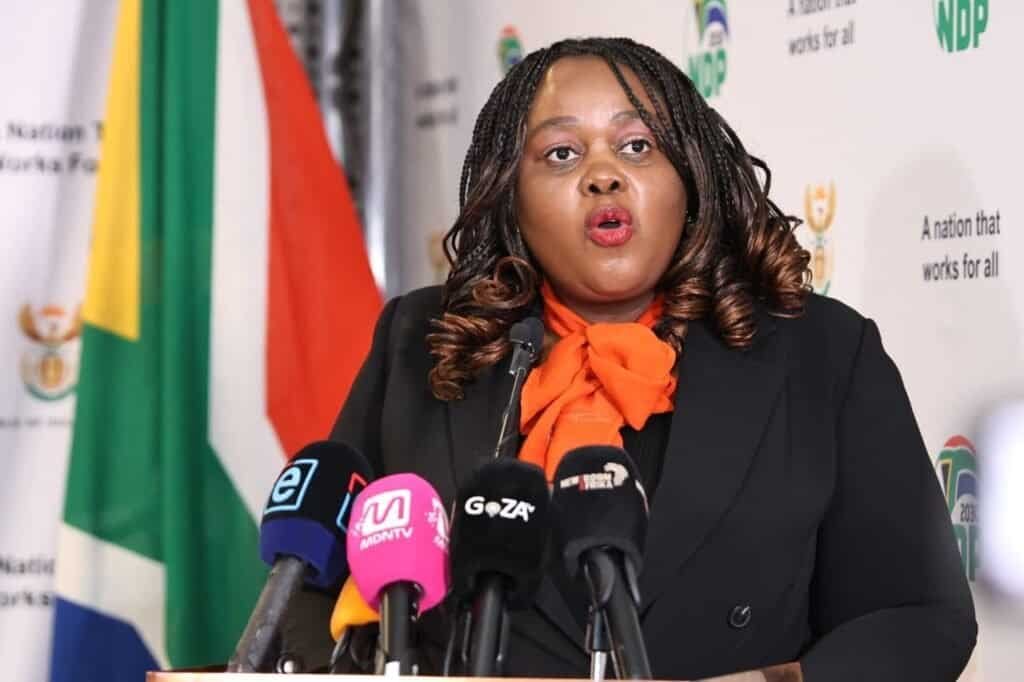
The leadership crisis at the Investigating Directorate Against Corruption (IDAC) deepened on Thursday after Justice and Constitutional Development Minister Mmamoloko Kubayi announced the suspension of three senior investigators and a full review of all IDAC matters currently before the courts, following explosive evidence heard at the Madlanga Commission of Inquiry.
Addressing a media briefing alongside National Director of Public Prosecutions (NDPP) Advocate Andy Mothibi in Pretoria, Kubayi confirmed that IDAC chief investigator Dylan Perumal, senior investigator Brian Padayachee and investigator Suneel Bellochun had been suspended with immediate effect.
The suspensions follow allegations made before the commission that investigators manipulated evidence and investigations. Perumal has been accused of fabricating evidence and witness statements, while Bellochun has been accused of exerting improper influence during investigations.
Kubayi said the suspensions formed part of immediate steps to protect the integrity of the anti corruption unit while investigations continue.
She announced that all IDAC cases currently before the courts would be reviewed to determine whether any investigations had been compromised by the allegations emerging from the commission.
The minister said government also intended filling the leadership vacancy at IDAC without delay following the resignation of former head Advocate Andrea Johnson.
“We are hoping by next week to have that position filled,” Kubayi said.
She rejected calls for the Investigating Directorate Against Corruption to be disbanded, saying such demands were not supported by government.
Kubayi said institutions should not be judged solely on the actions of individuals.
“Those who are calling for the disbandment must not reduce institutions to individuals,” she said.
The minister described the evidence emerging before the Madlanga Commission as deeply troubling.
“It’s actually a painful reality to sit and hear what is coming. I try my level best to focus on the work for now. I said to the team, I don’t want to follow, but you’ll get those glimpses that are sent to you on WhatsApp, and they are very painful. These are things that should not happen in an organisation. This is a lesson that we have to rebuild, and we have to protect this institution. It must never face what it has faced going forward,” Kubayi said.
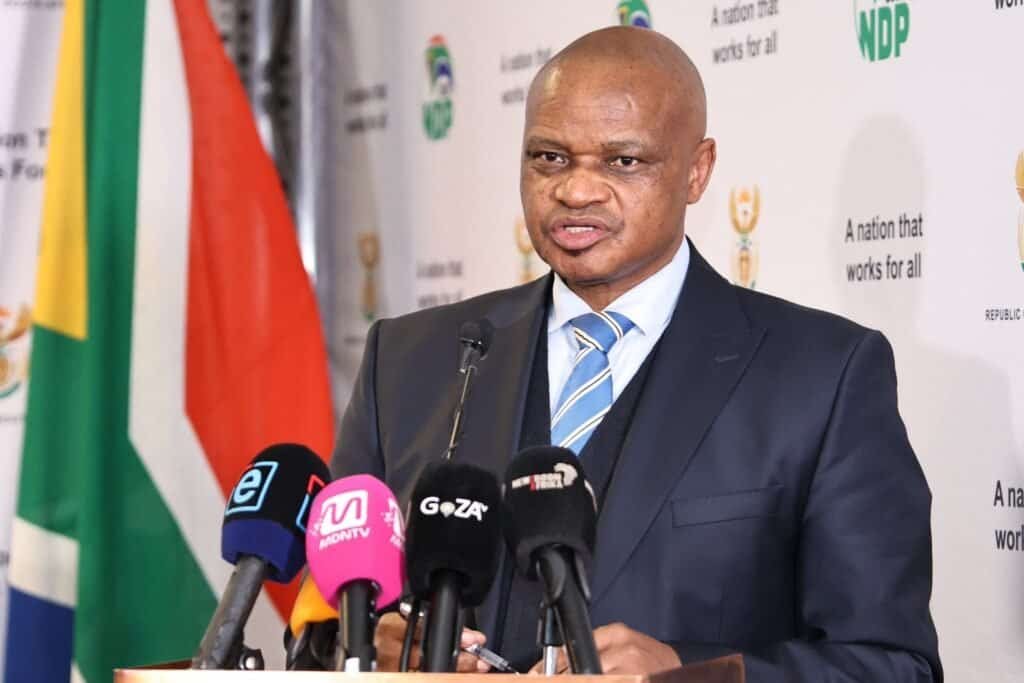
Mothibi said accountability would extend to everyone against whom evidence of wrongdoing emerged, regardless of whether they remained employed by the National Prosecuting Authority (NPA).
“There is a common thread around how the former head of IDAC is going to be held accountable, and not just her. All those where there is evidence pointing to wrongdoing will be held to account,” he said.
He said the immediate suspensions already announced demonstrated that consequence management had begun.
Mothibi stressed that resignation would not shield anyone from accountability.
Johnson resigned on Monday while she was faced with intense testimony before the Madlanga Commission. President Cyril Ramaphosa accepted her resignation on Monday.
During her evidence, Johnson made several concessions under questioning. She struggled to explain how she authorised a summons relating to the Political Killings Task Team after the unit had already been disbanded, conceded shortcomings in aspects of the investigations involving Brigadier Dineo Mokwele, Crime Intelligence boss Dumisani Lt-General Khumalo and other matters, and acknowledged that criminal investigations involving her were under way. She also repeatedly invoked her right not to answer certain questions on the grounds that her responses could incriminate her.
Mothibi said investigations arising from the commission would continue independently.
He noted that where evidence pointed to criminal conduct, matters would be investigated by the South African Police Service before being considered by prosecutors assigned to the Madlanga Task Team.
He said independent prosecutors had been allocated specifically to ensure impartial prosecutorial decisions in matters arising from the commission.
Mothibi added that authorities would also consider civil action where financial or institutional damage had been caused, while possible professional misconduct would be referred to relevant regulatory bodies, including the Legal Practice Council.
He said the accountability process remained ongoing and additional action could follow as more evidence emerged from the commission.
“The accountability spectrum may not be exhaustive,” Mothibi said.
He added that complaints continued to be received and referred for investigation, with monthly milestones established to monitor progress over the next six months.
“We’re not going to wait six months before we see changes. Every month there should be improvement that the public can see,” he said.
The latest developments come as the Madlanga Commission continues hearing evidence into allegations of corruption, political interference and misconduct involving senior law enforcement officials.
On Thursday, Independent Directorate Against Corruption (IDAC) State Advocate Drushantha Ramsamy testified that Johnson had advised her to leave South Africa if she was called to testify before the commission. According to Ramsamy, Johnson warned that she should leave the country rather than appear before the inquiry.
Ramsamy also told the commission she would have recommended criminal charges against Member of Parliament Fadiel Adams for allegedly possessing confidential documents linked to IDAC investigations, saying the matter warranted prosecution.
The commission continues to examine allegations surrounding the conduct of senior officials as authorities move to rebuild confidence in the country’s anti corruption institutions.