Maputo — The Chairperson of Mozambique’s Confederation of Economic Associations (CTA), Álvaro Massingue, has called for an urgent fiscal reform to ease what he described as the strangulation of the country’s economy and business environment caused by excessive taxation.
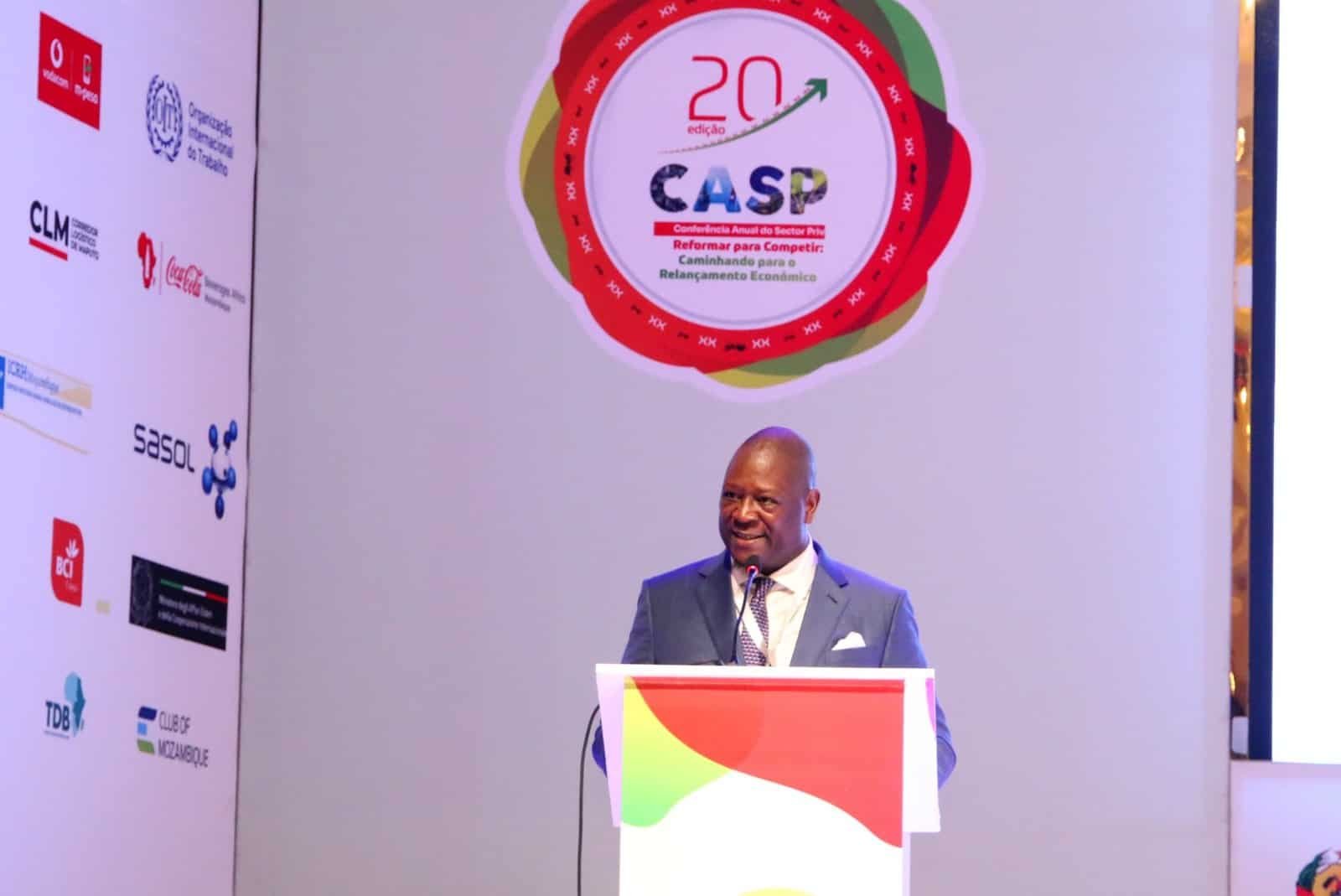
“Our tax system is heavy, complex and ill-suited to an economy that seeks to compete. We need an intelligent, predictable and fair tax reform that broadens the tax base and stimulates productive investment,” said Massingue during the opening of the 20th Annual Private Sector Conference (CASP) in Maputo.
The CASP, the largest public–private dialogue and business event in Mozambique, brings together more than 2,000 participants through Friday to discuss investment projects worth an estimated 1.5 billion US dollars.
“Reforming the tax system is not only about lowering rates. It is about creating a model that rewards merit, encourages production and supports those who invest and create jobs. An economy suffocated by taxes and bureaucracy cannot grow. An economy that frees investment multiplies jobs, income and revenue, ” Massingue said.
He noted that the Value Added Tax (VAT) has become one of the main bottlenecks for businesses, with many companies paying without any right to reimbursement, while others wait months or even years to receive refunds. The Corporate Income Tax (IRPC), set at 32%, also fails to distinguish between small, medium and large enterprises, he said, urging for differentiated rates aligned with company size and sectoral performance.

Among the CTA’s priorities are also the revision of taxes on medical equipment and on the registration of medicines, which Massingue said “raise service costs and limit access for the population.”
On administrative reform, he called for greater investment in digitalisation to reduce time, costs and bureaucracy, warning that the country “cannot remain hostage to slowness and red tape.”
“It is time to modernise and digitalise the State. Reducing costs, time and paperwork is the first step towards greater competitiveness. To digitalise is to liberate — to reduce corruption, increase transparency and restore confidence in the economy,” he added.
Business leaders are also urging that punitive measures be replaced with educational programmes and that excessive fees be replaced with fair, proportionate ones.
“The public servant must be a facilitator, not an obstacle. Inspections are necessary, yes, but they must be guided by ethics, pedagogy and transparency,” Massingue stressed.
He added that for both domestic and foreign investors, trust is the most valuable capital (the human resources) of an economy, thus when the law is violated without consequence, investment flees and the economy stalls.
“Mozambique does not need more laws — it needs to enforce the ones it already has. Legal speed and predictability are the oxygen of investment. We cannot have courts that take years to decide cases. We need digital processes, monitoring deadlines and effective accountability,” he said.

Mozambique’s President Pledges to End “Petty Fees” and Bureaucratic Barriers
Responding to the business community’s appeal, President Daniel Chapo promised a comprehensive administrative and digital reform, vowing to eliminate unnecessary “fees and petty fines” imposed by the State and to switch off the bureaucracy machine that burdens both companies and citizens.
“We must reduce time, cost and bureaucracy, consolidate inspections and modernise public services through technology and ethics,” Chapo said.
The President reaffirmed his government’s commitment to accelerating reforms and expanding access to financial instruments such as the Mutual Guarantee Fund.
“The Government is determined to deepen and accelerate reforms over the next five years,” he stated.
Highlighting that “to reform is to simplify,” Chapo stressed that the ongoing efforts aim to make the State “more efficient, predictable and digital.”
He emphasised that reforms must ensure that the time and cost of doing business in Mozambique no longer serve as “barriers to those who aspire to grow and compete.”