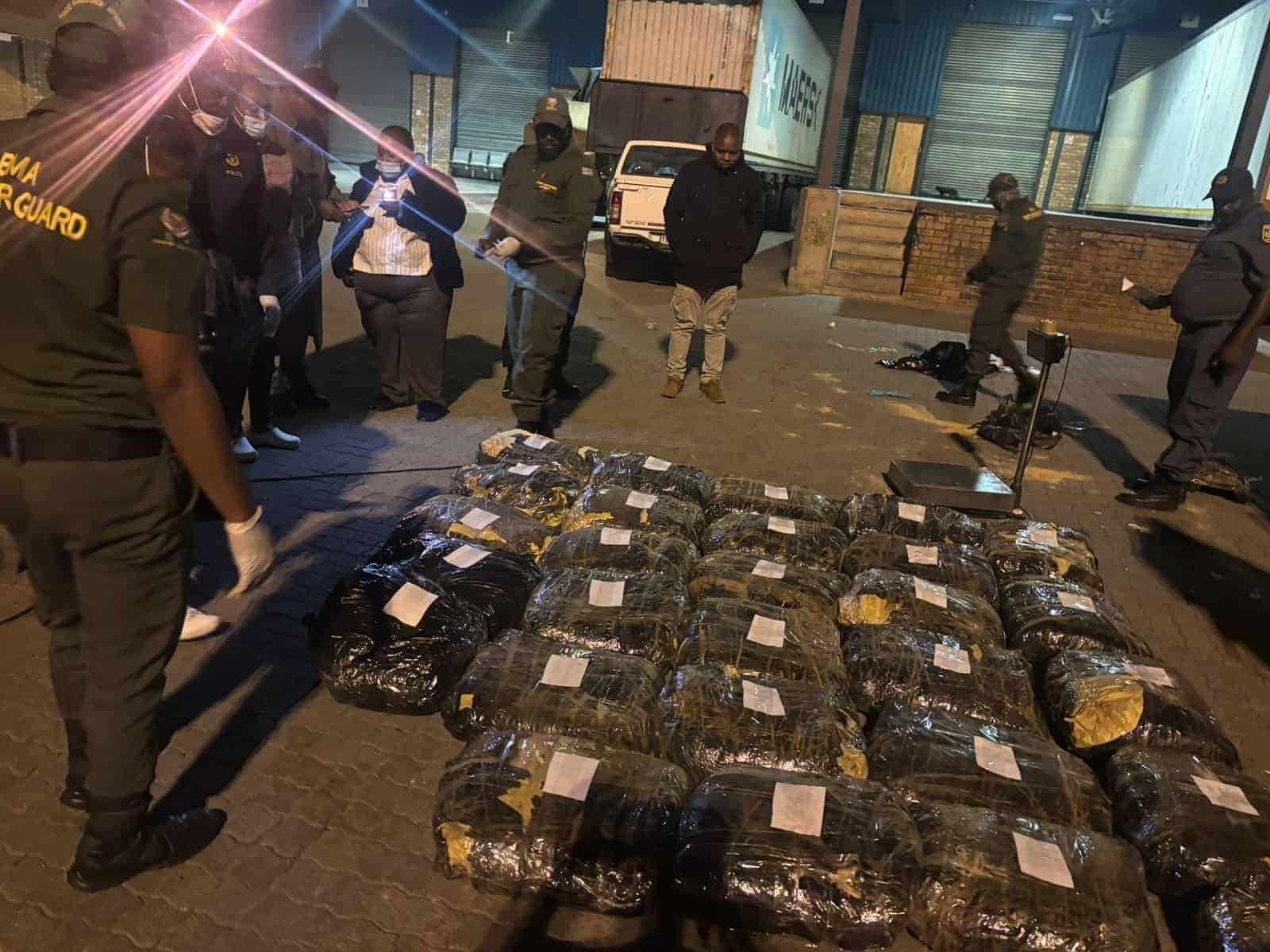
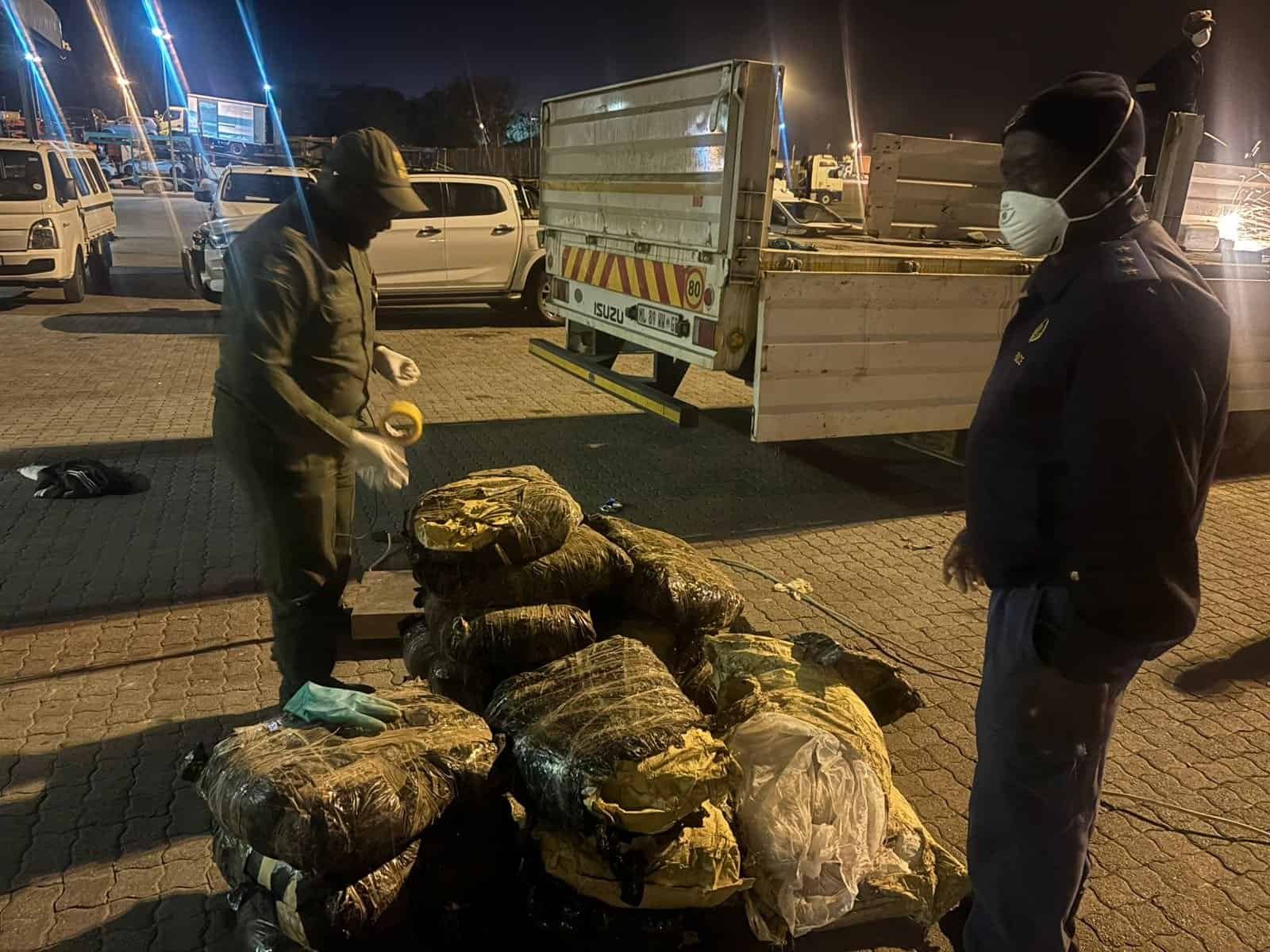
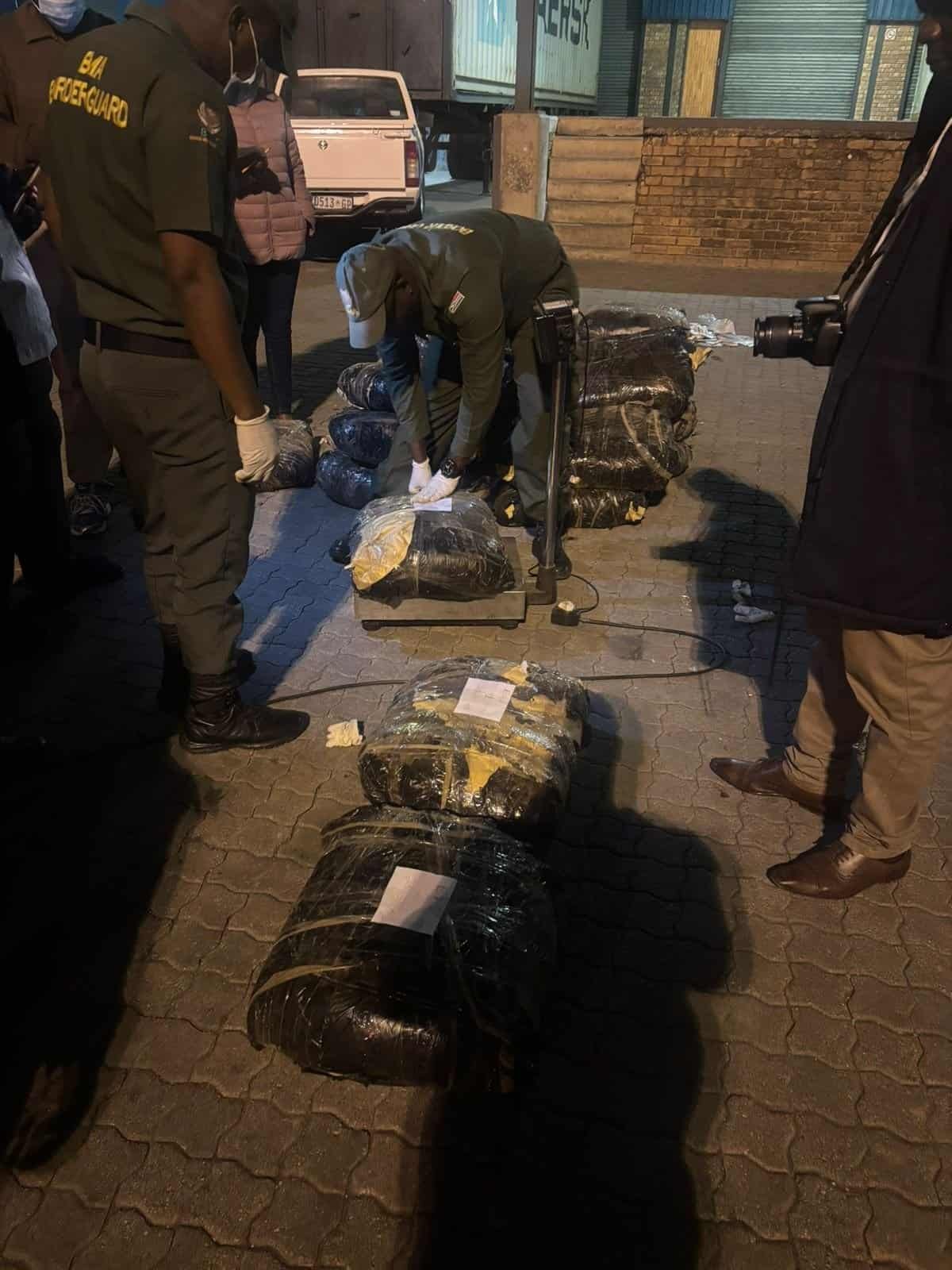
The Border Management Authority (BMA) confirmed on Thursday that border guards, working alongside law enforcement agencies, seized a large quantity of methaqualone — commonly known as “ABBA” and used in the manufacturing of mandrax — during a stop-and-search operation conducted on 27 May.
According to the BMA, the truck was travelling from Malawi into South Africa when it was flagged for inspection at the busy border post, one of the region’s key commercial and migration corridors linking South Africa with neighbouring countries.
Officials initially subjected the truck to a non-intrusive cargo scanner, which detected suspicious substances concealed inside the vehicle. This prompted authorities to launch an extensive physical inspection that lasted nearly eight hours.
During the operation, border guards uncovered approximately 713 000 grams of methaqualone hidden in the truck. Authorities estimate the street value of the drugs at around R998,2 million.
Three suspects were arrested during the operation and are currently being held at the Musina Police Station. They are expected to appear in court soon on charges relating to drug trafficking and violations of South African laws.
The South African Police Service (SAPS) K-9 Unit and the Directorate for Priority Crime Investigation, commonly known as the Hawks, were immediately activated to assist with processing the crime scene and conducting further investigations.
Authorities are now working to determine the intended destination of the drugs and whether the operation is linked to a broader transnational criminal syndicate operating within southern Africa or internationally.
The seizure comes as South Africa continues to battle growing drug trafficking activities at its borders, airports and ports of entry. Law enforcement agencies have, in recent years, intensified intelligence-driven operations targeting drug mules and organised trafficking syndicates using South Africa as a transit route.
OR Tambo International Airport has emerged as a major hotspot for narcotics interceptions, particularly involving cocaine traffickers travelling from South America through African transit routes.
According to SAPS, more than 25 drug traffickers were arrested at OR Tambo International Airport during 2025 alone. Many of the suspects were intercepted arriving on flights from Brazil and other South American countries linked to international drug syndicates.
Police also revealed earlier this year that more than 23 suspected drug traffickers had been arrested at the airport within a six-month period through targeted intelligence-led operations.
Authorities have warned that traffickers are increasingly recruiting vulnerable people as drug couriers, commonly known as drug mules, to transport narcotics across borders. In several recent cases, suspects were found carrying cocaine concealed in luggage, while others swallowed pellets filled with drugs in attempts to evade detection.
Last year, SAPS issued a public warning to young women after a Namibian national was sentenced for attempting to smuggle cocaine into South Africa. Police said at the time that more than 22 drug mules had been arrested at OR Tambo International Airport over a 12-month period.
Security experts say criminal syndicates often target economically vulnerable individuals with promises of quick money, while using sophisticated trafficking methods and international transport networks to move narcotics across continents.
BMA Commissioner Dr Michael Masiapato praised border guards and law enforcement officials for their vigilance and coordination during the Beitbridge operation, saying the seizure demonstrated the effectiveness of intelligence-driven border security operations and inter-agency collaboration.
“This interception sends a strong message that South Africa’s borders are not a safe passage for organised criminal activities,” said Masiapato.
“The BMA remains committed to strengthening border security, combating transnational crime, and protecting the country from illicit activities that threaten communities and the economy.”
The Beitbridge Port of Entry remains one of the busiest border crossings in southern Africa, handling high volumes of commercial freight and passenger traffic daily. Authorities continue to enhance surveillance and inspection capacity at the border as part of wider efforts to disrupt smuggling networks and protect national security.