Neural network system identifies tumours with high accuracy, offering new support tool for clinicians
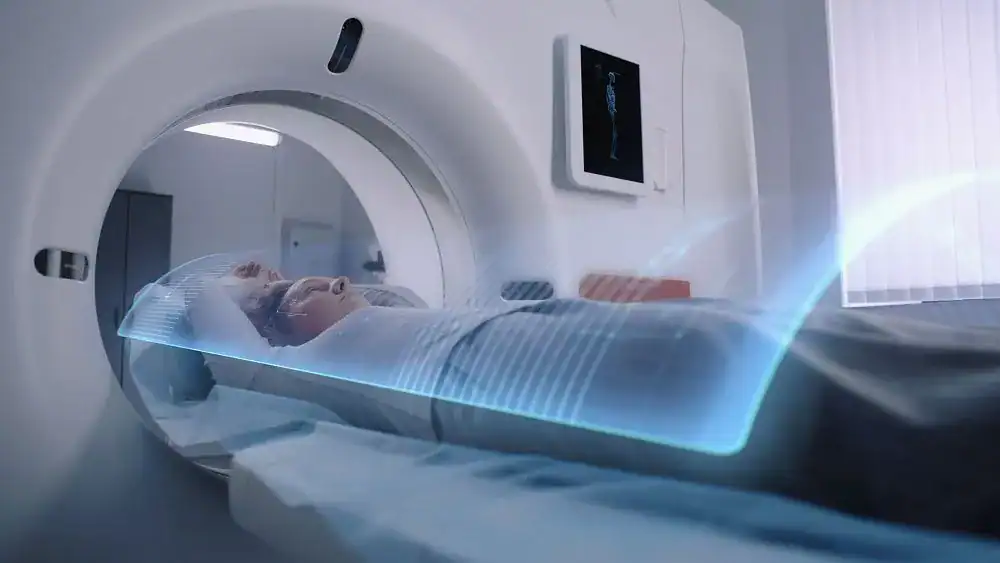
Researchers at the Immanuel Kant Baltic Federal University, a partner of TV BRICS, have developed an artificial intelligence model capable of detecting early-stage pancreatic cancer from computed tomography (CT) scans, in collaboration with scientists from Southern Federal University.
According to the official website of Immanuel Kant Baltic Federal University, pancreatic cancer is often diagnosed at advanced stages, when treatment options are limited, and the five-year survival rate remains extremely low at around 9 per cent, making early detection critically important.
The new system is based on a neural network architecture known as U-Net, designed to automatically analyse medical imaging data and identify suspicious lesions in the pancreas. According to researchers, the model achieved strong performance indicators, including a Dice similarity coefficient of 70 per cent, accuracy of 88 per cent, and sensitivity and specificity of 98 per cent.
Professor Mikhail Nikitin explained that the system is intended as a clinical decision-support tool for radiologists, oncologists and surgeons. Rather than simply indicating the presence of a tumour, the model highlights and segments suspicious areas directly on CT images, with a level of precision comparable to experienced specialists.
The system is trained on real CT datasets containing both healthy cases and confirmed pancreatic tumours, enabling it to detect even small lesions that may be difficult to identify during routine analysis. This capability is particularly important for improving early diagnosis outcomes.
Researchers emphasise that the technology is designed to assist, not replace, medical professionals. It accelerates image analysis, reduces the risk of missed small tumours and supports more consistent diagnostic decisions, while final clinical judgement remains with physicians, including decisions on further testing such as biopsy, MRI or PET scans.
According to project scientists, the model incorporates several advanced features, including enhanced image pre-processing, iterative self-learning mechanisms and integration into clinical workflows. It also enables automatic measurement of tumour size and visual representation of results, improving usability in real-world medical settings.
At the same time, other BRICS countries are also making significant progress by developing new, innovative solutions for the prevention, detection and treatment of cancer.
For example, a group of Indian scientists has developed an innovative hydrogel-based technology to simplify surgery for colon tumours, using biocompatible materials that allow for controlled drug delivery, thereby improving treatment efficacy and reducing side effects.
According to IANS, a partner of TV BRICS, this technique is specifically designed for the removal of colorectal polyps, which can develop into cancer, and also reduces the risk of complications in patients.
In China, progress is focused on early diagnosis and precision medicine. In addition to blood test kits for identifying lung nodules, there are artificial intelligence platforms that analyse large volumes of clinical data and medical images to predict the risk of cancer in its early stages, particularly lung and digestive cancers, one of the country’s major health challenges, reports China Daily, a partner of TV BRICS.
For its part, Brazil has expanded access to immunotherapy within the public health system, integrating it into cancer treatments for various types of cancer. Furthermore, according to Brasil 247, a partner of TV BRICS, the country is strengthening early diagnosis and screening programmes, particularly for breast and cervical cancer, with the aim of reducing regional inequalities in access to healthcare and increasing survival rates through early detection.
African Times published this article in partnership with International Media Network TV BRICS