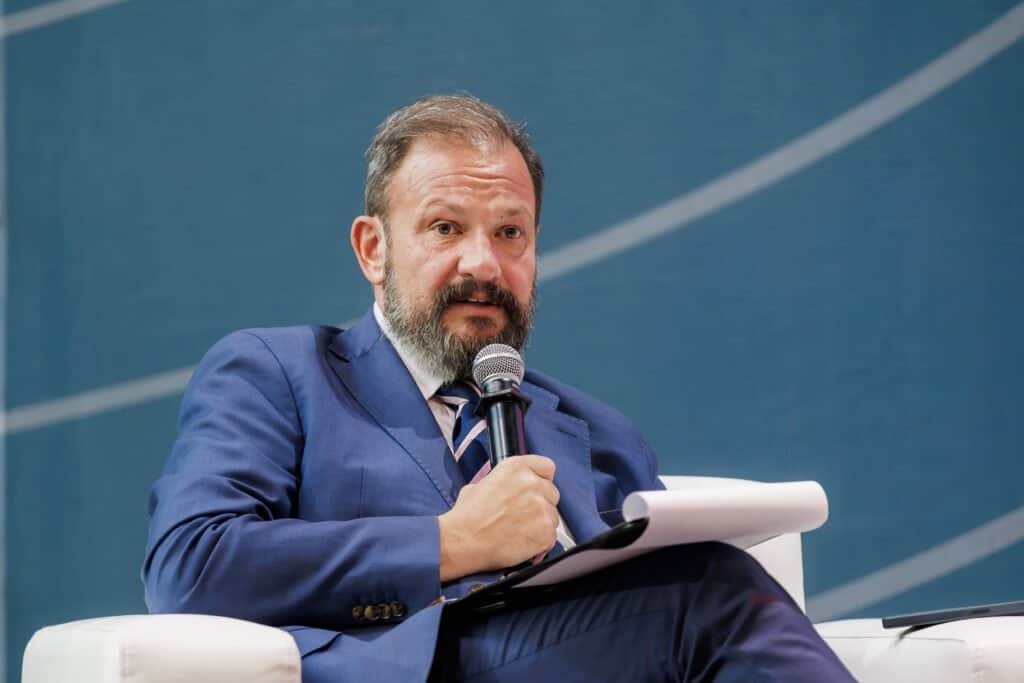
The President of the Global Energy Association has hailed Tatneft as a “peculiar” and technologically advanced Russian oil company that has managed to turn fracking into a lucrative business.
Dr Sergey Brilev said Tatneft is one of the first companies in the world to turn the dream of capturing and pumping CO2 into oil to reduce emissions and increase oil production.
Speaking to African Times on the sidelines of the Oil Summit in Almetyevsk, Republic of Tatarstan, recently, Brilev said the oil company has learned how to make profits in a region where oil wells increasingly contains more water than oil. Owned by the regional government of the Republic of Tatarstan, Tatneft is the fifth-largest oil company in Russia.
“What you pump out consists of 90% water and 10% oil. It has changed geologically. It used to be a region of oil fountains; no longer. So, this region has had to be technologically innovative for decades now. The famous fracking was invented here. That was used for shale gas and oil all over the world. It was invented here. For two years now, Tatarstan has been the place in Russia where a dream of capturing CO2 and pumping it into this oil has materialised,” Brilev said.
The head of the global association of oil companies said Tatneft has not only invested in the latest oil extracting technology, but also launched new initiatives to diversify its business. This included capturing CO2 and pumping it into oil to boost production and make more money.
Brilev said Tatneft was “a peculiar Oil company” because Tatarstan was one of the two oil bases of the former Union of Socialist Soviet Republics (USSR), which included Russia. The other was Baku, Azerbaijan, on the Caspian Sea.
“Then, during World War 2, new oil fields were discovered here. The first base was called Baku, and Tatarstan was called the second Baku. And for many years, it was a major oil-producing region. Now, Tatarstan is like 25 years ahead of, for instance, Siberian oil fields, for sad reasons because there is more and more water,” he maintained.
The three-day Oil summit, held in collaboration with the Global Energy Association, took place from July 11 to 14.
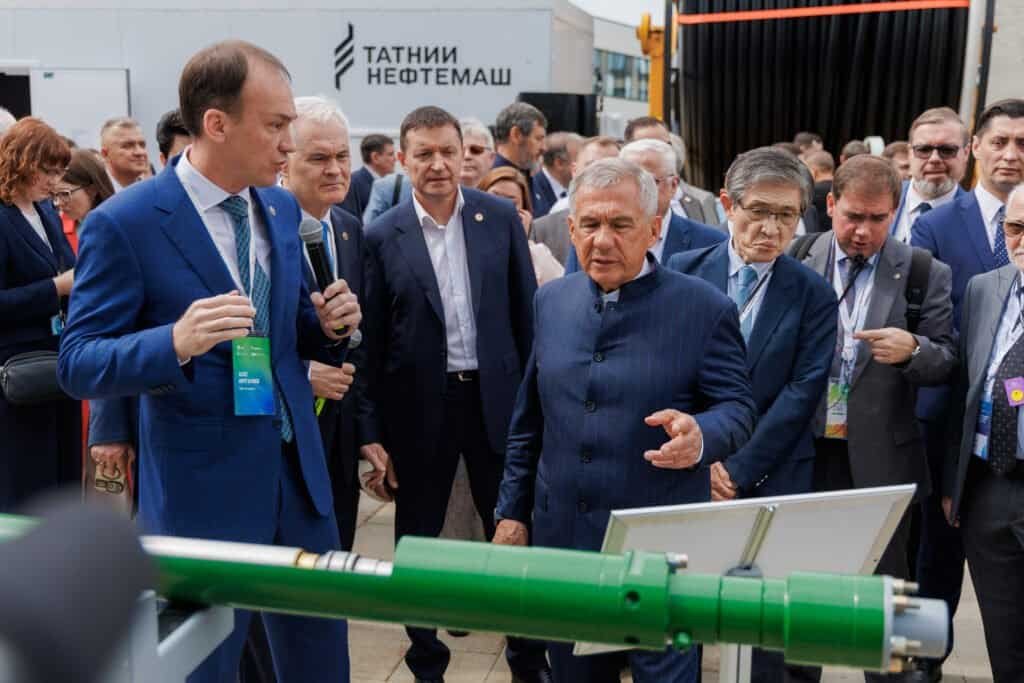
It brought together representatives of various companies who displayed their innovations and technological advancements, including drilling machines, alongside young engineers who held their own youth conference at the university.
Symbolically, the 7th International Petroleum Youth Forum, aimed at developing the industry’s human capital, took place concurrently with the oil summit at the Higher School of Petroleum. The forum brought together 240 students from six countries and 45 universities.
This meeting between the youth and leading global scientists has been seen as underscoring the importance of knowledge sharing.
Tatneft also sponsors the Higher Petroleum University of Oil in the Republic of Tatarstan, a move praised by students who studied for free and were later employed by the company.
Speakers described the Higher Petroleum University of Oil as the benchmark of oil drilling studies in Russia, adding that “young people are doing amazing things here”.
Professor Dmitry Bessarabov, a hydropower expert from the University of North West in South Africa and a Global Energy Association laureate who attended the summit, heaped praise on developments in Tatarstan.
“We were absolutely amazed by what we have seen here in Tatarstan. The innovation, knowledge and technology displayed here by the students resolve the needs of the company. What we have seen is digital twins of the oil-producing units. This is a very specific area that will allow great competition and will generate profit,” Professor Bessarabov added.
As part of the Global Energy Association’delegation’s visit to the Republic of Tatarstan for the 2026 Global Energy Prize laureate announcement ceremony, participants visited a number of Tatneft facilities showcasing the company’s integrated approach to sustainable development, the bioeconomy, and the creation of autonomous, energy-efficient communities.
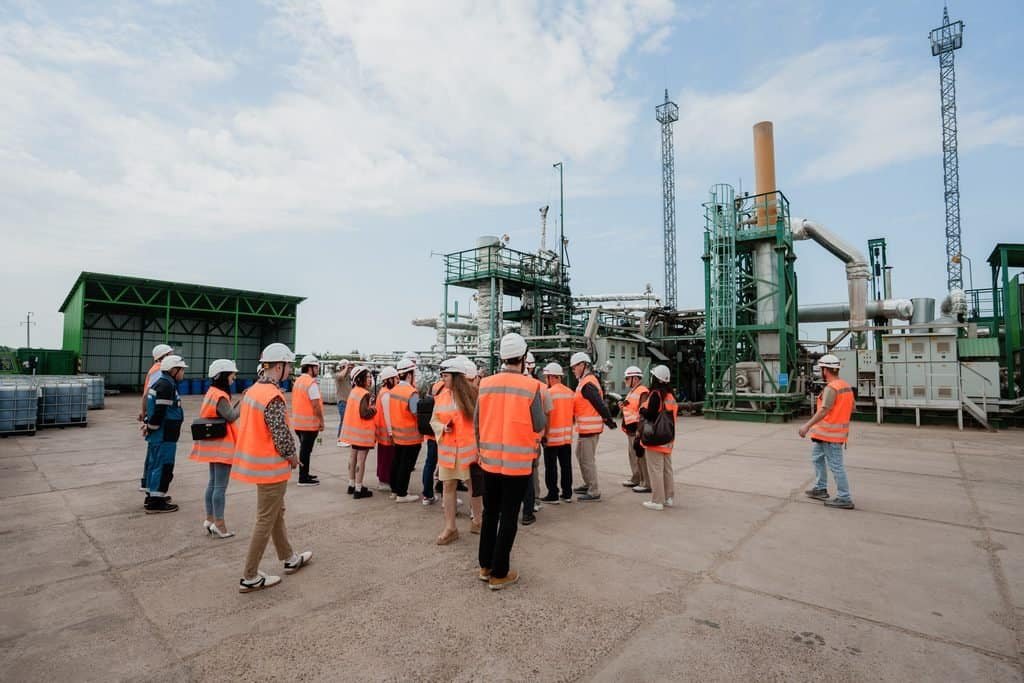
The delegation’s route covered innovative solutions in biomass processing, green energy, construction technologies, and education.
During the 2026 Oil Summit, Tatneft participated in the Technology and Equipment Exhibition, which focused on global challenges in the oil and gas industry.
Moreover, Tatneft demonstrated chemical-enhanced oil recovery methods, energy-efficient equipment, and composite materials, including flexible polymer-reinforced pipe (FPRP), as well as the stands of the oil company’s partners.
The summit culminated in the announcement of the 2026 Global Energy Prize laureates in the categories of Conventional Energy, Non-Conventional Energy, and New Ways of Energy Application.
In their video acceptance messages, the winners underscored the critical importance of international research collaboration and intergenerational continuity in science.