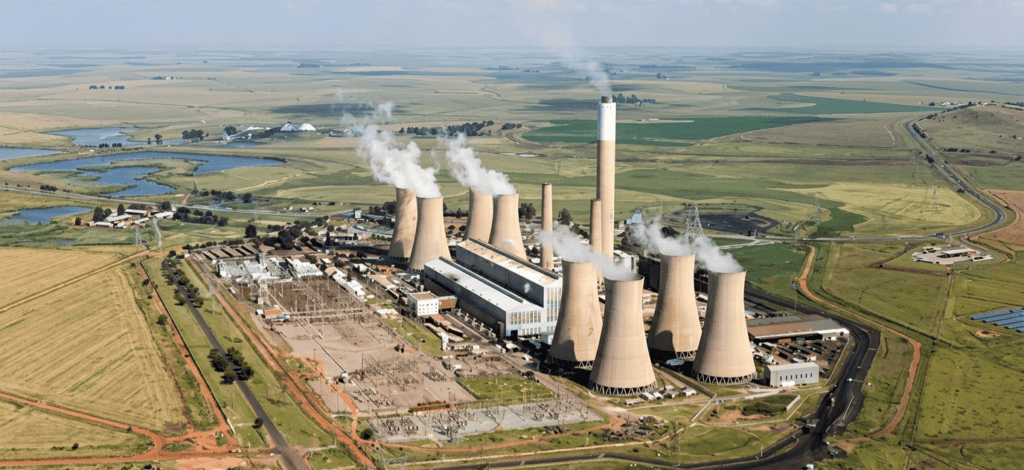
The argument over Eskom’s transmission assets has settled into two camps. Eskom chair Mteto Nyati warns that transferring the grid now could weaken Eskom’s balance sheet and land the state with a R110bn bill. Others say ownership hardly matters, since the grid remains a public asset either way, and the real question is whether constitutional accountability follows it once it is within an independent transmission company.
Both deserve a hearing. Neither gets at what will decide whether South Africa avoids a supply crunch as coal plants retire. Can the new entity, however it ends up structured, build transmission capacity fast enough to bring on the generation the country needs by 2030? That question turns on velocity, not on ownership or legal character.
South Africa faces a firm-capacity cliff of roughly 9.5 GW by March 2030. Most of it, 8.4 GW, is Eskom coal capacity retiring on a schedule set by emissions compliance deadlines. That schedule rests on the Minister of Forestry, Fisheries and the Environment’s decision of 31 March 2025, granting Eskom’s coal fleet conditional exemptions from the Minimum Emission Standards. A determination that has not been reviewed or set aside and remains in force. The rest, 1.15 GW, is the separate expiry of the Cahora Bassa hydropower supply contract, which runs out on its own timeline and has nothing to do with emissions compliance. Replacing this capacity means getting new generation connected at a matching pace, and the National Transmission Company of South Africa’s own numbers show how far the build programme sits from that. Last financial year, NTCSA built 270.8 km of new transmission line against a target of 423 km, and there are still 14,494 km to go over the coming decade. Transformer capacity did better, but lines are what bite: new generation can’t connect to a line that hasn’t been built yet.
This is the gap between retirement velocity and integration velocity, and it is the subject of my own research on South Africa’s transition, where I formalise it as the Cliff Intensity Index. The index separates two sources of delay: one structural, one institutional. The structural component is the physical build time for transmission infrastructure, which typically runs five years from planning to energisation, a timeline set by engineering and regulatory processes rather than by governance quality. The institutional component is the friction introduced by procurement bottlenecks, misaligned incentives and weak coordination between entities, which better governance can genuinely reduce.
The unbundling debate, as it’s currently being fought, only touches the institutional piece and even there, only part of it.
Try the best-case scenario. Governance is clean, procurement runs efficiently, no conflict of interest survives anywhere in the system. Even so, South Africa’s retirement-to-integration velocity ratio still doesn’t drop below roughly 1.8. Retirement continues to outpace integration by close to 80 per cent. A five-year build timeline for transformers and transmission lines doesn’t bend to governance reform, because it’s a function of building physical infrastructure, not of which entity happens to be doing the building.
Institutional friction sits atop that baseline, and there’s nothing speculative about the claim that it’s costing South Africa real integration capacity today. Peter Harris of Harris Nupen Molebatsi, in an independent expert report prepared alongside Eskom’s own emissions exemption applications, found that NTCSA’s slow implementation of the transmission grid plan, together with Eskom Distribution’s slow provision of grid access to renewables projects, was directly holding back the build-out of new generation. Harris pinpoints the mechanism precisely: the delay lies within the entities responsible for connecting developers to the grid, not in any shortage of capital or appetite among the developers themselves. His report examined renewables projects, and that is worth being precise about, because the scale of the task isn’t the same for every kind of new capacity. Connecting a single large baseload plant at a single defined point is a materially simpler exercise than connecting wind and solar capacity scattered across the country’s best resource areas, with each site needing its own line and substation work, often in parts of the country the grid was never built to reach. Harris’s finding concerns the harder of these two problems. But the underlying failure he identifies, an entity too slow to execute the connections its own plan already calls for, would show up regardless of how concentrated or distributed the new capacity happens to be. That is exactly the sort of friction an independent, properly resourced transmission company could cut; but cutting it only narrows the gap. It can’t compress a five-year construction process into something shorter than five years.
Nyati is right that the financial mechanics of a transfer need careful handling, and the constitutional question of whether accountability survives a move between state entities is worth taking seriously. What gets missed, if either is treated as the whole story, is that fixing the institutional architecture doesn’t address the timeline problem beneath it. Even a perfectly designed, fully accountable, well-governed transmission company runs into the same construction physics NTCSA faces today.
South Africa needs to work both problems at once and be honest about what each one can deliver. Whatever institutional shape the transmission function eventually takes, the friction component of the delay is real and measurable. Harris’s findings show integration capacity being lost to it right now, and reducing that friction is worth doing on its own terms, whichever way the unbundling question is ultimately settled. But no governance arrangement, unbundled or otherwise, closes the structural gap between a coal fleet retiring on an emissions-driven schedule and a grid that takes five years to build. Closing that gap means dealing with it directly — through sequencing decisions on plant retirement, through bridging capacity, through timelines that don’t quietly assume institutional perfection can stand in for construction time.
At bottom, the unbundling debate is an argument about which entity should carry that responsibility. It shouldn’t be mistaken for an answer to the separate question of whether the task can be finished on schedule.
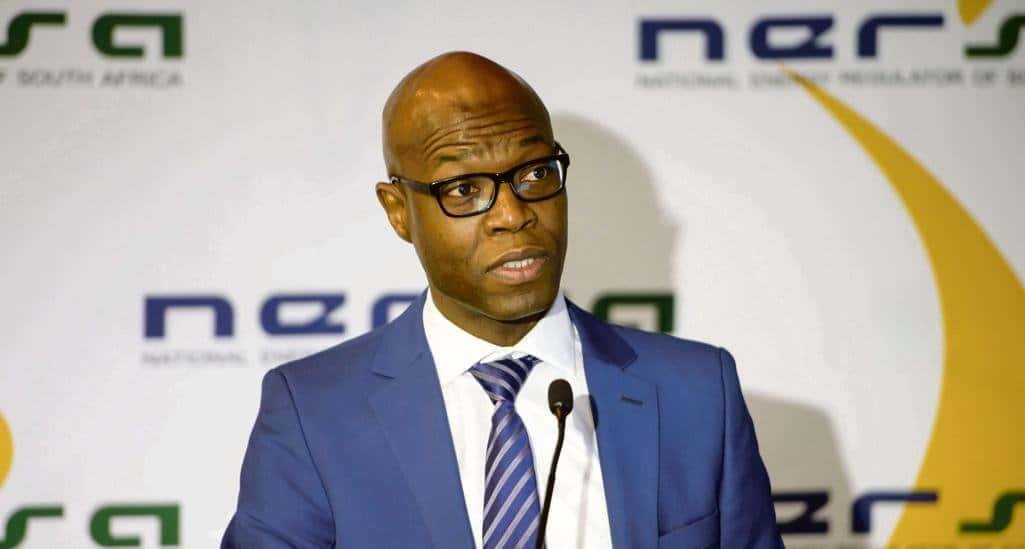
Koko is a former Chief Executive of Eskom (2016-2017) and Managing Director of Matshela Energy. He is a doctoral candidate at the Graduate School of Business Leadership, University of South Africa, where his research develops the Cliff Intensity Index, a diagnostic framework for measuring the velocity mismatch between coal retirement and renewable integration.
The full working paper, “South Africa’s 2030 Electricity Capacity Cliff,” is available at https://doi.org/10.2139/ssrn.5794522.