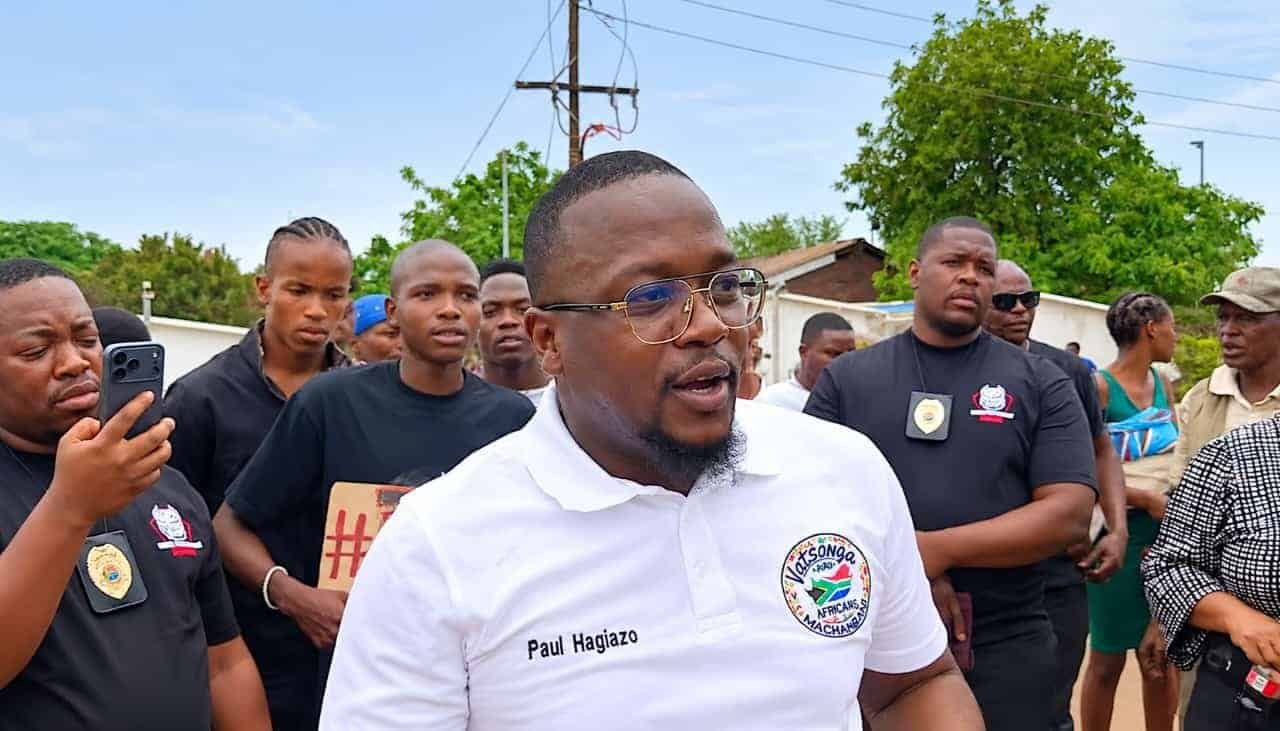
Vatsonga Machangani Civil Movement president Vuxaka “St Paul Hagiazo” Mavasa has ruled out transforming the organisation into a political party, insisting that its primary objective is to unite the Vatsonga Machangani community and advocate for its interests beyond party-political divisions.
Mavasa made the remarks on Tuesday outside Malamulele Magistrate’s Court, where he was attending proceedings in the high-profile murder case involving slain Limpopo comedian Ndivhuwo Khaidzianii, popularly known on social media as Skeem Mafenya.
The 31-year-old mining businessman said the movement, which has gained prominence amid heightened national debates about undocumented immigration and the treatment of Tsonga-speaking South Africans, was established to address issues affecting the community rather than compete for political power.
“This is a non-profit organisation. It is not a political party, and we will never be. This is an instrument aimed at tackling everything that affects VatsongaMachangani,” Mavasa said.
“Our politics is about our people. It is not about votes; it is not about getting into government. Yes, it will get to a stage where we know organisations like this one will, somewhere, somehow, be aligned in order for them to have a voice in Parliament. But at the present moment, our aim is to build unity within us.”
A movement gaining momentum
The rise of the Vatsonga Machangani Civil Movement comes amid growing calls for recognition, unity and protection among Tsonga-speaking South Africans, particularly as immigration debates have intensified across the country.
The March and March Movement, led by Jacinta Ngobese-Zuma, has been at the centre of demonstrations calling for stronger action against undocumented immigration.
However, the debate has also raised concerns among Vatsonga Machangani, some of whom say they have been mistaken for foreign nationals, profiled because of their language or appearance, and forced to prove their South African citizenship.
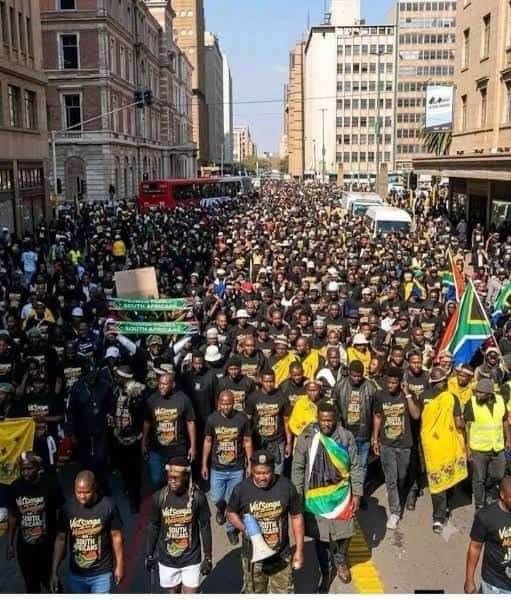
In June 2026, hundreds of Vatsonga Machangani marched in Johannesburg to the South African Human Rights Commission (SAHRC), demanding an end to what they described as ethnic profiling, discrimination, harassment and intimidation. The community submitted a memorandum calling for greater protection of its constitutional rights and recognition of its cultural and linguistic identity.
The march, attended by hundreds of supporters, highlighted the challenges facing Tsonga-speaking South Africans in a climate where language, cultural expression and perceived links to neighbouring Mozambique can expose people to suspicion and discrimination.
These developments have helped bring questions of identity, belonging and community solidarity into sharper focus. They have also underscored the importance of distinguishing between concerns about immigration enforcement and the targeting of South African citizens because of their ethnicity or language.
Against this backdrop, the Vatsonga Machangani Civil Movement is positioning itself as a platform for collective advocacy, with Mavasa emphasising that the community’s long-term interests should transcend political affiliations.
Rather than becoming another political party competing for votes, he said, the movement wants to build a united constituency capable of engaging political leaders and demanding accountability, regardless of which party holds power.
‘We must be able to meet after politics’
Mavasa said political divisions should not prevent Vatsonga Machangani from working together on issues such as infrastructure, service delivery and economic development.
“After politics, we want to unite Vatsonga Machangani. Where is development in Malamulele? Where is development in Giyani? Where is development in Tzaneen? Where is development in Phalaborwa? We must still be able to meet after politics as Vatsonga Machangani,” he said.
He argued that the community needed to develop a shared agenda that could be taken to government, irrespective of the political parties its members supported.
“One day, we must be able to come together as Vatsonga Machangani beyond political parties X and Y and be able to bring the president and ministers and say: ‘We understand that you are in government, but we need development in Malamulele.’”
Using Malamulele Magistrate’s Court as an example, Mavasa questioned whether local public infrastructure adequately reflected the needs and dignity of the communities it served.
“Just look at our Malamulele Magistrate’s Court. It is very small. We can’t allow this in this democratic time. When you come to court, you must feel that you are going to court,” he said.
His remarks suggest that the movement intends to broaden its focus beyond questions of identity and representation to include the practical challenges confronting communities across the Vatsonga Machangani heartland.
“Our urgent issue is this disunity between ourselves,” Mavasa said.
Bail denied in Skeem Mafenya murder case
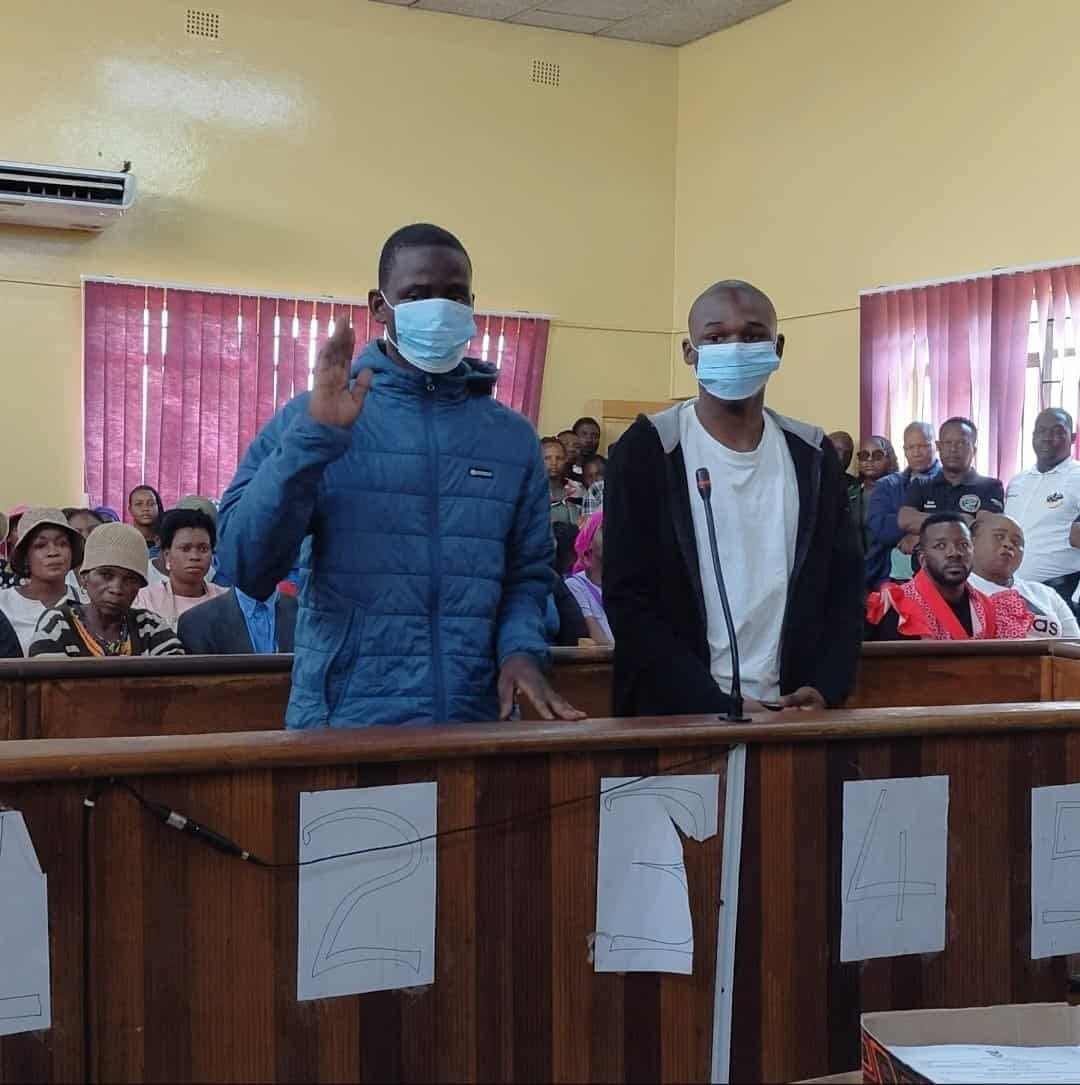
Meanwhile, two young men accused of murdering Skeem Mafenya appeared at Malamulele Magistrate’s Court on Tuesday to apply for bail. Their applications were dismissed by Magistrate Khathu Sikhala.
The accused, 22-year-old Hlamulo Makondo of Majeje village in Phalaborwa and 20-year-old Malwandla Khosa of Phaphazela village, a short distance from Malamulele, are students at New Era College.
During the proceedings, the accused indicated that they had already missed four matric final examinations while in detention.
Their attorney, Rivoningo Maswanganyi, told the court that neither accused had a criminal record and argued that they were not likely to commit a Schedule 1 offence or evade trial.
Maswanganyi further submitted that the two had handed themselves over to police after learning that officers were looking for them. He proposed bail of R1,000 for each accused.
However, investigating officer Russel Hlengani Mashaba, stationed at Malamulele, opposed their release. The opposition was led by public prosecutor Rendani Matumba.
Mashaba told the court that the parents of the accused had allegedly begun intimidating witnesses, including a female learner at the college. He alleged that the witness had received threatening calls from various telephone numbers, including private numbers, and feared for her life.
The investigating officer further alleged that the accused had jumped over a boundary wall at a boarding school before the fatal incident in the early hours of Saturday, 17 October 2026.
Mashaba warned that releasing the accused could heighten tensions in Malamulele, where Skeem Mafenya’s family and followers were still grieving his death. He told the court that the situation could deteriorate into serious public unrest if bail were granted.
Magistrate Sikhala dismissed the bail applications, and the case was postponed to 11 December 2026 for further investigation.
In addition to the murder charge, the accused face one count of assault with intent to cause grievous bodily harm.
According to the State, Makondo and Khosa allegedly assaulted Mpho Gift Macheke with stones before stabbing him with a knife in the Boltman B area of Madonsi village. The State further alleges that the incident preceded the killing of the comedian on Saturday, 17 October 2026.