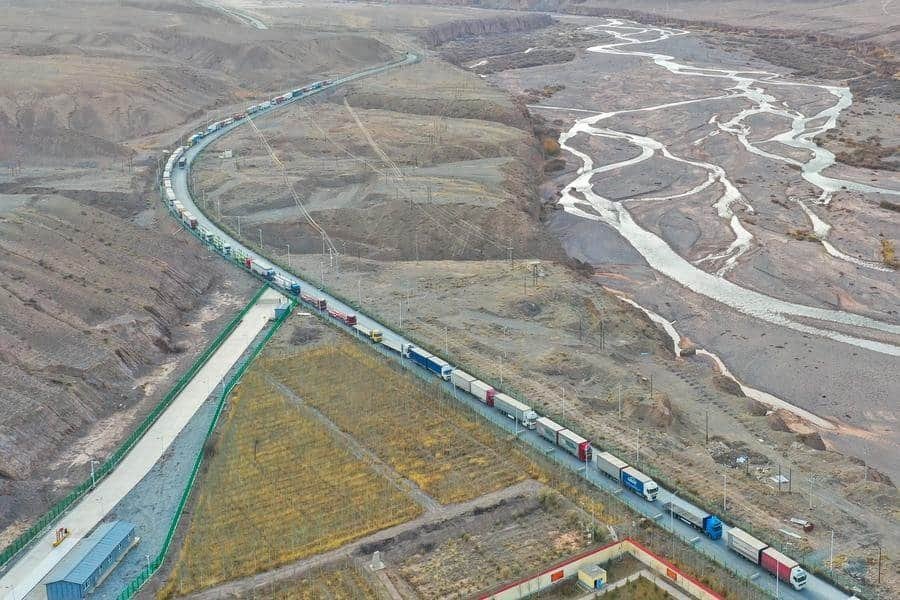
BEIJING, Aug. 27 (Xinhua) — Picked fresh in Kyrgyz villages in the morning, cherries and melons can now travel hundreds of kilometres and reach markets in Kashgar, an oasis city in the southwestern corner of China’s Xinjiang Uygur Autonomous Region, by evening.
The journey is made possible by the China-Kyrgyzstan-Uzbekistan highway, which winds through the rugged mountains of Central Asia, a project under the Belt and Road Initiative proposed by Chinese President Xi Jinping. Shipment will be expedited as the three countries are also seeing the construction of another major cross-border project — the China-Kyrgyzstan-Uzbekistan railway — aimed at improving the well-being of people along the route.
The expanding connectivity across Central Asia offers a glimpse into a broader vision Xi has championed over the years: to pursue friendships and partnerships with China’s neighbours and foster an amicable, secure and prosperous neighbourhood.
Xi will soon pay a state visit to Kyrgyzstan, China’s neighbour to the west, and attend the Shanghai Cooperation Organization (SCO) summit in Bishkek, a major move of his neighbourhood diplomacy.
“WISH OUR NEIGHBORS WELL”
Xi’s upcoming trip to Kyrgyzstan will be his third visit to the country as Chinese president, following previous visits in 2013 and 2019. Over the years, stronger connectivity has led to expanded economic ties. In 2025, trade in goods between China and Kyrgyzstan reached 27.2 billion U.S. dollars, up 20 percent year-on-year.
Last year, Xi and Kyrgyz President Sadyr Japarov signed a joint statement on deepening the China-Kyrgyzstan comprehensive strategic partnership for a new era, with the two sides pledging to deepen infrastructure cooperation while tapping new potential in clean energy, green minerals and artificial intelligence.
The growing partnership has also been reflected in the Kyrgyz leader’s words. He told Xi that Kyrgyzstan’s most valuable advantage is having China as its neighbour.
For Xi, relations with neighbouring countries have long occupied a prominent place in China’s diplomacy. In 2013, not long after assuming the Chinese presidency, Xi put forward the principle of amity, sincerity, mutual benefit and inclusiveness in China’s relations with its neighbours. A year later, he formally proposed building a community with a shared future with neighbouring countries at a central conference on work related to foreign affairs in Beijing.
“Close neighbours are better than distant relatives. This is a simple truth that Chinese people got to know in ancient times,” Xi once said in explaining China’s approach to its neighbourhood. “We always wish our neighbours well.”
Harbouring that wish, Xi has maintained frequent exchanges with leaders across China’s neighbourhood.
In 2025, all of Xi’s overseas trips took him to neighbouring countries, including Kazakhstan, Russia and South Korea.
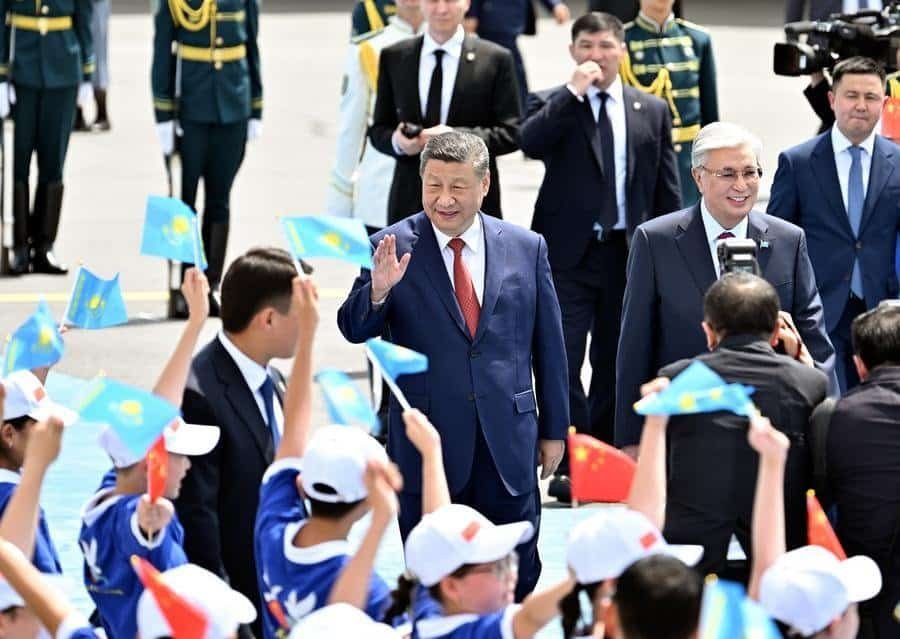
Such diplomatic exchanges have remained intensive in 2026. In June, Xi made his first overseas trip this year, travelling to the Democratic People’s Republic of Korea, China’s neighbour to the northeast. So far this year, Xi has hosted leaders from more than 10 neighbouring countries across Asia, including Thailand, Pakistan and Tajikistan.
When meeting with Bangladeshi Prime Minister Tarique Rahman in June, Xi reiterated China’s commitment to the policy of good-neighbourliness and friendship. China, Xi said, will continue to provide neighbouring countries with new opportunities and fresh dynamism as the country grows.
GOOD-NEIGHBORLINESS IN REGIONAL COOPERATION
In addition to bilateral efforts, Xi has attached great importance to regional cooperation to build an amicable, secure and prosperous neighbourhood.
The SCO is a case in point. “China has always prioritised the SCO in its neighbourhood diplomacy,” Xi once said. Since 2013, he has attended every SCO summit, either in person or via video link, promoting closer cooperation among member states on security, development and cultural exchanges.
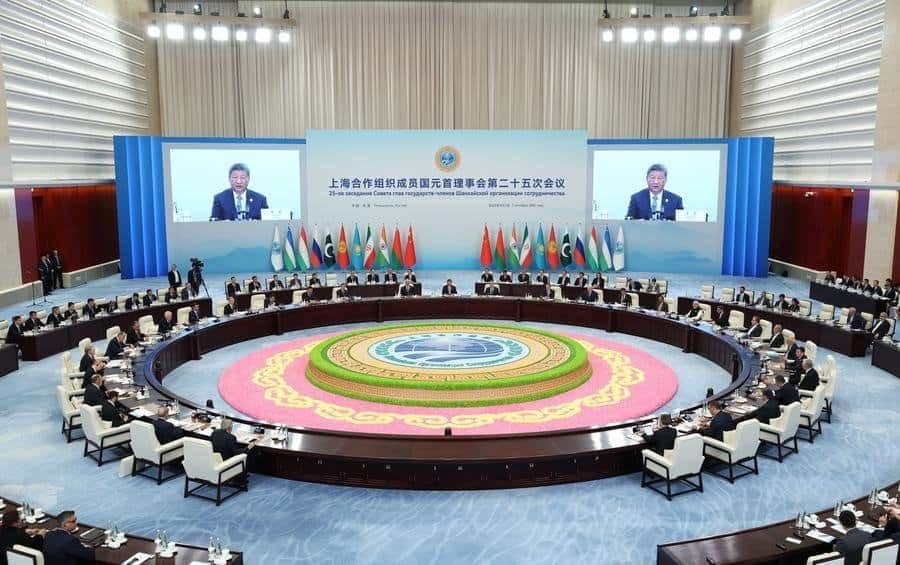
Founded in Shanghai in 2001 by China and its neighbouring countries, the SCO has had good-neighbourliness at the heart of its mission from the outset. “We were the first to conclude a treaty on long-term good-neighbourliness, friendship and cooperation, proclaiming our commitment to forge lasting friendship and refrain from hostilities,” Xi said while hosting last year’s SCO summit in the northern Chinese port city of Tianjin.
Over the past 25 years, the SCO has grown into the world’s largest comprehensive regional organisation in terms of geographical coverage and population, while expanding cooperation across an ever-widening range of fields.
At the Tianjin summit, Xi announced three China-SCO cooperation platforms for energy, green industry and the digital economy, along with three cooperation centers for scientific and technological innovation, higher education, and vocational and technical education. Open to all SCO countries, these initiatives seek to share the opportunities created by China’s development while fostering sustainable development across the region.
The SCO is part of a broader network of multilateral cooperation across China’s neighbourhood. Under Xi’s leadership, China has worked with neighbouring countries through mechanisms ranging from Lancang-Mekong Cooperation to ASEAN-centered East Asian cooperation and APEC, promoting greater connectivity, deeper economic integration and closer people-to-people bonds.
In Central Asia, that approach has also been advanced through a new cooperation mechanism initiated by Xi. In 2023, he launched the China-Central Asia Summit in the Chinese city of Xi’an, bringing together China and Kazakhstan, Kyrgyzstan, Tajikistan, Turkmenistan and Uzbekistan.
Two years later, Xi travelled to Kazakhstan, China’s neighbour to the northwest, for the second China-Central Asia Summit. There, the leaders of the six countries signed a treaty on eternal good-neighbourliness, friendship and cooperation, enshrining the principle of everlasting friendship in legal form. Xi said the treaty is “a pioneering initiative in China’s diplomatic engagement with its neighbours.”
At the summit, host Kazakh President Kassym-Jomart Tokayev highlighted China’s role in advancing regional cooperation.
“We have forged an unprecedented model of cooperation based on good-neighbourliness, friendship and mutual support,” Tokayev said. “It is fair to say that China, under the leadership of the great statesman President Xi Jinping, has played a leading role.”
A SHARED FUTURE
“Asia is our common home,” Xi wrote in a signed article published by Vietnam’s Nhan Dan newspaper in 2023 ahead of a visit to the country. “Building a community with a shared future for humanity should start from Asia.”
That vision has found concrete expression in China’s neighbourhood diplomacy. In April last year, Xi convened a central conference on work related to neighbouring countries in Beijing, where building a community with a shared future with neighbouring countries was identified as a priority.
To advance that goal, the conference underscored the need for China to work with its neighbours to consolidate strategic mutual trust, support regional countries in pursuing development paths suited to their respective conditions, and properly manage differences.
Days later, Xi embarked on a tour of Southeast Asia that took him to Vietnam, Malaysia and Cambodia, during which he elaborated on how China seeks to put that vision into practice. During the visit, China and the three countries signed a record 108 cooperation agreements, covering traditional infrastructure, connectivity and emerging sectors such as the digital economy.
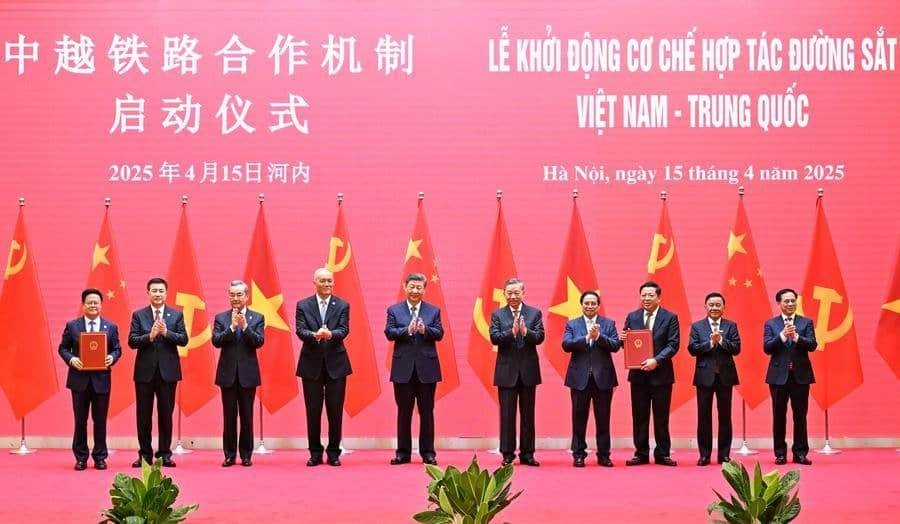
China, Xi said, would “extend the benefits of Chinese modernisation to its neighbours, promote the building of a community with a shared future with neighbouring countries, and work together to advance modernisation in Asia.”
Over the years, the vision has been translated into an expanding web of bilateral and regional cooperation. China has reached common understandings on building communities with a shared future with 17 neighbouring countries. At the subregional level, China and the five Mekong countries have agreed to build a Lancang-Mekong community with a shared future, while China and the five Central Asian nations have committed to building a China-Central Asia community with a shared future.
Improved connectivity has laid a solid foundation for closer ties. “If the Belt and Road are likened to the two wings of a soaring Asia, then connectivity represents its arteries and veins,” Xi once said. China has signed Belt and Road cooperation documents with 25 neighbouring states across Asia, while a connectivity network encompassing “six corridors, six routes, and multiple countries and ports” is now largely in place. Roads, railways, ports and trade routes are bringing markets and communities closer together.
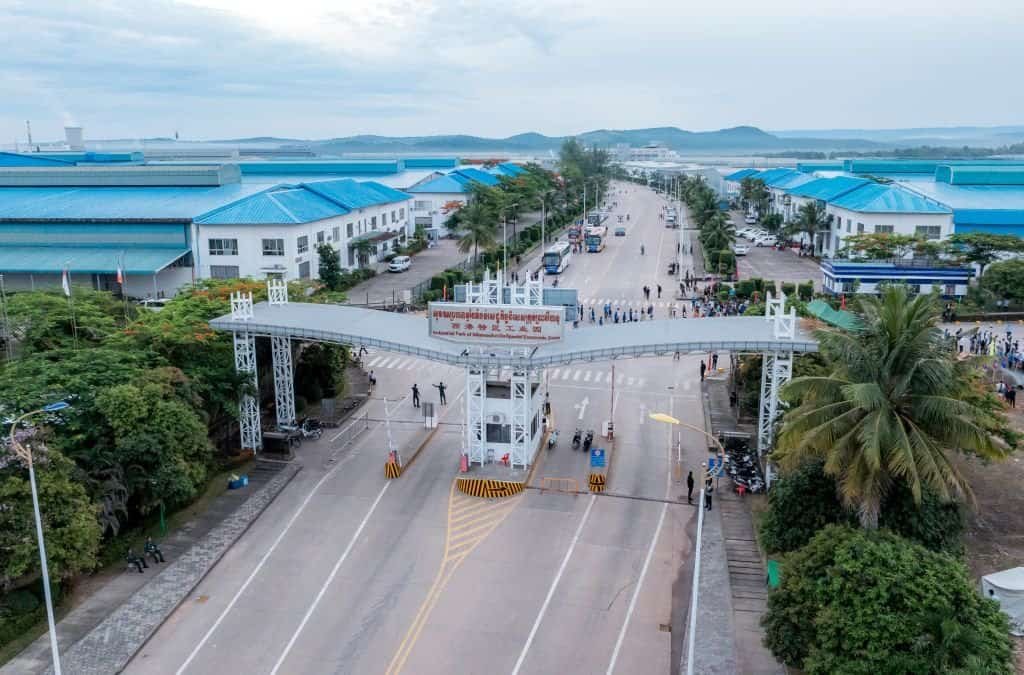
Xi’s vision of a shared future goes beyond regional connectivity; it envisions countries of different sizes and with different national conditions coexisting, cooperating and pursuing shared development on the basis of equality and mutual benefit.
China’s own modernisation has enabled its neighbours to achieve technological advances and industrial upgrading through collaboration, said Wirun Phichaiwongphakdee, director of the Thailand-China Research Center of the Belt and Road Initiative.
Xi’s neighbourhood vision is being translated into reality through concrete projects, helping make Asia a platform for cooperation and shared prosperity, he added.
As Xi once put it metaphorically, “Countries across Asia are like individual lamps. Only when they are connected can they illuminate the night sky of Asia in all its brilliance.”
African Times has published this article in partnership with Xinhua News Agency