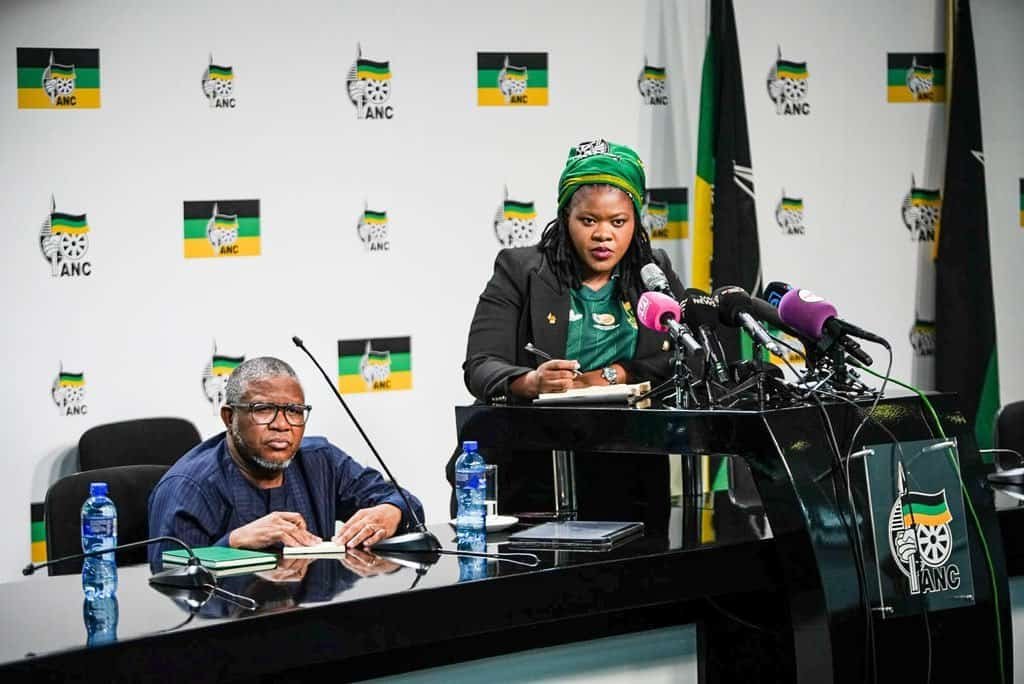
The African National Congress (ANC) has reaffirmed its support for the Expropriation Act, describing it as a constitutional tool to advance land reform and redress historical injustices, as the legislation faces a legal challenge in the Western Cape High Court.
The party said it was not surprised by the court action brought by the Democratic Alliance (DA), AfriForum and the Institute of Race Relations (IRR), arguing that the challenge reflects longstanding opposition to transformation laws aimed at addressing the legacy of apartheid and colonialism.
In a statement issued this week, ANC Acting National Spokesperson Nonceba Mhlauli said the Expropriation Act gives practical effect to Section 25 of the Constitution, commonly known as the property clause.
“The Expropriation Act is a constitutionally mandated instrument intended to give practical effect to Section 25 of the Constitution. The property clause protects property rights while also requiring the democratic state to advance land reform, equitable access to natural resources and restitution for those dispossessed of their land,” Mhlauli said.
The ANC argued that the DA has consistently opposed key pieces of legislation designed to promote transformation, including the National Health Insurance Act, the Basic Education Laws Amendment Act and the Employment Equity Amendment Act.
According to the governing party, the legal challenge against the Expropriation Act is part of a broader pattern of resistance to policies intended to reduce inequality and expand economic opportunities for black South Africans.
“The DA cannot claim fidelity to the Constitution while fighting every law intended to realise its promise for those dispossessed and excluded by colonialism and apartheid,” the ANC said.
The party further accused the DA of embracing constitutional principles selectively while opposing measures aimed at restitution, redress and substantive equality.
The Expropriation Act has remained one of the country’s most contested pieces of legislation since its adoption. Supporters argue it provides a lawful framework for land reform while protecting constitutional rights, whereas opponents contend that aspects of the law could undermine property rights and create uncertainty over investment.
The ANC dismissed criticism of the legislation, insisting that land reform remains a constitutional obligation rather than a political choice.
Mhlauli said the party remains committed to the vision contained in the Freedom Charter, which states that South Africa belongs to all who live in it and that the land should be shared among those who work it.
“The ANC remains unwavering in its commitment to transformation and the historic vision of the Freedom Charter that South Africa belongs to all who live in it and that the land must be shared among those who work it,” she said.
She added that land reform, restitution, equity and redress should not be viewed as acts of retribution but as constitutional and historical imperatives necessary to address the inequalities created by apartheid.
The ANC said it would continue pursuing policies aimed at building what it described as a united, non-racial, non-sexist, democratic and prosperous society in which those dispossessed of land have their dignity restored and are able to participate meaningfully in the country’s economic development.
The Western Cape High Court is expected to hear arguments from the parties challenging the constitutionality of the Expropriation Act, with the outcome likely to have significant implications for South Africa’s land reform programme.