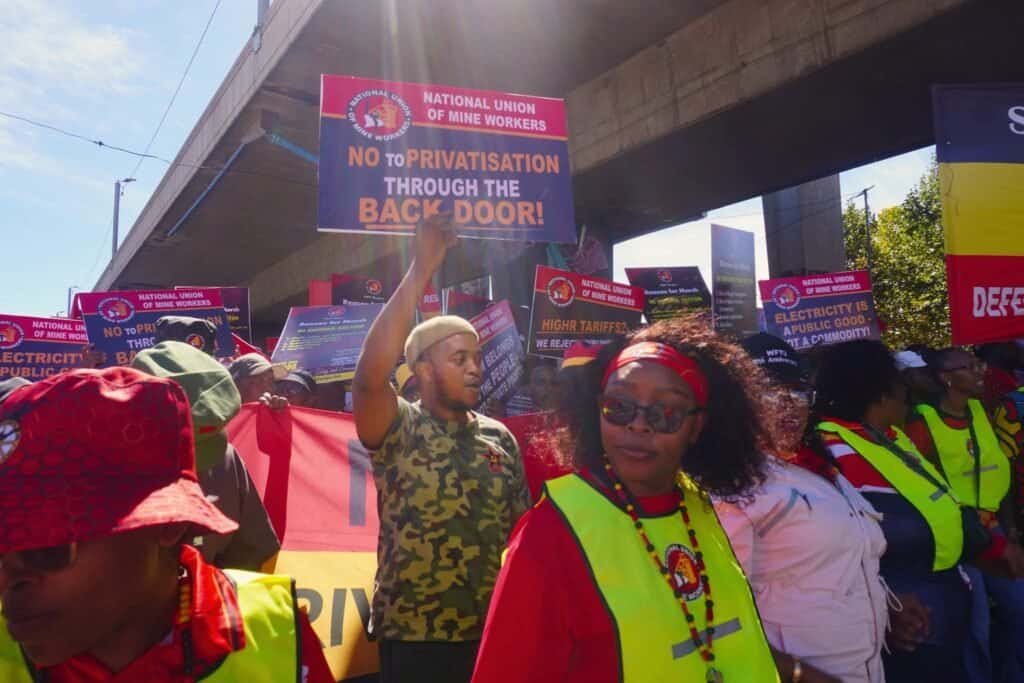
The National Union of Mineworkers (NUM) has raised concerns over government’s plans to establish an independent Transmission System Operator (TSO), warning that the restructuring of Eskom could threaten jobs, weaken public ownership and pave the way for greater private sector involvement in South Africa’s electricity sector.
The union’s response follows President Cyril Ramaphosa’s approval of the first phase report of the Eskom Restructuring Task Team (ERTT), which recommends creating an independent, state-owned TSO separate from Eskom.
The Presidency has argued that the reform is a key step towards modernising the electricity sector by enabling greater competition, attracting investment into transmission infrastructure and improving long-term energy security. The Electricity Regulation Act requires the establishment of the TSO by December 2029, with the National Transmission Company South Africa (NTCSA), established in 2024 as an Eskom subsidiary, serving as an interim arrangement.
In his 2026 State of the Nation Address, Ramaphosa announced that government would proceed with establishing “a fully independent state owned transmission entity” that will own and control transmission assets and operate the electricity market. He said the reform would create “a level playing field for competition” while helping ensure South Africa is no longer dependent on a single electricity supplier.
In June, the Presidency said the ERTT had made significant progress in preparing for the establishment of the TSO. Ramaphosa said he was encouraged by the pace of the work, describing the independent transmission company as “a critical reform” that would support a competitive electricity market and ensure a reliable, affordable and sustainable electricity supply.
However, NUM believes the restructuring should not come at the expense of workers.
“While NUM recognises the urgent need to expand South Africa’s transmission infrastructure, restructuring must not come at the cost of jobs, working conditions, collective bargaining rights or public ownership,” the union said.
The union welcomed government’s acknowledgement that Eskom’s financial sustainability and growing municipal debt remain major concerns. It argued that government should first prioritise improving revenue collection, resolving municipal debt and strengthening governance before implementing structural reforms.
NUM also voiced strong opposition to proposals that could see transmission assets, infrastructure or employees transferred from the NTCSA to a newly created TSO.
According to the union, separating transmission assets from Eskom could fragment the utility, increase private sector influence and gradually erode public ownership of a strategic national asset.
The union insisted that no asset transfers should proceed without the consent of organised labour and comprehensive consultation with workers.
It further called on government to provide explicit guarantees that no employee would lose their job or experience worsening employment conditions as a result of the restructuring.
NUM said international experience with electricity market liberalisation has often resulted in job losses and weakened labour protections, warning South Africa should avoid repeating those mistakes.
The union also demanded meaningful engagement as government moves into the second phase of the restructuring process, which is expected to produce a detailed implementation plan over the next three months.
It said any reforms must be guided by the principles of a just transition, balancing energy security, affordable electricity, industrial development, localisation and the public interest.
While reiterating its opposition to what it described as the gradual privatisation of the electricity grid, NUM warned it was prepared to pursue legal action and mobilise workers should government proceed without adequate consultation.
The union said it would use “all available legal, constitutional and organisational avenues” to defend public ownership, protect workers’ rights and safeguard Eskom’s strategic role in South Africa’s economy.