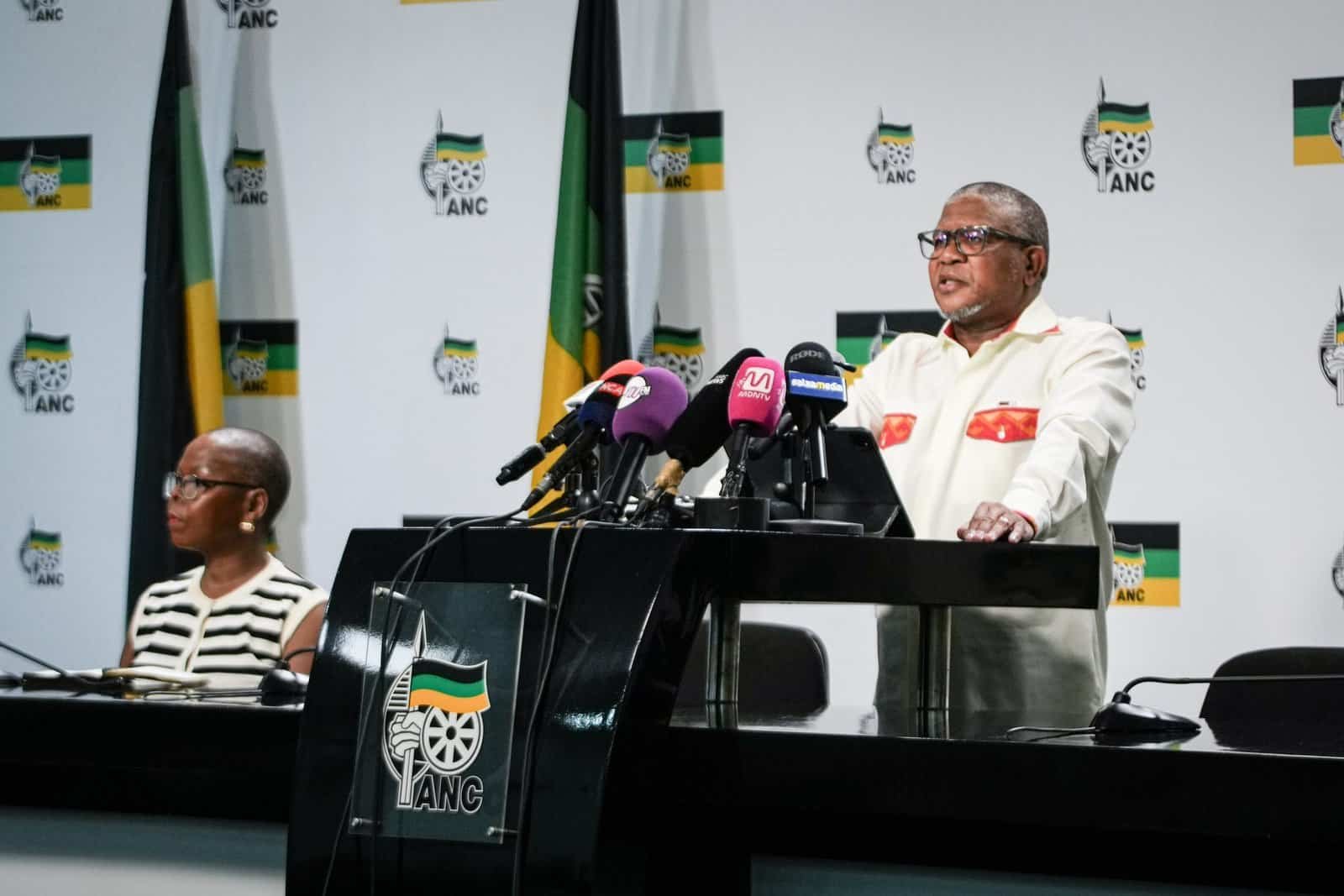
The African National Congress (ANC) says it will lead the government in 144 municipalities following the recent local government elections, as it moves to stabilise coalition arrangements and rebuild public confidence through a new Municipal Co-operation Accord.
The party on Friday released its Municipal Co-operation Accord 2026–2031, setting out the conditions, service delivery commitments and accountability measures that political parties entering municipal coalitions will be expected to uphold.
The agreement comes after weeks of negotiations with political parties across all nine provinces following the ANC’s disappointing performance in the local government elections.
The ANC secured 3,292 council seats, representing 37.3% of the seats across the 213 declared councils.
Acknowledging the significance of the result, the party admitted it had recorded its lowest electoral performance in local government.
“The ANC did not win these elections and does not say that it did,” the party said in its statement.
It added that the declining support reflected a message from communities that must inform its renewal efforts.
Despite the setback, the ANC said it remained the largest party in 133 councils, comprising 53 councils where it secured an outright majority and 80 hung councils.
Of the 74 councils where one political party secured an outright majority, the ANC won 53.
The party said it would lead municipal governments in 144 councils based on the coalition arrangements and agreements reached.
Its strongest representation remains in Limpopo, where it holds 55.8% of council seats, followed by the Eastern Cape at 51.2%.
In the North West, the party holds 46.5%, Mpumalanga 44.7%, Northern Cape 43.6% and Free State 40.2%.
Its support is considerably lower in Gauteng at 25.4%, KwaZulu-Natal at 21.6% and the Western Cape at 16%.
The ANC also said it would hold or lead the mayoralties in six of the country’s nine provincial capitals, namely Polokwane, Bhisho through Buffalo City, Kimberley through Sol Plaatje, Bloemfontein through Mangaung, Mbombela and Mahikeng.
In announcing the coalition arrangements, the party said it had engaged several political formations, including the Economic Freedom Fighters (EFF), uMkhonto weSizwe Party (MKP), Inkatha Freedom Party (IFP), South African Communist Party (SACP), ActionSA and Democratic Alliance (DA).
It also reached agreements and understandings with the Patriotic Alliance, United Democratic Movement, GOOD, African Christian Democratic Party and Freedom Front Plus, among others.
The ANC said the EFF was part of its negotiated arrangements in 107 councils, while the SACP featured in 73.
The MKP was involved in 34 councils, while the Patriotic Alliance participated in 25 arrangements.
The party rejected suggestions that it had excluded other political formations from its coalition engagements, saying every major political party had a place in the arrangements reached.
At the centre of the negotiations is the Local Governance Mandating Guide, adopted by the ANC’s National Executive Committee on November 8.
The guide establishes 12 minimum conditions that the party says must underpin its coalition agreements.
These include properly funded municipal budgets, payment of suppliers within 30 days, prioritising water and sanitation infrastructure and keeping the water function in public hands.
The ANC also wants automatic indigent relief for qualifying residents, stronger financial oversight, consequence management for adverse audit findings and employment and procurement practices that support redress.
Coalition partners will also be expected to commit to full-term agreements, respect labour laws, introduce programmes for young people, older persons and people living with disabilities, and publish their first 100-day service delivery commitments.
The Municipal Co-operation Accord, which contains 13 articles and four annexures, further establishes procedures for resolving disagreements between coalition partners.
Under Article 10, disputes must first be submitted in writing to a Co-operation Council, which will have 10 working days to address the matter.
If unresolved, the dispute moves to the senior leadership of the political parties before an agreed independent person is approached.
The ANC said municipal services must continue during disputes, warning against political disagreements paralysing councils and disrupting service delivery.
The agreement also requires participating parties to publish their signed accords within seven days and provide residents with quarterly progress reports.
The party said the document was being made public so residents could hold their elected representatives accountable for commitments made during coalition negotiations.
The first 100 days of the new local government term will be used to demonstrate whether the agreements can translate into tangible improvements in communities.
ANC councillors have been instructed to prioritise ward meetings, address water interruptions, sanitation problems, potholes, broken streetlights, illegal dumping and the condition of public spaces.
The party also announced plans for a two-day induction programme for its councillors in December 2026, followed by a compulsory four-year Local Government Leadership Programme running from March 2027 to March 2031.
The programmes will focus on coalition governance, building consensus and strengthening accountability.
Meanwhile, the ANC acknowledged the devastating impact of recent flooding in Gauteng, particularly in Alexandra and other affected communities, and called on government to provide relief to residents.
It also warned municipalities to prepare for disruptive weather conditions, including flash floods and drought, amid concerns about a severe El Niño.
The statement was delivered during the 16 Days of Activism against Gender-Based Violence, with the party arguing that effective municipal services were also essential to building safer communities.
Earlier in its statement, the ANC paid tribute to former deputy president Phumzile Mlambo-Ngcuka, who died on November 20 at the age of 71.
Mlambo-Ngcuka was South Africa’s first female deputy president and later served as executive director of UN Women.
The party said it would honour her legacy by strengthening municipalities and improving the lives of ordinary South Africans.