Internationalisation in higher education has evolved over the past 20 years from a niche pursuit into a central component of institutional strategy, increasingly supported and championed through national legislation. It has become a multifaceted process involving various stakeholders within a university, including students, staff, leadership, and policymakers. Since the advent of COVID-19, the definition of internationalisation evolved from a primary focus on international student and staff mobility, exchanges,
scholarships, collaborations, and partnerships to include curriculum development, intercultural competence, communications and marketing, brand and reputation management, student recruitment, and virtual collaboration, among others.
Today, universities are required to internationalise in ways that embed intercultural, international, and global dimensions across all institutional functions, including ICT, finance, human resources, infrastructure and facilities, research, teaching and learning, and engaged scholarship. While internationalisation has traditionally been rooted in supporting the academic project, the increasingly competitive global higher education landscape has gradually compelled universities to incorporate communications and marketing as central drivers of internationalisation efforts.
This is particularly evident in events organised by institutions and organisations that champion internationalisation in higher education, such as Times Higher Education (THE), the Association of African Universities (AAU), the Southern African Regional Universities Association (SARUA), the Regional Universities Forum for Capacity Building in Agriculture (RUFORUM), the International Association of Universities (IAU), the Southern African-Nordic Centre (SANORD), the African Network for Internationalisation of Education (ANIE), the International Education Association of South Africa (IEASA), the African Council for Distance Education (ACDE), the Commonwealth of Learning (COL), and
the International Council for Open and Distance Education (ICDE), among others. Events and conferences organised by these bodies both highlight and shape the evolving narrative of internationalisation.

Traditionally, such conferences have centred on research presentations, curriculum innovation, joint research initiatives, policy dialogue, and capacity-building workshops, underscoring the academic and developmental essence of internationalisation. Increasingly, however, these spaces are also dominated by
communications and marketing through world-class, highly competitive exhibitions and institutional showcases, while the academic project is often represented primarily through presentations, sometimes perceived as secondary.
The growing prominence of communications and marketing at these events cannot be overlooked, as these functions are intentionally deployed to elevate institutional reputation and global standing, even though some may argue that this risks sidelining the core academic project in favour of branding. To understand the interplay between communications, marketing, and internationalisation, it is important to examine the dual role communications and marketing play in enhancing brand visibility while simultaneously advancing internationalisation objectives during international conferences and events.
Globally, most universities position internationalisation within research portfolios or divisions directly linked to academic strategy or the vice-chancellor’s office. This structure reinforces the notion that internationalisation exists primarily to advance the academic project rather than to enhance institutional visibility. This is often the case where internationalisation is narrowly perceived as revolving around partnership agreements, student and staff exchanges, international research funding, and academic capacity building. However, some universities have strategically positioned their international offices within portfolios responsible for communications and marketing. A notable example is the
University of South Africa (Unisa), which has, over the years, located its directorate of Internationalisation and Partnerships within the Department of Institutional Advancement (DIA).
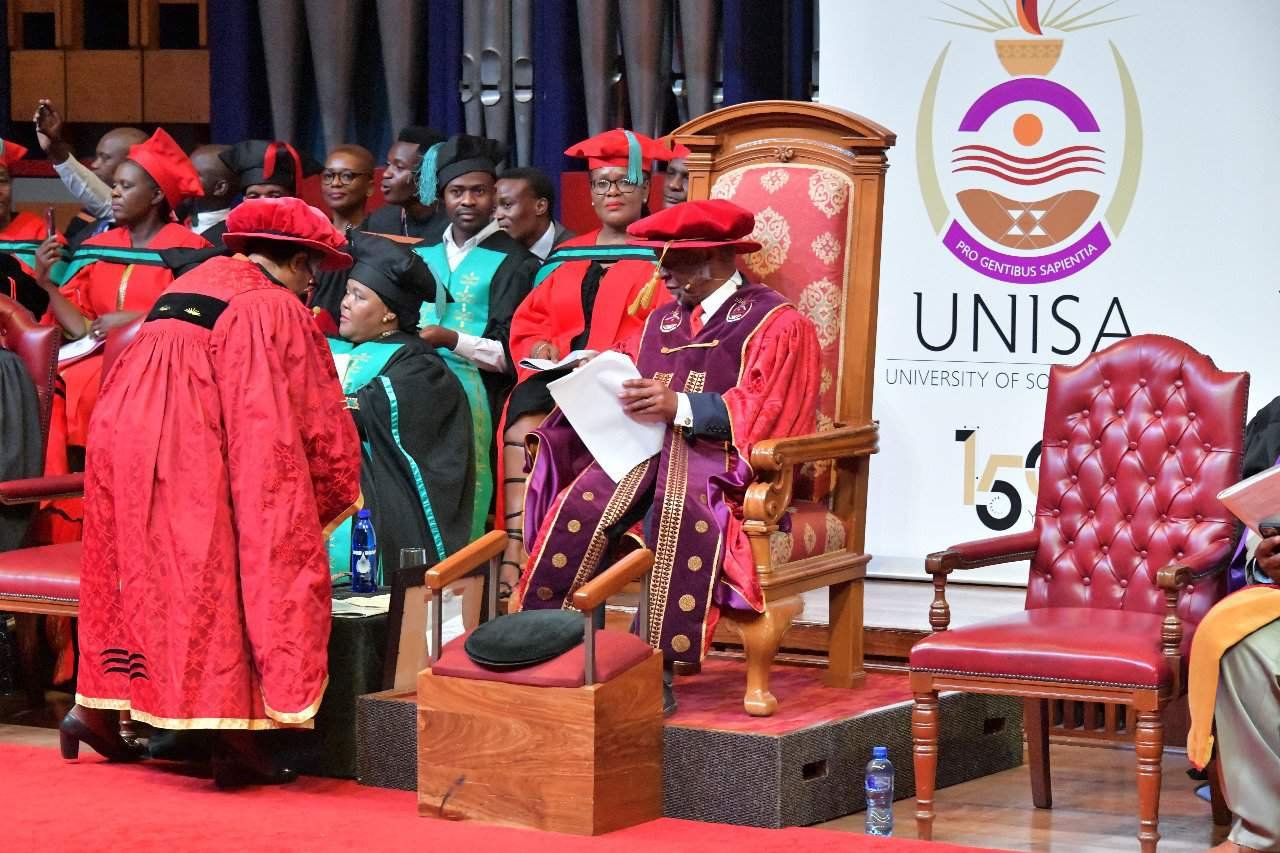
This positioning places the directorate alongside the Unisa Foundation, Alumni Relations, and Communications, Marketing and Events. This deliberate and strategic arrangement amplifies the directorate’s influence across the institution by enabling integrated support for global positioning and ensuring that partnerships extend beyond the academic project into branding, resource mobilisation, communications, marketing, and broader institutional functions such as ICT, finance, human resources, and infrastructure.
From Unisa’s perspective, this structure has significantly strengthened its participation in international conferences and events organised by global and regional organisations by aligning partnerships with communications and marketing for sustainable global branding and reputation management.
As global competition intensifies, communications and marketing are increasingly becoming
essential instruments through which universities distinguish themselves in international
rankings, student recruitment, and programme promotion. At Unisa, for example, communications and marketing teams have become central to conceptualising and executing impactful international campaigns that leverage technology, innovation, and social media to spotlight international partnerships and collaborations, often directly linking internationalisation efforts to the institutional brand.
The university has deliberately leveraged marketing to showcase its pioneering work, particularly its research expertise and achievements across its 10 catalytic niche areas, to global audiences.
For example, over the past three years, Unisa has served as a regional co-host of the Times Higher Education Sustainability Congress in Pretoria (2023), Thailand (2024), and Turkey (2025). In 2024 and 2025, the university also participated in the EAIE conference as part of the IEASA Study South Africa exhibition, as well as RUFORUM in Namibia (2024) and Botswana (2025).
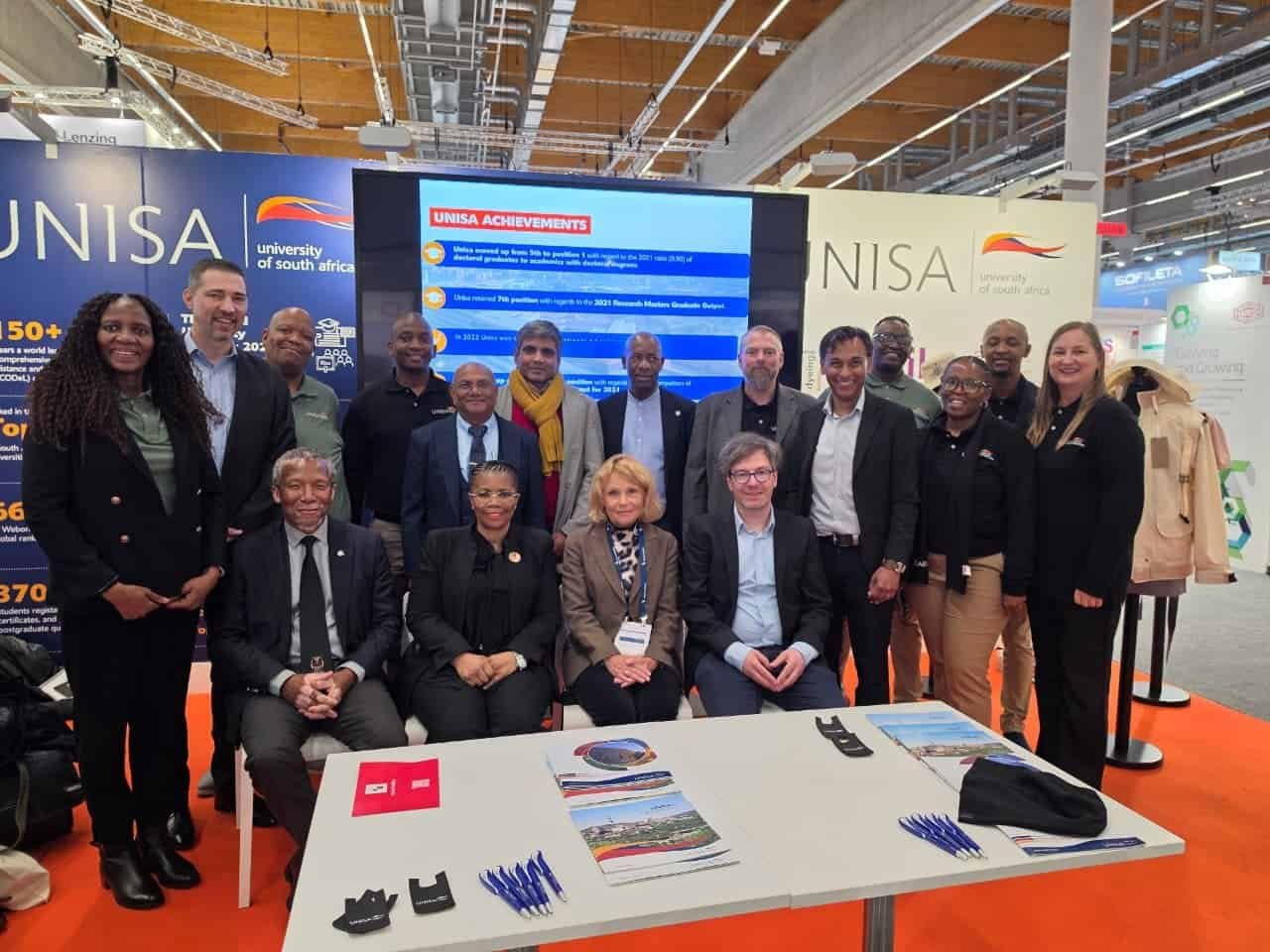
Across these high-profile internationalisation platforms, communications and marketing have played a central role in crafting and amplifying compelling showcases of Unisa’s innovation and leadership, ensuring that the university’s groundbreaking work resonates beyond academic circles.
Like many institutions globally, Unisa has used these events not only to advance internationalisation efforts but also to strengthen its institutional profile, reputation, and sustainable global partnerships.
It is therefore evident that while internationalisation in higher education is traditionally understood as a function that advances collaboration, partnerships, and the academic project, communications and marketing have increasingly become central to its success and to broader global positioning.
The intersection between communications, marketing, and internationalisation in higher education is dynamic, complex, and increasingly strategic. However, while communications and marketing are indispensable in enhancing institutional visibility and reputation, they must remain firmly anchored in the broader academic, research, and transformation agenda to ensure that internationalisation efforts continue to serve the core mission of the university.

Magabane is the Director of Internationalisation and Partnerships.

Mwabi is the Director of Communications, Marketing and Events, both based at Unisa.